
具有两个亲电弹头的分子双齿物作为一种新的药理学模式。
Molecular Bidents with Two Electrophilic Warheads as a New Pharmacological Modality.
作者信息
Li Zhengnian, Jiang Jie, Ficarro Scott B, Beyett Tyler S, To Ciric, Tavares Isidoro, Zhu Yingde, Li Jiaqi, Eck Michael J, Jänne Pasi A, Marto Jarrod A, Zhang Tinghu, Che Jianwei, Gray Nathanael S
机构信息
Department of Chemical and Systems Biology, Stanford Cancer Institute, ChEM-H, Stanford University, Stanford, California 94305, United States.
Lowe Center for Thoracic Oncology, Dana-Farber Cancer Institute, Boston, Massachusetts 02215, United States.
出版信息
ACS Cent Sci. 2024 Feb 26;10(6):1156-1166. doi: 10.1021/acscentsci.3c01245. eCollection 2024 Jun 26.
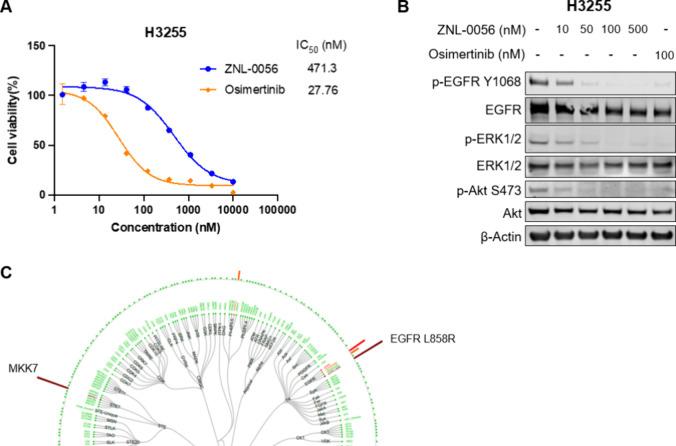
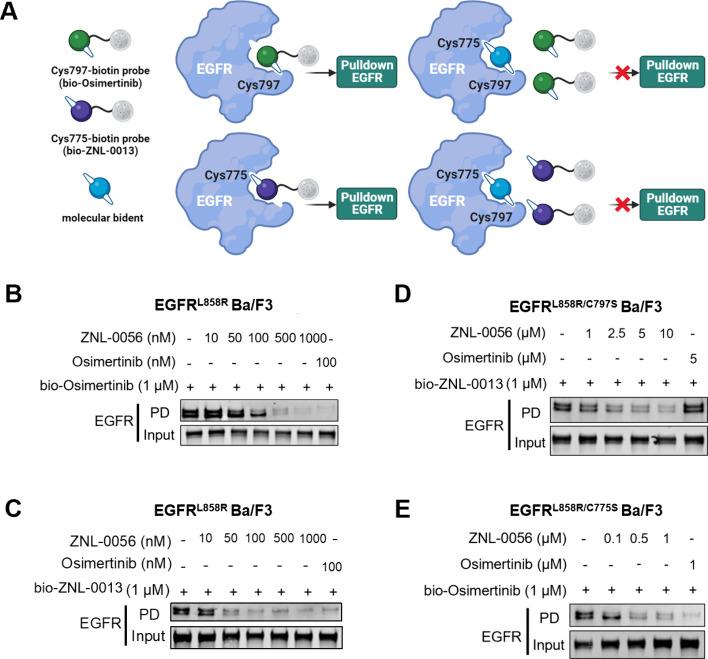
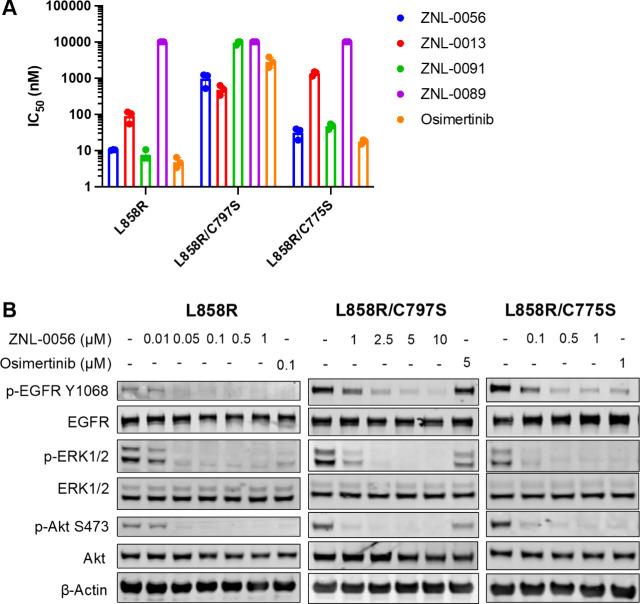
A systematic strategy to develop dual-warhead inhibitors is introduced to circumvent the limitations of conventional covalent inhibitors such as vulnerability to mutations of the corresponding nucleophilic residue. Currently, all FDA-approved covalent small molecules feature one electrophile, leaving open a facile route to acquired resistance. We conducted a systematic analysis of human proteins in the protein data bank to reveal ∼400 unique targets amendable to dual covalent inhibitors, which we term "molecular bidents". We demonstrated this strategy by targeting two kinases: MKK7 and EGFR. The designed compounds, ZNL-8162 and ZNL-0056, are ATP-competitive inhibitors that form two covalent bonds with cysteines and retain potency against single cysteine mutants. Therefore, molecular bidents represent a new pharmacological modality with the potential for improved selectivity, potency, and drug resistance profile.
本文介绍了一种开发双弹头抑制剂的系统策略,以规避传统共价抑制剂的局限性,如对相应亲核残基突变的易感性。目前,所有获得美国食品药品监督管理局(FDA)批准的共价小分子都具有一个亲电试剂,这为获得性耐药性提供了一条容易的途径。我们对蛋白质数据库中的人类蛋白质进行了系统分析,以揭示约400个适合双共价抑制剂作用的独特靶点,我们将其称为“分子双齿物”。我们通过靶向两种激酶:MKK7和表皮生长因子受体(EGFR)来证明这一策略。设计的化合物ZNL-8162和ZNL-0056是ATP竞争性抑制剂,它们与半胱氨酸形成两个共价键,并对单半胱氨酸突变体保持活性。因此,分子双齿物代表了一种新的药理学模式,具有提高选择性、活性和耐药性谱的潜力。


 Zotero 插件