
艾日布林治疗乳腺癌:当前见解与治疗前景
Eribulin in breast cancer: Current insights and therapeutic perspectives.
作者信息
Oey Oliver, Wijaya Wynne, Redfern Andrew
机构信息
Faculty of Medicine, University of Western Australia, Nedlands 6009, Australia.
Department of Medical Oncology, Sir Charles Gairdner Hospital, Nedlands 6009, WA, Australia.
出版信息
World J Exp Med. 2024 Jun 20;14(2):92558. doi: 10.5493/wjem.v14.i2.92558.
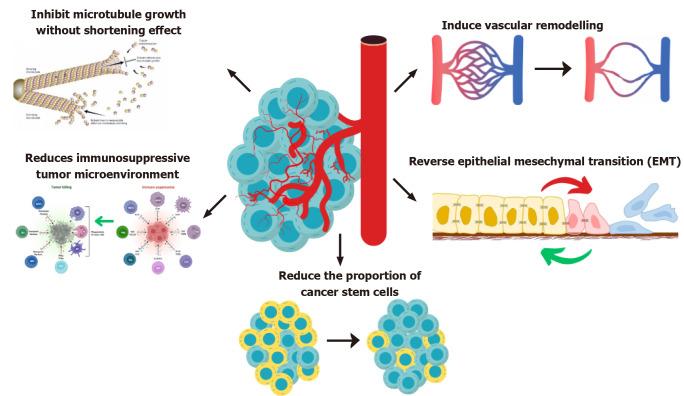
Eribulin is a non-taxane synthetic analogue approved in many countries as third-line treatment for the treatment of patients with metastatic breast cancer. In addition to its mitotic property, eribulin has non-mitotic properties including but not limited to, its ability to induce phenotypic reversal of epithelial to mesenchymal transition, vascular remodelling, reduction in immunosuppressive tumour microenvironment. Since approval, there has been a surge in studies investigating the application of eribulin as an earlier-line treatment and also in combination with other agents such as immunotherapy and targeted therapy across all breast cancer sub-types, including hormone receptor positive, HER2 positive and triple negative breast cancer, many demonstrating promising activity. This review will focus on the application of eribulin in the treatment of metastatic breast cancer across all subtypes including its role as an earlier-line agent, its toxicity profile, and potential future directions.
艾瑞布林是一种非紫杉烷类合成类似物,在许多国家被批准作为转移性乳腺癌患者的三线治疗药物。除了其有丝分裂特性外,艾瑞布林还具有非有丝分裂特性,包括但不限于诱导上皮-间质转化的表型逆转、血管重塑、减少免疫抑制性肿瘤微环境的能力。自获批以来,对艾瑞布林作为一线治疗药物以及与免疫疗法和靶向疗法等其他药物联合应用于所有乳腺癌亚型(包括激素受体阳性、HER2阳性和三阴性乳腺癌)的研究激增,许多研究显示出有前景的活性。本综述将聚焦于艾瑞布林在所有亚型转移性乳腺癌治疗中的应用,包括其作为一线药物的作用、毒性特征以及潜在的未来方向。

 Zotero 插件