
基于人性化护理模式联合一氧化氮的手术室护理对肺手术后康复效果的影响
Operation room nursing based on humanized nursing mode combined with nitric oxide on rehabilitation effect after lung surgery.
作者信息
Wang Qiao-Li, Wang Zhi-Bo, Zhu Jin-Fu
机构信息
Department of Anesthesiology and Perioperative Medicine, The First Affiliated Hospital of Nanjing Medical University, Nanjing 210029, Jiangsu Province, China.
Department of Thoracic Surgery, Jiangsu Provincial People's Hospital, Nanjing 210029, Jiangsu Province, China.
出版信息
World J Clin Cases. 2024 Jun 26;12(18):3368-3377. doi: 10.12998/wjcc.v12.i18.3368.
BACKGROUND
With advancements in the diagnosis and treatment of lung diseases, lung segment surgery has become increasingly common. Postoperative rehabilitation is critical for patient recovery, yet challenges such as complications and adverse outcomes persist. Incorporating humanized nursing modes and novel treatments like nitric oxide inhalation may enhance recovery and reduce postoperative complications.
AIM
To evaluate the effects of a humanized nursing mode combined with nitric oxide inhalation on the rehabilitation outcomes of patients undergoing lung surgery, focusing on pulmonary function, recovery speed, and overall treatment costs.
METHODS
A total of 79 patients who underwent lung surgery at a tertiary hospital from March 2021 to December 2021 were divided into a control group ( = 39) receiving a routine nursing program and an experimental group ( = 40) receiving additional humanized nursing interventions and atomized inhalation of nitric oxide. Key indicators were compared between the two groups alongside an analysis of treatment costs.
RESULTS
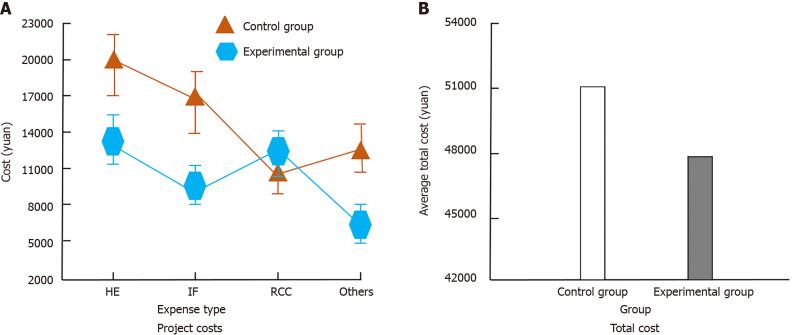
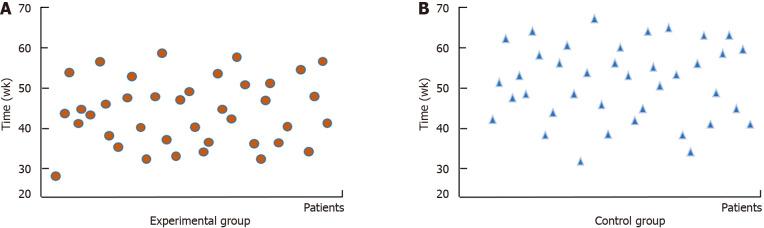
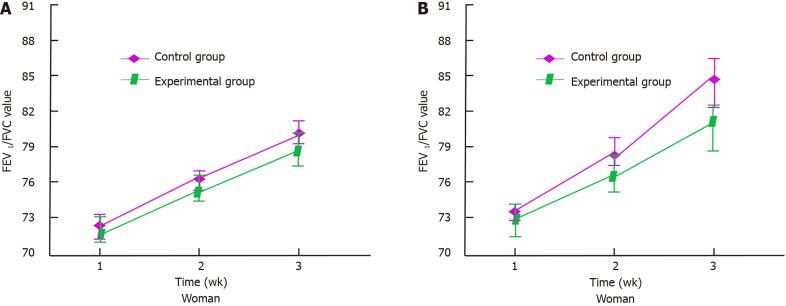
The experimental group demonstrated significant improvements in pulmonary function, reduced average recovery time, and lower total treatment costs compared to the control group. Moreover, the quality of life in the experimental group was significantly better in the 3 months post-surgery, indicating a more effective rehabilitation process.
CONCLUSION
The combination of humanized nursing mode and nitric oxide inhalation in postoperative care for lung surgery patients significantly enhances pulmonary rehabilitation outcomes, accelerates recovery, and reduces economic burden. This approach offers a promising reference for improving patient care and rehabilitation efficiency following lung surgery.
背景
随着肺部疾病诊断和治疗技术的进步,肺段手术越来越普遍。术后康复对患者恢复至关重要,但诸如并发症和不良后果等挑战仍然存在。纳入人性化护理模式和一氧化氮吸入等新治疗方法可能会促进恢复并减少术后并发症。
目的
评估人性化护理模式联合一氧化氮吸入对肺手术患者康复结局的影响,重点关注肺功能、恢复速度和总体治疗费用。
方法
选取2021年3月至2021年12月在一家三级医院接受肺手术的79例患者,分为接受常规护理方案的对照组(n = 39)和接受额外人性化护理干预及一氧化氮雾化吸入的实验组(n = 40)。比较两组的关键指标并分析治疗费用。
结果
与对照组相比,实验组肺功能显著改善,平均恢复时间缩短,总治疗费用降低。此外,实验组术后3个月的生活质量明显更好,表明康复过程更有效。
结论
在肺手术患者术后护理中采用人性化护理模式与一氧化氮吸入相结合的方法,可显著提高肺康复效果,加速恢复并减轻经济负担。该方法为改善肺手术后的患者护理和康复效率提供了有前景的参考。
 Zotero 插件