
基于循环神经网络的从头合成抗菌肽设计。
De novo synthetic antimicrobial peptide design with a recurrent neural network.
机构信息
Canada's Michael Smith Genome Sciences Centre, BC Cancer Agency, Vancouver, British Columbia, Canada.
Bioinformatics Graduate Program, University of British Columbia, Vancouver, British Columbia, Canada.
出版信息
Protein Sci. 2024 Aug;33(8):e5088. doi: 10.1002/pro.5088.
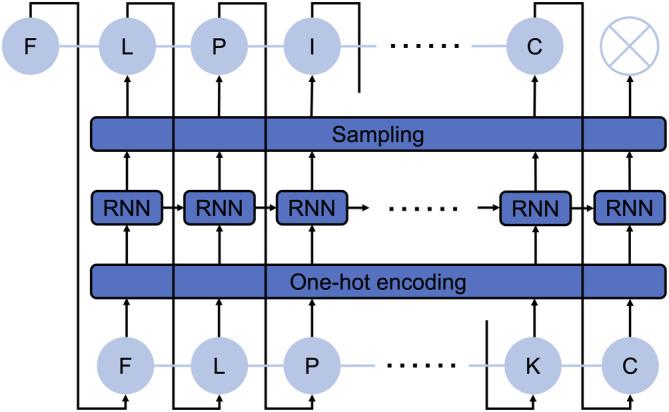
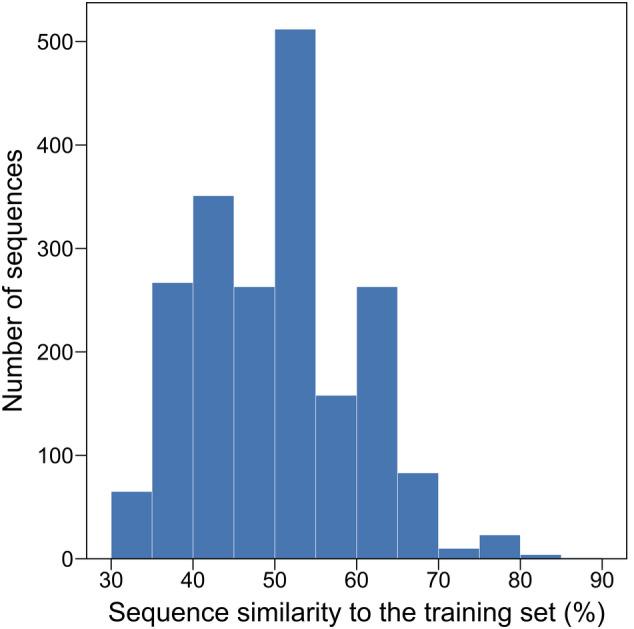
Antibiotic resistance is recognized as an imminent and growing global health threat. New antimicrobial drugs are urgently needed due to the decreasing effectiveness of conventional small-molecule antibiotics. Antimicrobial peptides (AMPs), a class of host defense peptides, are emerging as promising candidates to address this need. The potential sequence space of amino acids is combinatorially vast, making it possible to extend the current arsenal of antimicrobial agents with a practically infinite number of new peptide-based candidates. However, mining naturally occurring AMPs, whether directly by wet lab screening methods or aided by bioinformatics prediction tools, has its theoretical limit regarding the number of samples or genomic/transcriptomic resources researchers have access to. Further, manually designing novel synthetic AMPs requires prior field knowledge, restricting its throughput. In silico sequence generation methods are gaining interest as a high-throughput solution to the problem. Here, we introduce AMPd-Up, a recurrent neural network based tool for de novo AMP design, and demonstrate its utility over existing methods. Validation of candidates designed by AMPd-Up through antimicrobial susceptibility testing revealed that 40 of the 58 generated sequences possessed antimicrobial activity against Escherichia coli and/or Staphylococcus aureus. These results illustrate that AMPd-Up can be used to design novel synthetic AMPs with potent activities.
抗生素耐药性被认为是当前日益严重的全球健康威胁。由于传统小分子抗生素的疗效逐渐降低,我们迫切需要新的抗菌药物。抗菌肽 (AMPs) 作为宿主防御肽的一类,正成为满足这一需求的有希望的候选药物。氨基酸的潜在序列空间组合非常庞大,使得我们有可能通过几乎无限数量的新型基于肽的候选药物来扩展当前的抗菌药物库。然而,无论是通过湿实验室筛选方法还是借助生物信息学预测工具,直接挖掘天然存在的 AMPs,都受到研究人员可获得的样本数量或基因组/转录组资源的理论限制。此外,人工设计新型合成 AMP 需要先验领域知识,限制了其通量。基于计算机的序列生成方法作为一种高通量解决方案,正引起人们的兴趣。在这里,我们介绍了 AMPd-Up,这是一种基于递归神经网络的从头设计抗菌肽的工具,并展示了其相对于现有方法的优势。通过抗菌敏感性测试对 AMPd-Up 设计的候选物进行验证,结果表明,在生成的 58 个序列中,有 40 个对大肠杆菌和/或金黄色葡萄球菌具有抗菌活性。这些结果表明,AMPd-Up 可用于设计具有强大活性的新型合成 AMP。


 Zotero 插件