
利用基于流动性的空间抽样优化新发感染的检测。
Optimizing the detection of emerging infections using mobility-based spatial sampling.
作者信息
Zhang Die, Ge Yong, Wang Jianghao, Liu Haiyan, Zhang Wen-Bin, Wu Xilin, B M Heuvelink Gerard, Wu Chaoyang, Yang Juan, Ruktanonchai Nick W, Qader Sarchil H, Ruktanonchai Corrine W, Cleary Eimear, Yao Yongcheng, Liu Jian, Nnanatu Chibuzor C, Wesolowski Amy, Cummings Derek A T, Tatem Andrew J, Lai Shengjie
机构信息
School of Geography and Environment, Jiangxi Normal University, Nanchang, China.
State Key Laboratory of Resources and Environmental Information System, Institute of Geographic Sciences & Natural Resources Research, Chinese Academy of Sciences, Beijing, China.
出版信息
Int J Appl Earth Obs Geoinf. 2024 Jul;131:103949. doi: 10.1016/j.jag.2024.103949.
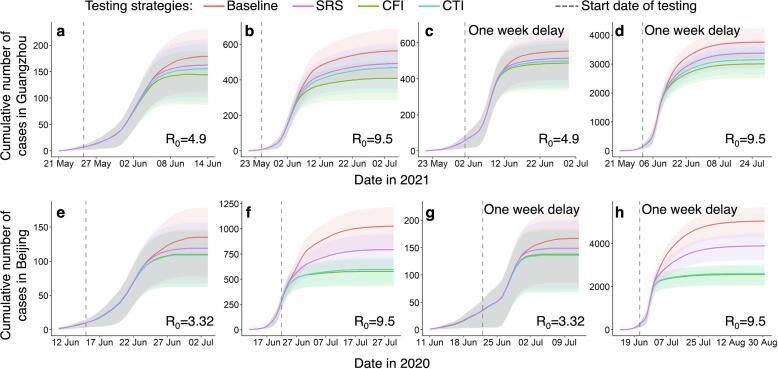
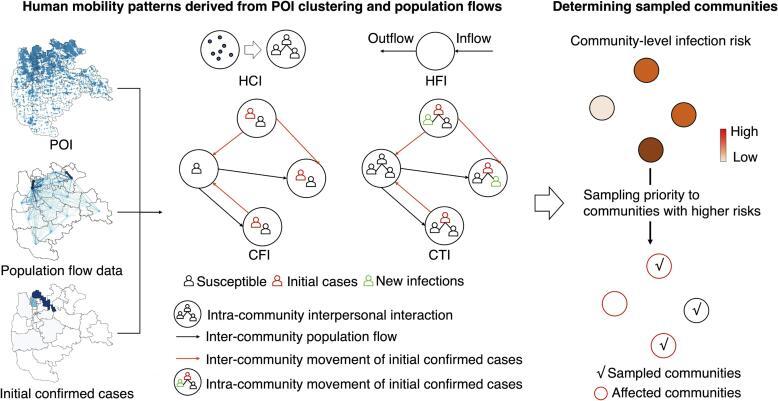
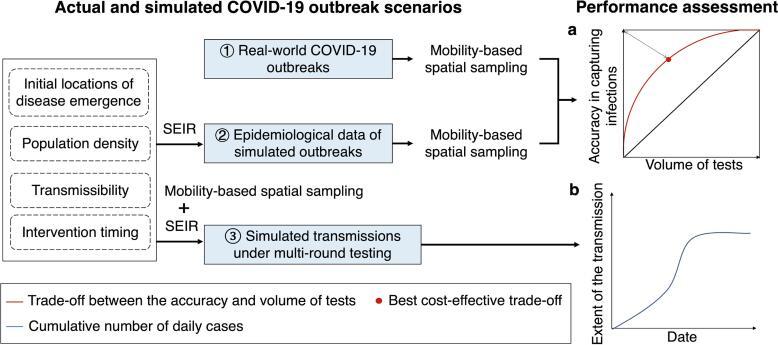
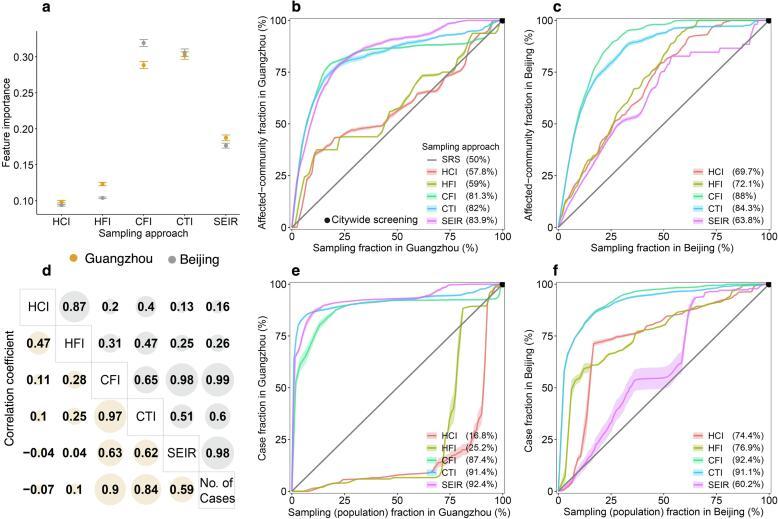
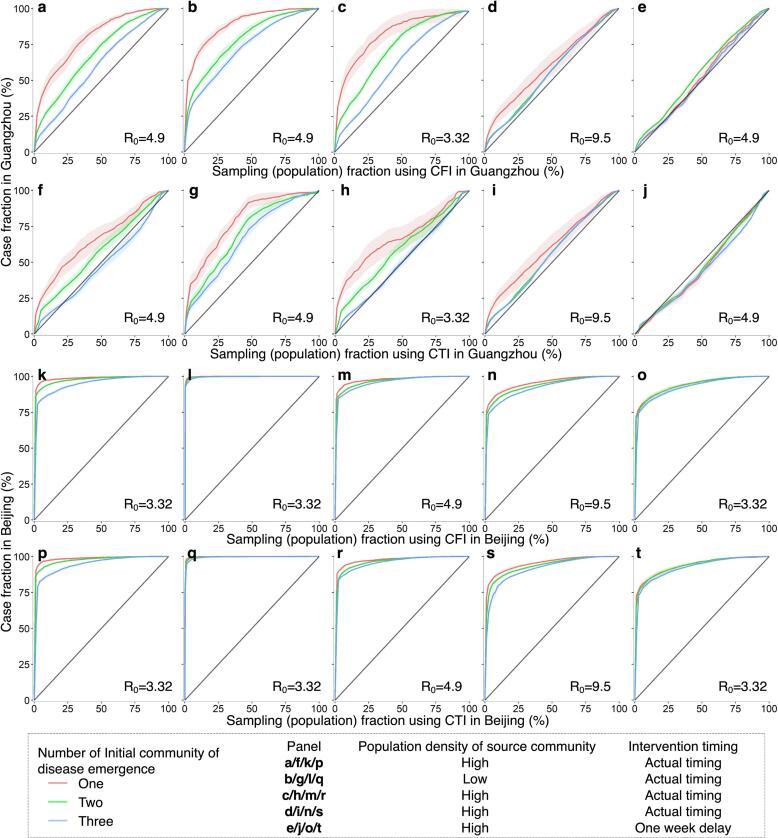
Timely and precise detection of emerging infections is imperative for effective outbreak management and disease control. Human mobility significantly influences the spatial transmission dynamics of infectious diseases. Spatial sampling, integrating the spatial structure of the target, holds promise as an approach for testing allocation in detecting infections, and leveraging information on individuals' movement and contact behavior can enhance targeting precision. This study introduces a spatial sampling framework informed by spatiotemporal analysis of human mobility data, aiming to optimize the allocation of testing resources for detecting emerging infections. Mobility patterns, derived from clustering point-of-interest and travel data, are integrated into four spatial sampling approaches at the community level. We evaluate the proposed mobility-based spatial sampling by analyzing both actual and simulated outbreaks, considering scenarios of transmissibility, intervention timing, and population density in cities. Results indicate that leveraging inter-community movement data and initial case locations, the proposed Case Flow Intensity (CFI) and Case Transmission Intensity (CTI)-informed spatial sampling enhances community-level testing efficiency by reducing the number of individuals screened while maintaining a high accuracy rate in infection identification. Furthermore, the prompt application of CFI and CTI within cities is crucial for effective detection, especially in highly contagious infections within densely populated areas. With the widespread use of human mobility data for infectious disease responses, the proposed theoretical framework extends spatiotemporal data analysis of mobility patterns into spatial sampling, providing a cost-effective solution to optimize testing resource deployment for containing emerging infectious diseases.
及时、准确地检测新出现的感染对于有效的疫情管理和疾病控制至关重要。人员流动显著影响传染病的空间传播动态。整合目标空间结构的空间采样有望成为检测感染时检测资源分配的一种方法,利用个人移动和接触行为的信息可以提高靶向精度。本研究引入了一个基于人类移动数据时空分析的空间采样框架,旨在优化检测新出现感染的检测资源分配。从兴趣点和出行数据聚类得出的移动模式被整合到社区层面的四种空间采样方法中。我们通过分析实际和模拟疫情,考虑城市中的传播性、干预时机和人口密度等情景,评估所提出的基于移动性的空间采样。结果表明,利用社区间移动数据和初始病例位置,所提出的基于病例流强度(CFI)和病例传播强度(CTI)的空间采样通过减少筛查个体数量提高了社区层面的检测效率,同时在感染识别中保持了较高的准确率。此外,在城市中迅速应用CFI和CTI对于有效检测至关重要,特别是在人口密集地区的高传染性感染中。随着人类移动数据在传染病应对中的广泛使用,所提出的理论框架将移动模式的时空数据分析扩展到空间采样,为优化检测资源部署以控制新出现的传染病提供了一种经济高效的解决方案。

 Zotero 插件