
调控细胞死亡的挑战:对癌症治疗抵抗的影响。
Challenges of Regulated Cell Death: Implications for Therapy Resistance in Cancer.
机构信息
Department of Pharmacy, Health and Nutritional Sciences, University of Calabria, 87036 Rende, Italy.
Health Center, University of Calabria, 87036 Rende, Italy.
出版信息
Cells. 2024 Jun 22;13(13):1083. doi: 10.3390/cells13131083.
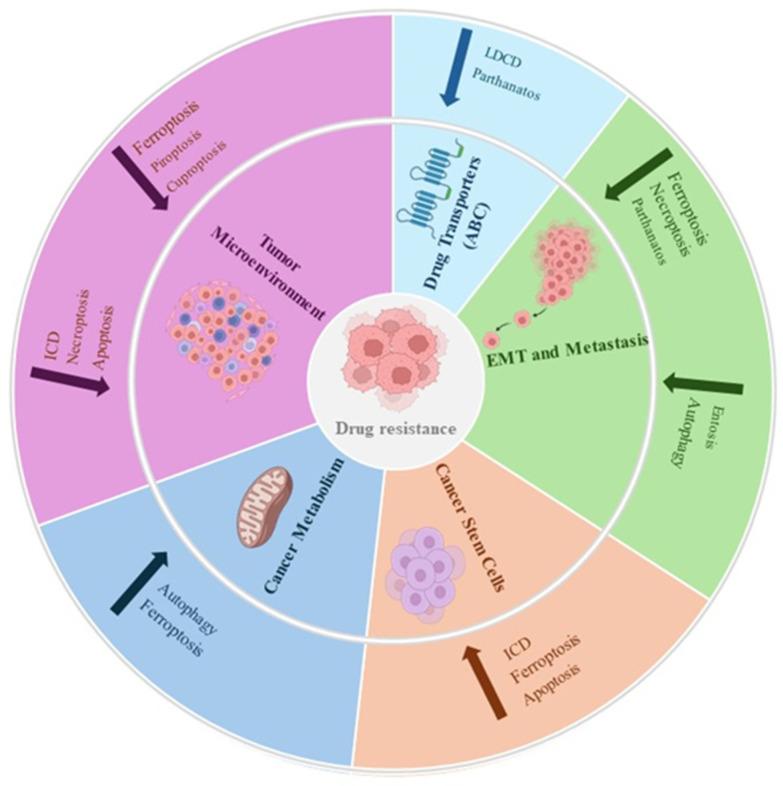
Regulated cell death, a regulatory form of cell demise, has been extensively studied in multicellular organisms. It plays a pivotal role in maintaining organismal homeostasis under normal and pathological conditions. Although alterations in various regulated cell death modes are hallmark features of tumorigenesis, they can have divergent effects on cancer cells. Consequently, there is a growing interest in targeting these mechanisms using small-molecule compounds for therapeutic purposes, with substantial progress observed across various human cancers. This review focuses on summarizing key signaling pathways associated with apoptotic and autophagy-dependent cell death. Additionally, it explores crucial pathways related to other regulated cell death modes in the context of cancer. The discussion delves into the current understanding of these processes and their implications in cancer treatment, aiming to illuminate novel strategies to combat therapy resistance and enhance overall cancer therapy.
程序性细胞死亡,作为一种细胞程序性死亡的调控形式,在多细胞生物中得到了广泛的研究。它在维持正常和病理条件下的机体稳态中起着关键作用。尽管各种程序性细胞死亡模式的改变是肿瘤发生的特征,但它们对癌细胞可能产生不同的影响。因此,人们越来越感兴趣的是使用小分子化合物针对这些机制进行治疗,在各种人类癌症中都取得了显著的进展。本综述重点总结了与细胞凋亡和自噬依赖性细胞死亡相关的关键信号通路。此外,还探讨了与癌症相关的其他程序性细胞死亡模式的关键途径。讨论深入探讨了这些过程的当前理解及其在癌症治疗中的意义,旨在阐明新的策略来对抗治疗耐药性并增强整体癌症治疗效果。

 Zotero 插件