
最后一个普遍共同祖先的性质及其对早期地球系统的影响。
The nature of the last universal common ancestor and its impact on the early Earth system.
机构信息
Bristol Palaeobiology Group, School of Earth Sciences, University of Bristol, Bristol, UK.
Department of Marine Microbiology and Biogeochemistry, NIOZ, Royal Netherlands Institute for Sea Research, Den Burg, The Netherlands.
出版信息
Nat Ecol Evol. 2024 Sep;8(9):1654-1666. doi: 10.1038/s41559-024-02461-1. Epub 2024 Jul 12.
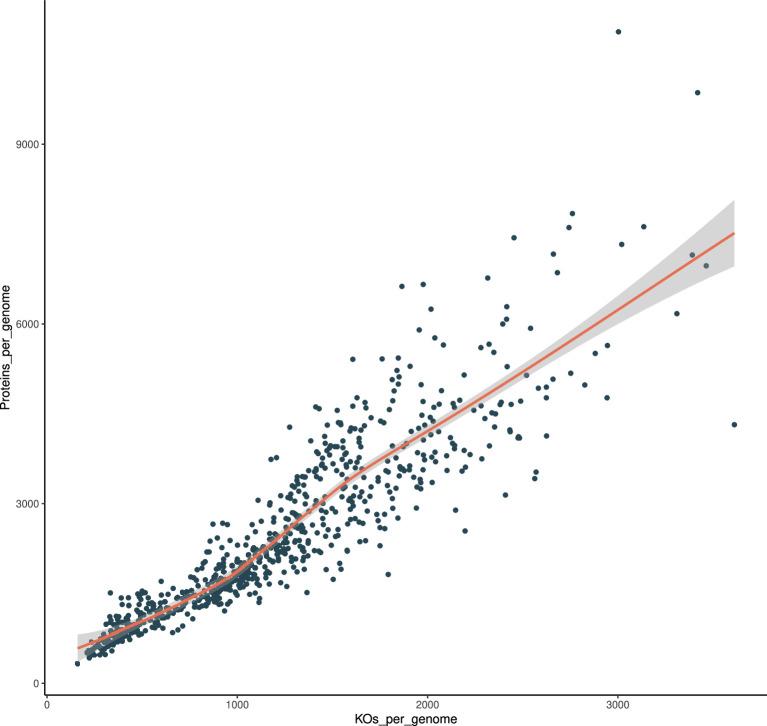
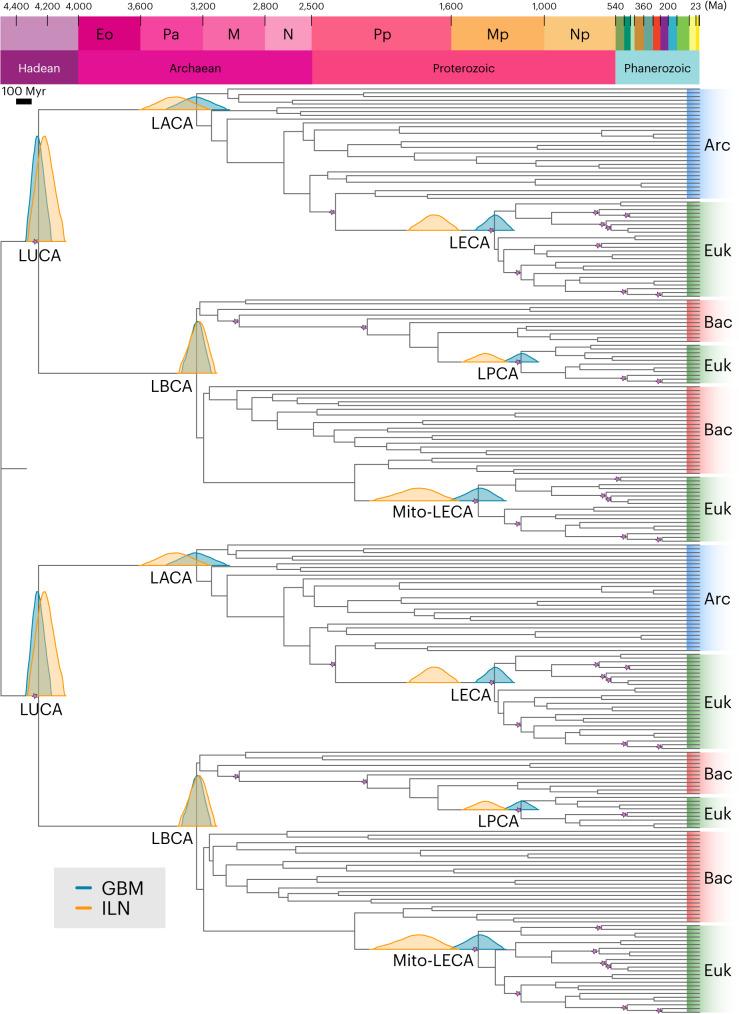
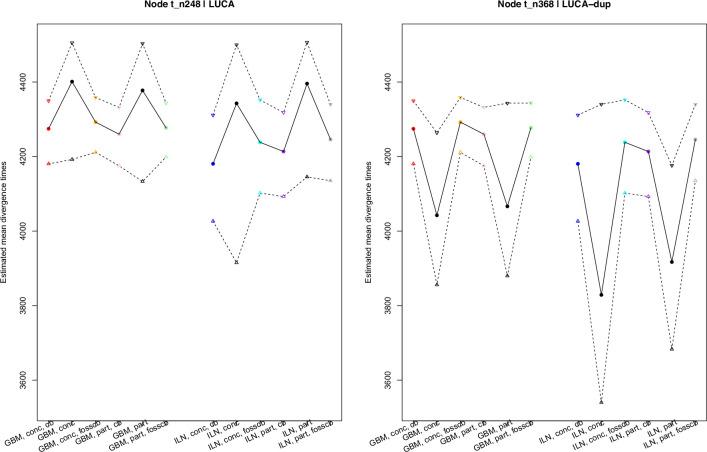
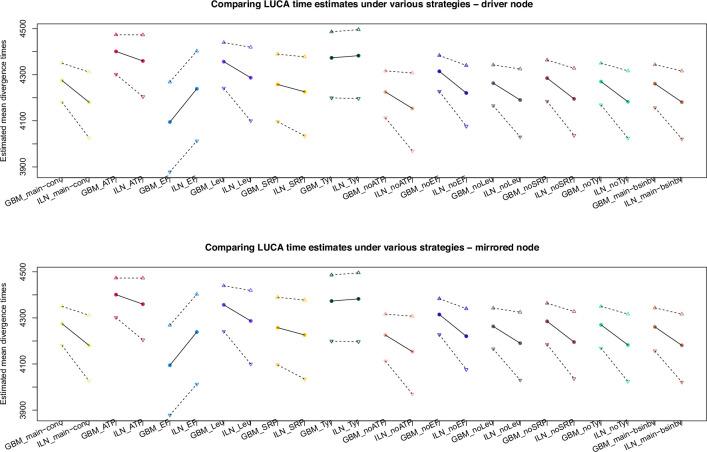
The nature of the last universal common ancestor (LUCA), its age and its impact on the Earth system have been the subject of vigorous debate across diverse disciplines, often based on disparate data and methods. Age estimates for LUCA are usually based on the fossil record, varying with every reinterpretation. The nature of LUCA's metabolism has proven equally contentious, with some attributing all core metabolisms to LUCA, whereas others reconstruct a simpler life form dependent on geochemistry. Here we infer that LUCA lived ~4.2 Ga (4.09-4.33 Ga) through divergence time analysis of pre-LUCA gene duplicates, calibrated using microbial fossils and isotope records under a new cross-bracing implementation. Phylogenetic reconciliation suggests that LUCA had a genome of at least 2.5 Mb (2.49-2.99 Mb), encoding around 2,600 proteins, comparable to modern prokaryotes. Our results suggest LUCA was a prokaryote-grade anaerobic acetogen that possessed an early immune system. Although LUCA is sometimes perceived as living in isolation, we infer LUCA to have been part of an established ecological system. The metabolism of LUCA would have provided a niche for other microbial community members and hydrogen recycling by atmospheric photochemistry could have supported a modestly productive early ecosystem.
最后一个普遍共同祖先 (LUCA) 的本质、年龄及其对地球系统的影响一直是不同学科激烈争论的主题,这些争论通常基于不同的数据和方法。LUCA 的年龄估计通常基于化石记录,每次重新解释都会有所不同。LUCA 的新陈代谢性质同样存在争议,一些人认为所有核心代谢都归因于 LUCA,而另一些人则重建了一种依赖地球化学的更简单的生命形式。在这里,我们通过使用微生物化石和同位素记录对前 LUCA 基因重复进行分歧时间分析,并在新的交叉支撑实现下进行校准,推断 LUCA 生活在 42 亿年前(4.09-4.33 Ga)。系统发育协调表明,LUCA 的基因组至少为 2.5 Mb(2.49-2.99 Mb),编码约 2600 种蛋白质,与现代原核生物相当。我们的结果表明,LUCA 是一种原核生物级别的厌氧乙酰菌,具有早期免疫系统。尽管 LUCA 有时被认为是孤立存在的,但我们推断 LUCA 是一个既定生态系统的一部分。LUCA 的新陈代谢为其他微生物群落成员提供了一个小生境,而大气光化学的氢气回收可以支持一个适度有生产力的早期生态系统。




 Zotero 插件