
短链脂肪酸在炎症和身体健康中的作用。
The Role of Short Chain Fatty Acids in Inflammation and Body Health.
机构信息
Department of Pharmacology of Chinese Materia Medica, School of Chinese Materia Medica, Beijing University of Chinese Medicine, Beijing 102488, China.
College of Life Sciences, Beijing University of Chinese Medicine, Beijing 102488, China.
出版信息
Int J Mol Sci. 2024 Jul 5;25(13):7379. doi: 10.3390/ijms25137379.
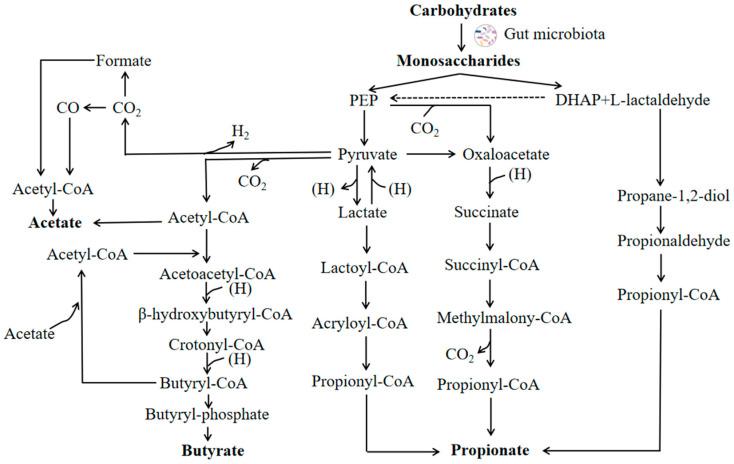
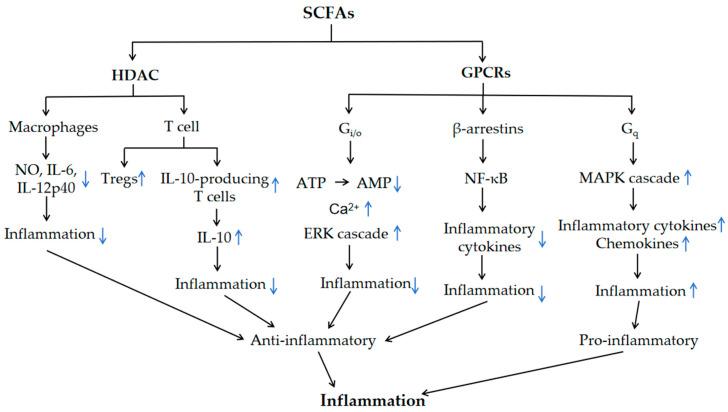
Short chain fatty acids (SCFAs), mainly including acetate, propionate and butyrate, are produced by intestinal bacteria during the fermentation of partially digested and indigestible polysaccharides. SCFAs play an important role in regulating intestinal energy metabolism and maintaining the homeostasis of the intestinal environment and also play an important regulatory role in organs and tissues outside the gut. In recent years, many studies have shown that SCFAs can regulate inflammation and affect host health, and two main signaling mechanisms have also been identified: the activation of G-protein coupled receptors (GPCRs) and inhibition of histone deacetylase (HDAC). In addition, a growing body of evidence highlights the importance of every SCFA in influencing health maintenance and disease development. In this review, we summarized the recent advances concerning the biological properties of SCFAs and their signaling pathways in inflammation and body health. Hopefully, it can provide a systematic theoretical basis for the nutritional prevention and treatment of human diseases.
短链脂肪酸(SCFAs)主要包括乙酸、丙酸和丁酸,是肠道细菌在部分消化和不可消化的多糖发酵过程中产生的。SCFAs 在调节肠道能量代谢和维持肠道环境平衡方面发挥着重要作用,对肠道外的器官和组织也起着重要的调节作用。近年来,大量研究表明,SCFAs 可以调节炎症,影响宿主健康,并且已经确定了两种主要的信号机制:G 蛋白偶联受体(GPCR)的激活和组蛋白去乙酰化酶(HDAC)的抑制。此外,越来越多的证据强调了每种 SCFA 对维持健康和疾病发展的重要性。在这篇综述中,我们总结了 SCFAs 的生物学特性及其在炎症和身体健康中的信号通路的最新进展。希望它能为人类疾病的营养预防和治疗提供系统的理论基础。

 Zotero 插件