
杜氏肌营养不良症的呼吸功能表现:临床表现和动物模型的启示。
Respiratory performance in Duchenne muscular dystrophy: Clinical manifestations and lessons from animal models.
机构信息
Department of Physiology, University College Cork, Cork, Ireland.
出版信息
Exp Physiol. 2024 Sep;109(9):1426-1445. doi: 10.1113/EP091967. Epub 2024 Jul 18.
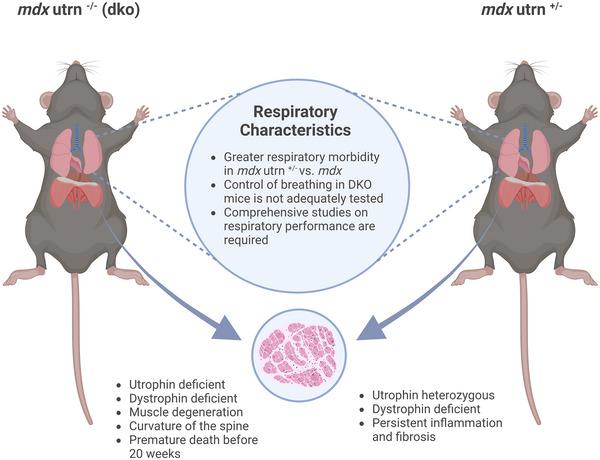
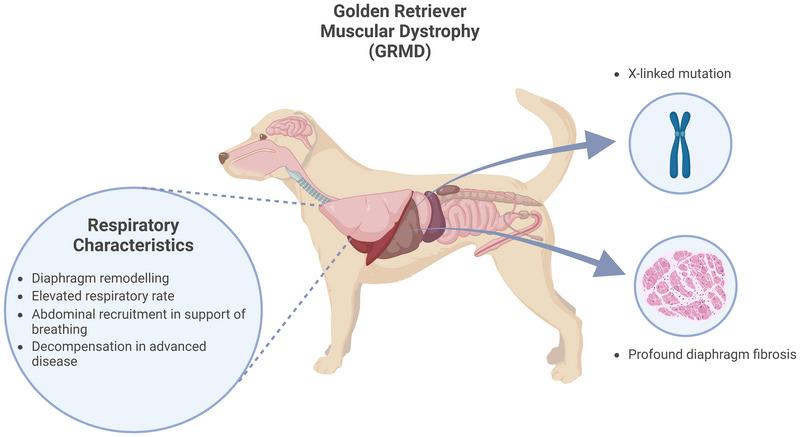
Duchenne muscular dystrophy (DMD) is a fatal genetic neuromuscular disease. Lack of dystrophin in skeletal muscles leads to intrinsic weakness, injury, subsequent degeneration and fibrosis, decreasing contractile function. Dystropathology eventually presents in all inspiratory and expiratory muscles of breathing, severely curtailing their critical function. In people with DMD, premature death is caused by respiratory or cardiac failure. There is an urgent need to develop therapies that improve quality of life and extend life expectancy in DMD. Surprisingly, there is a dearth of information on respiratory control in animal models of DMD, and respiratory outcome measures are often limited or absent in clinical trials. Characterization of respiratory performance in murine and canine models has revealed extensive remodelling of the diaphragm, the major muscle of inspiration. However, significant compensation by extradiaphragmatic muscles of breathing is evident in early disease, contributing to preservation of peak respiratory system performance. Loss of compensation afforded by accessory muscles in advanced disease is ultimately associated with compromised respiratory performance. A new and potentially more translatable murine model of DMD, the D2.mdx mouse, has recently been developed. Respiratory performance in D2.mdx mice is yet to be characterized fully. However, based on histopathological features, D2.mdx mice might serve as useful preclinical models, facilitating the testing of new therapeutics that rescue respiratory function. This review summarizes the pathophysiological mechanisms associated with DMD both in humans and in animal models, with a focus on breathing. We consider the translational value of each model to human DMD and highlight the urgent need for comprehensive characterization of breathing in representative preclinical models to better inform human trials.
杜氏肌营养不良症(DMD)是一种致命的遗传性神经肌肉疾病。骨骼肌中缺乏肌营养不良蛋白会导致内在的虚弱、损伤、随后的退化和纤维化,从而降低收缩功能。最终,呼吸肌病理学会出现在所有吸气和呼气肌肉中,严重限制了它们的关键功能。在 DMD 患者中,呼吸或心力衰竭会导致过早死亡。迫切需要开发能够提高 DMD 患者生活质量和延长预期寿命的疗法。令人惊讶的是,DMD 动物模型中的呼吸控制信息匮乏,并且临床试验中的呼吸结局测量通常有限或缺失。对鼠和犬模型的呼吸性能进行的特征描述表明,膈肌(主要的吸气肌)发生了广泛的重塑。然而,在疾病早期,呼吸的胸外肌肉会出现显著代偿,从而保持峰值呼吸系统性能。在晚期疾病中,辅助呼吸肌提供的代偿丧失最终会导致呼吸性能受损。最近开发了一种新的、潜在更具转化性的 DMD 鼠模型,即 D2.mdx 鼠。D2.mdx 鼠的呼吸性能尚未完全得到描述。然而,基于组织病理学特征,D2.mdx 鼠可能作为有用的临床前模型,有助于测试挽救呼吸功能的新疗法。这篇综述总结了人类和动物模型中与 DMD 相关的病理生理机制,重点是呼吸。我们考虑了每个模型对人类 DMD 的转化价值,并强调了全面描述代表性临床前模型的呼吸功能的迫切需要,以便更好地为人类试验提供信息。


 Zotero 插件