
切尔诺贝利灾难后污染最严重地区的甲状腺癌
Thyroid Cancer in Regions Most Contaminated after the Chernobyl Disaster.
作者信息
Janiak Marek K, Kamiński Grzegorz
机构信息
Professor Emeritus, Former Head of the Department of Radiobiology and Radiation Protection, Military Institute of Hygiene and Epidemiology, Warsaw, Poland.
Head of the Department of Endocrinology and Radioisotope Therapy, Military Institute of Medicine, Warsaw, Poland.
出版信息
J Biomed Phys Eng. 2024 Jun 1;14(3):299-308. doi: 10.31661/jbpe.v0i0.2402-1722. eCollection 2024 Jun.
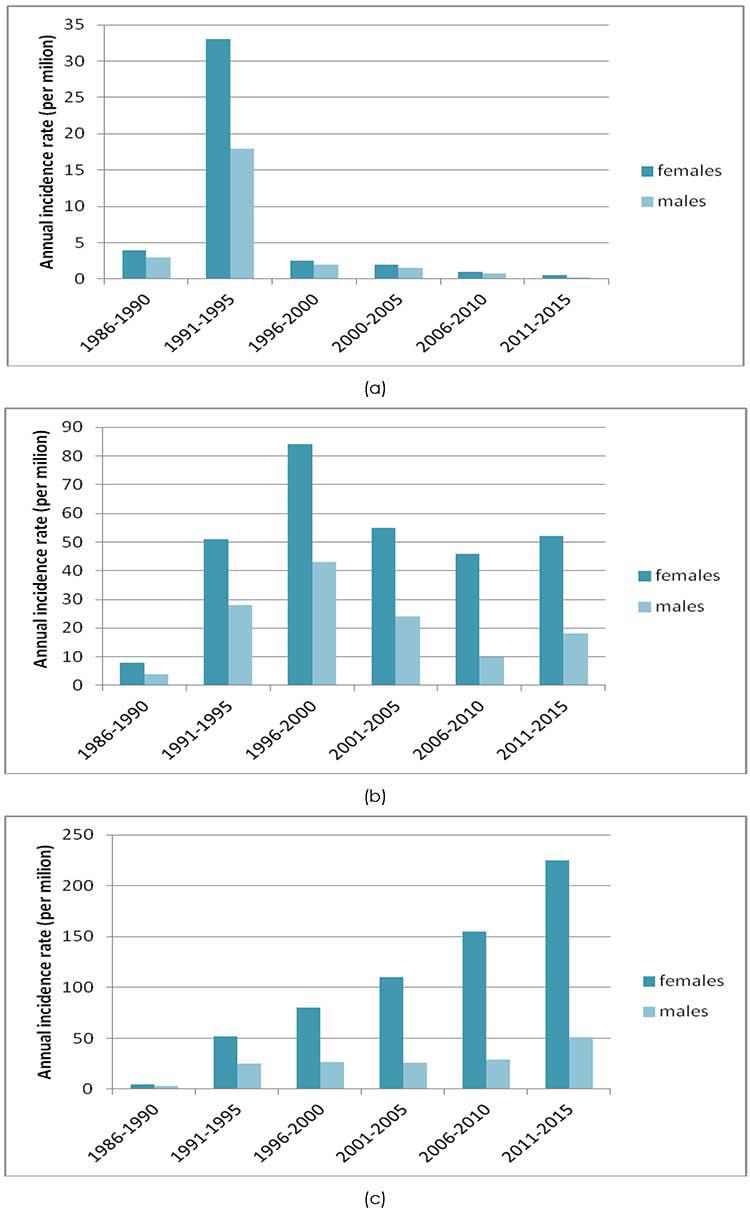
Exposure to ionizing radiation, especially during childhood, is a well-established risk factor for thyroid cancer. Following the 1986 Chernobyl nuclear power plant accident the total number of cases of thyroid cancer registered between 1991 and 2015 in males and females who were less than 18 years old exceeded 19,000 (in Belarus and Ukraine, and in the most contaminated oblasts of the Russian Federation). However, as indicated by the United Nations Scientific Committee on the Effects of Atomic Radiation the fraction of the incidence of thyroid cancer attributable to radiation exposure among the non-evacuated residents of the contaminated regions of Belarus, Ukraine and Russia is of the order of 0.25. Apparently, the increased registration of thyroid neoplasms in the parts of these countries is a classical 'screening effect', i.e., massive diagnostic examinations of the risk-aware populations performed with modern eqipment resulting in detection of many occult neoplasms (incidentalomas). Moreover, one type of thyroid cancer previously called 'encapsulated follicular variant of papillary thyroid carcinoma' is non-invasive and instead of 'carcinoma' should now be recognized as 'noninvasive follicular thyroid neoplasm with papillary-like nuclear features.' Other potential causes of overdiagnosing of thyroid tumors include increase of the spontaneous incidence rate of this disease with age, iodine deficiency among children from Belarus, Russia and Ukraine, and/or consumption by these children of drinking water containing high levels of nitrates that likely coincides with the carcinogenic effect of radiation on the thyroid gland.
暴露于电离辐射,尤其是在儿童时期,是甲状腺癌公认的危险因素。1986年切尔诺贝利核电站事故后,1991年至2015年间登记的18岁以下男性和女性甲状腺癌病例总数超过19000例(在白俄罗斯、乌克兰以及俄罗斯联邦污染最严重的州)。然而,正如联合国原子辐射影响科学委员会所指出的,在白俄罗斯、乌克兰和俄罗斯受污染地区未撤离居民中,归因于辐射暴露的甲状腺癌发病率所占比例约为0.25。显然,这些国家部分地区甲状腺肿瘤登记数量的增加是典型的“筛查效应”,即使用现代设备对有风险意识的人群进行大规模诊断检查,从而发现许多隐匿性肿瘤(偶发瘤)。此外,一种以前称为“甲状腺乳头状癌的包膜滤泡变体”的甲状腺癌是非侵袭性的,现在不应再称为“癌”,而应确认为“具有乳头状核特征的非侵袭性滤泡性甲状腺肿瘤”。甲状腺肿瘤过度诊断的其他潜在原因包括该疾病的自发发病率随年龄增长而增加、白俄罗斯、俄罗斯和乌克兰儿童碘缺乏,和/或这些儿童饮用含有高浓度硝酸盐的水,这可能与辐射对甲状腺的致癌作用同时发生。
 Zotero 插件