
miR-200s 的过表达抑制了小鼠卵巢癌细胞的增殖和侵袭,同时增加了细胞凋亡。
Overexpression of miR-200s inhibits proliferation and invasion while increasing apoptosis in murine ovarian cancer cells.
机构信息
Department of Biomedical Sciences, Ontario Veterinary College, University of Guelph, Guelph, ON, Canada.
出版信息
PLoS One. 2024 Jul 19;19(7):e0307178. doi: 10.1371/journal.pone.0307178. eCollection 2024.
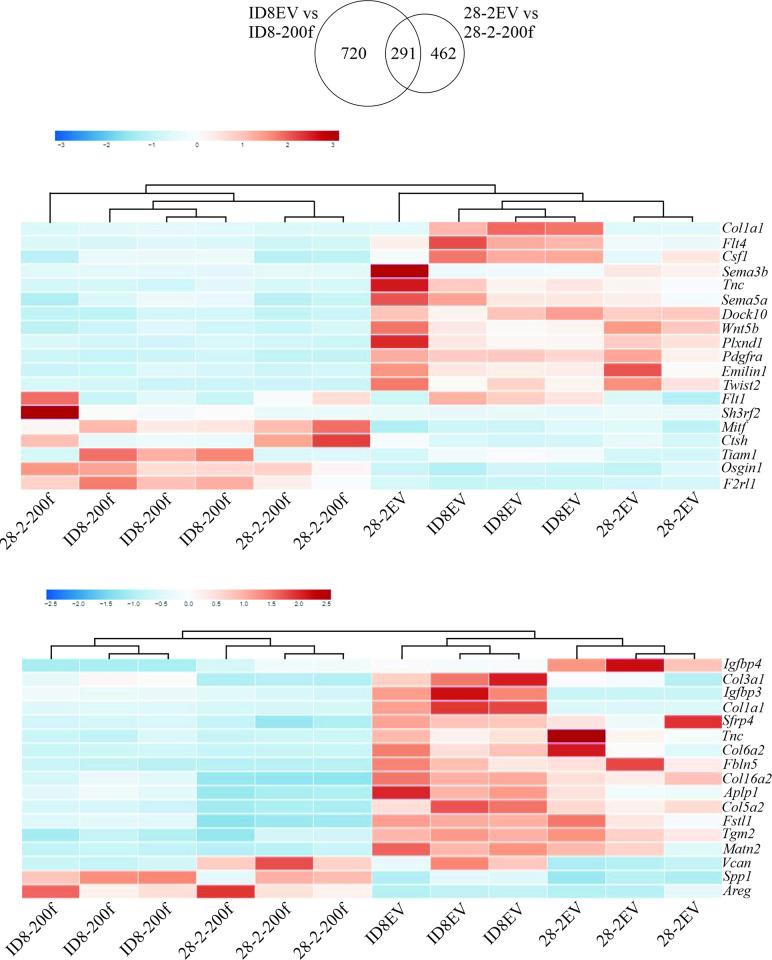
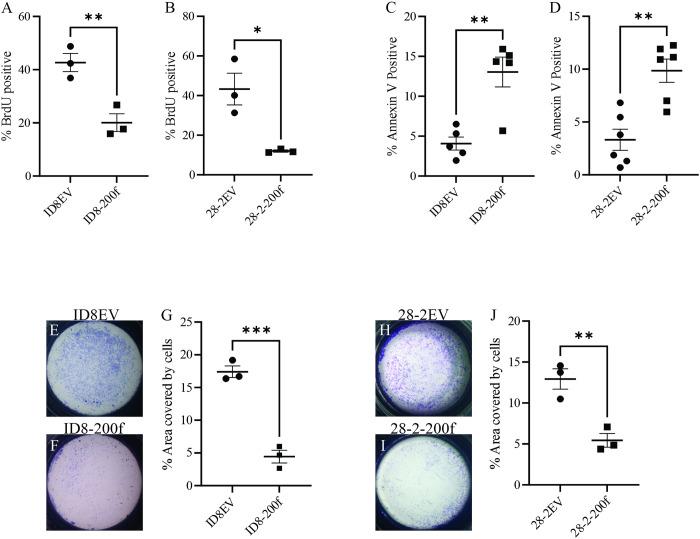
Women diagnosed with ovarian cancer frequently have a poor prognosis as their cancer is often diagnosed at more advanced stages when the cancer has metastasized. At this point surgery cannot remove all the tumor cells and while ovarian cancer cells often initially respond to chemotherapeutic agents like carboplatin and paclitaxel, resistance to these agents frequently occurs. Thus, novel therapies are required for the treatment of advanced stage ovarian cancer. One therapeutic option being explored is the regulation of non-coding RNAs such as microRNAs. An advantage of microRNAs is that they can regulate tens, hundreds and sometimes thousands of mRNAs in cells and thus may be more effective than chemotherapeutic agents or targeted therapies. To investigate the therapeutic potential of miR-200s in ovarian cancer, lentiviral vectors were used to overexpress both miR-200 clusters in two murine ovarian cancer cell lines, ID8 and 28-2. Overexpression of miR-200s reduced the expression of several mesenchymal genes and proteins, significantly inhibited proliferation as assessed by BrdU flow cytometry and significantly reduced invasion through Matrigel coated transwell inserts in both cell lines. Overexpression of miR-200s also increased basal apoptosis approximately 3-fold in both cell lines as determined by annexin V flow cytometry. Pathway analysis of RNA sequencing of control and miR-200 overexpressing ovarian cancer cells revealed that genes regulated by miR-200s were involved in processes like epithelial mesenchymal transition (EMT) and cell migration. Therefore, miR-200s can inhibit proliferation and increase apoptosis while suppressing tumor cell invasion and thus simultaneously target three key cancer pathways.
女性诊断为卵巢癌往往预后不良,因为她们的癌症通常在更晚期诊断,此时癌症已经转移。此时,手术无法去除所有肿瘤细胞,虽然卵巢癌细胞最初通常对顺铂和紫杉醇等化疗药物有反应,但对这些药物的耐药性经常发生。因此,需要新的治疗方法来治疗晚期卵巢癌。正在探索的一种治疗选择是调节非编码 RNA,如 microRNAs。microRNAs 的一个优点是它们可以调节细胞中数十、数百甚至数千个 mRNA,因此可能比化疗药物或靶向治疗更有效。为了研究 miR-200s 在卵巢癌中的治疗潜力,使用慢病毒载体在两种鼠源性卵巢癌细胞系 ID8 和 28-2 中过表达 miR-200 簇。miR-200s 的过表达降低了几个间质基因和蛋白的表达,显著抑制了 BrdU 流式细胞术评估的增殖,并显著抑制了两种细胞系中穿过 Matrigel 包被的 Transwell 插入物的侵袭。miR-200s 的过表达还使两种细胞系中的基础凋亡增加了约 3 倍,如通过流式细胞术检测 Annexin V 确定的。对照和 miR-200 过表达卵巢癌细胞的 RNA 测序的通路分析表明,miR-200 调节的基因参与上皮间质转化 (EMT) 和细胞迁移等过程。因此,miR-200s 可以抑制增殖并增加凋亡,同时抑制肿瘤细胞侵袭,从而同时针对三个关键的癌症途径。


 Zotero 插件