
奥希替尼新辅助治疗 I 期-IIIA 期表皮生长因子受体突变型非小细胞肺癌:一项多中心 II 期研究。
Neoadjuvant Osimertinib for the Treatment of Stage I-IIIA Epidermal Growth Factor Receptor-Mutated Non-Small Cell Lung Cancer: A Phase II Multicenter Study.
机构信息
Department of Medicine, University of California, San Francisco, San Francisco, CA.
Helen Diller Family Comprehensive Cancer Center, University of California, San Francisco, San Francisco, CA.
出版信息
J Clin Oncol. 2024 Sep 10;42(26):3105-3114. doi: 10.1200/JCO.24.00071. Epub 2024 Jul 19.
PURPOSE
To assess the safety and efficacy of the third-generation epidermal growth factor receptor (EGFR) tyrosine kinase inhibitor osimertinib as neoadjuvant therapy in patients with surgically resectable stage I-IIIA -mutated non-small cell lung cancer (NSCLC).
PATIENTS AND METHODS
This was a multi-institutional phase II trial of neoadjuvant osimertinib for patients with surgically resectable stage I-IIIA (American Joint Committee on Cancer [AJCC] V7) -mutated (L858R or exon 19 deletion) NSCLC (ClinicalTrials.gov identifier: NCT03433469). Patients received osimertinib 80 mg orally once daily for up to two 28-day cycles before surgical resection. The primary end point was major pathological response (MPR) rate. Secondary safety and efficacy end points were also assessed. Exploratory end points included pretreatment and post-treatment tumor mutation profiling.
RESULTS
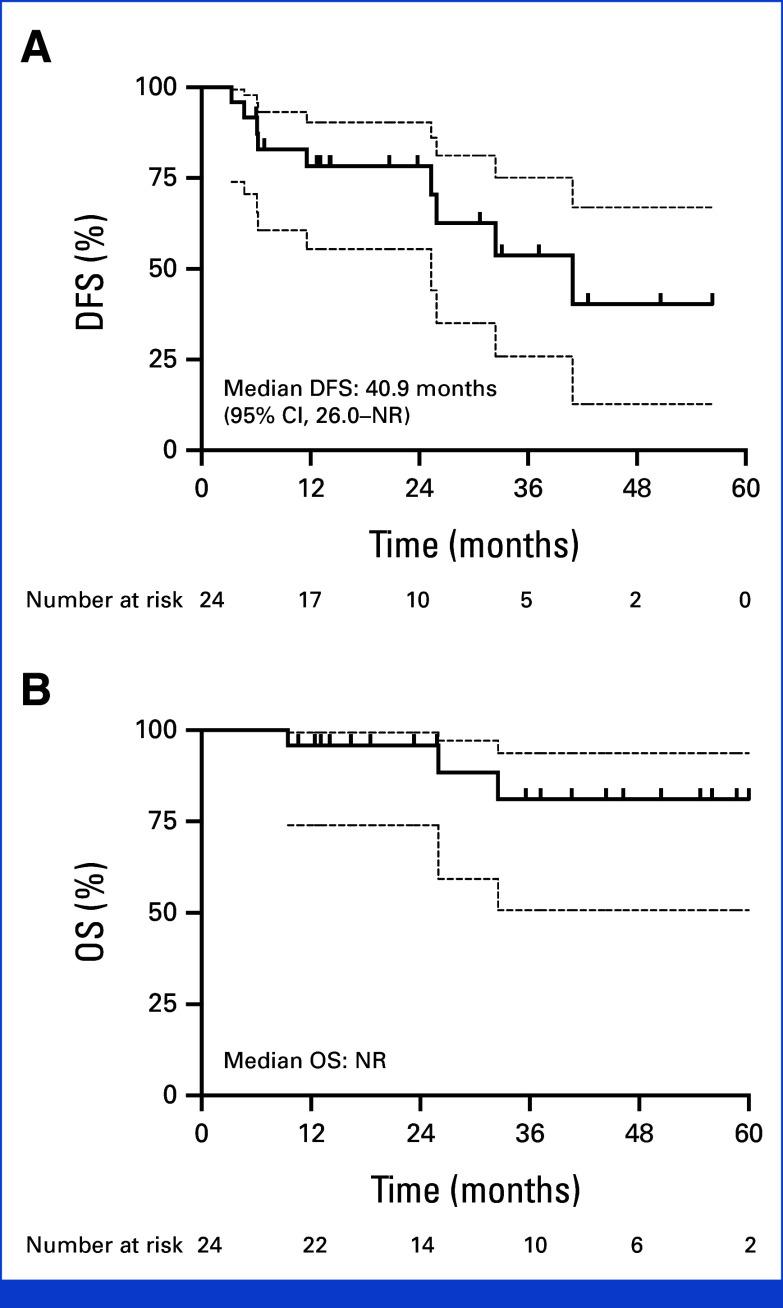
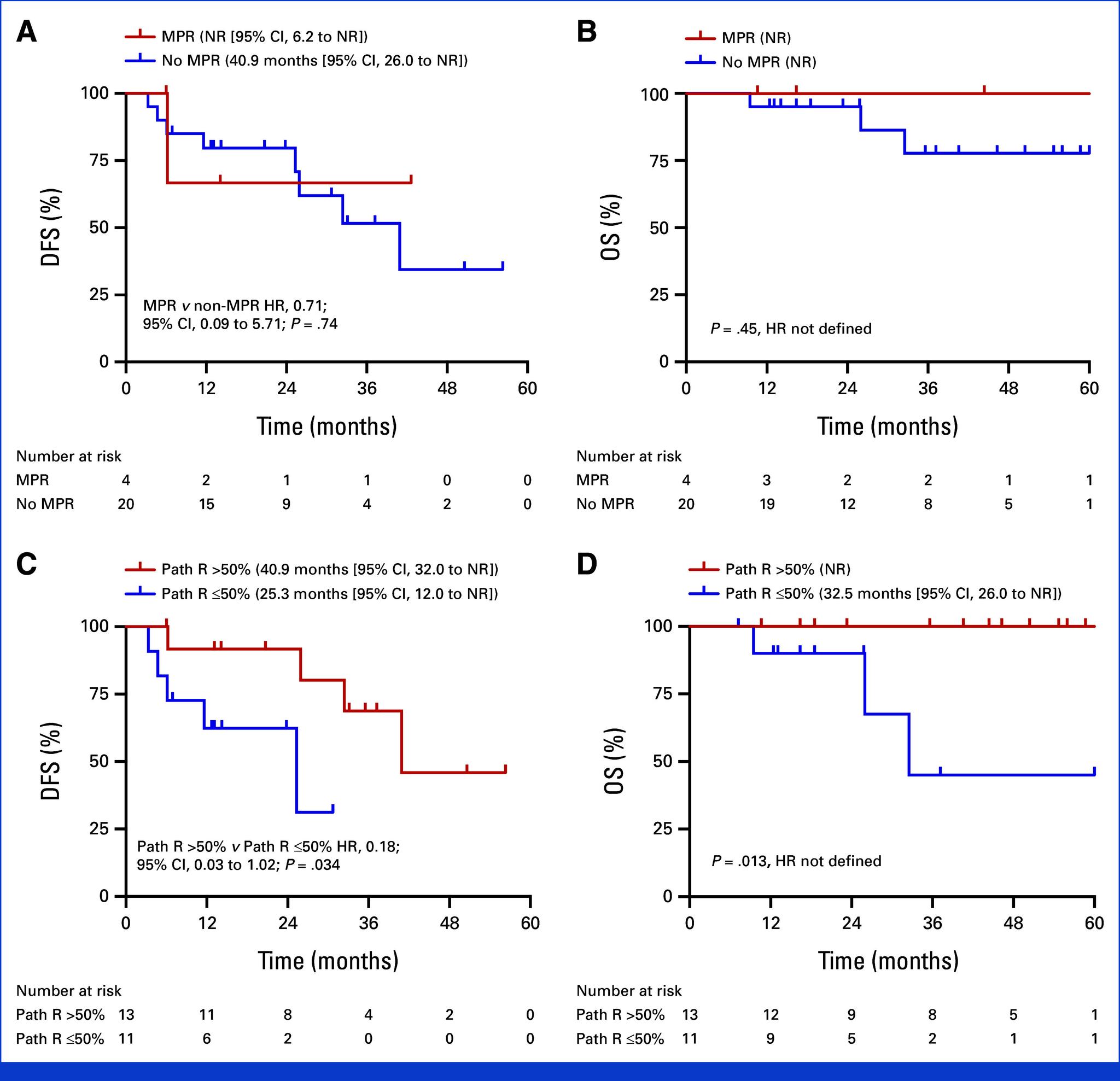
A total of 27 patients were enrolled and treated with neoadjuvant osimertinib for a median 56 days before surgical resection. Twenty-four (89%) patients underwent subsequent surgery; three (11%) patients were converted to definitive chemoradiotherapy. The MPR rate was 14.8% (95% CI, 4.2 to 33.7). No pathological complete responses were observed. The ORR was 52%, and the median DFS was 40.9 months. One treatment-related serious adverse event (AE) occurred (3.7%). No patients were unable to undergo surgical resection or had surgery delayed because of an AE. The most common co-occurring tumor genomic alterations were in (42%) and (21%).
CONCLUSION
Treatment with neoadjuvant osimertinib in surgically resectable (stage IA-IIIA, AJCC V7) -mutated NSCLC did not meet its primary end point for MPR rate. However, neoadjuvant osimertinib did not lead to unanticipated AEs, surgical delays, nor result in a significant unresectability rate.
目的
评估第三代表皮生长因子受体(EGFR)酪氨酸激酶抑制剂奥希替尼作为可手术切除的 I-IIIA 期 - 突变型非小细胞肺癌(NSCLC)新辅助治疗的安全性和有效性。
患者和方法
这是一项多中心、II 期奥希替尼新辅助治疗可手术切除的 I-IIIA(美国癌症联合委员会 [AJCC] V7) - 突变(L858R 或外显子 19 缺失)NSCLC 患者的临床试验(ClinicalTrials.gov 标识符:NCT03433469)。患者接受奥希替尼 80mg 口服,每日一次,最多两个 28 天周期,然后进行手术切除。主要终点是主要病理缓解(MPR)率。次要安全性和疗效终点也进行了评估。探索性终点包括治疗前和治疗后肿瘤突变分析。
结果
共纳入 27 例患者,接受奥希替尼新辅助治疗,中位数为 56 天,然后进行手术切除。24 例(89%)患者随后进行了手术;3 例(11%)患者转为确定性放化疗。MPR 率为 14.8%(95%CI,4.2 至 33.7)。未观察到病理完全缓解。ORR 为 52%,中位无进展生存期(DFS)为 40.9 个月。1 例治疗相关严重不良事件(AE)发生(3.7%)。无患者因 AE 而无法进行手术切除或手术延迟。最常见的合并肿瘤基因组改变发生在 (42%)和 (21%)。
结论
在可手术切除的(IA-IIIA 期,AJCC V7) - 突变型 NSCLC 中使用新辅助奥希替尼治疗未达到 MPR 率的主要终点。然而,新辅助奥希替尼并未导致意外的 AE、手术延迟,也未导致不可切除率显著增加。




 Zotero 插件