
葡萄渣作为一种新型功能成分:减轻赭曲霉毒素A的生物可及性并揭示细胞保护机制
Grape pomace as a novel functional ingredient: Mitigating ochratoxin A bioaccessibility and unraveling cytoprotective mechanisms .
作者信息
Mangiapelo Luciano, Frangiamone Massimo, Vila-Donat Pilar, Paşca Denisia, Ianni Federica, Cossignani Lina, Manyes Lara
机构信息
Department of Pharmaceutical Sciences, Section of Food Science and Nutrition, University of Perugia, 06123, Perugia, Italy.
Department of Biomedical Sciences, University of Lausanne, Rue du Bugnon, 1005, Lausanne, Switzerland.
出版信息
Curr Res Food Sci. 2024 Jun 25;9:100800. doi: 10.1016/j.crfs.2024.100800. eCollection 2024.
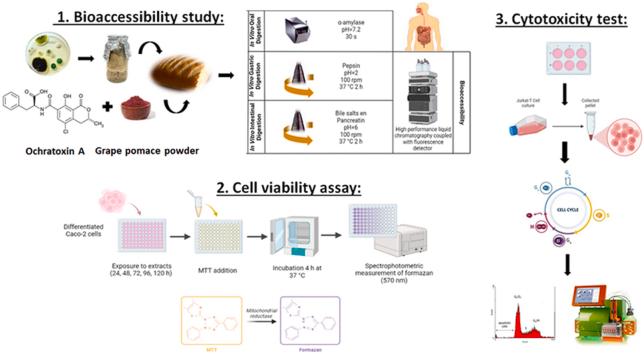
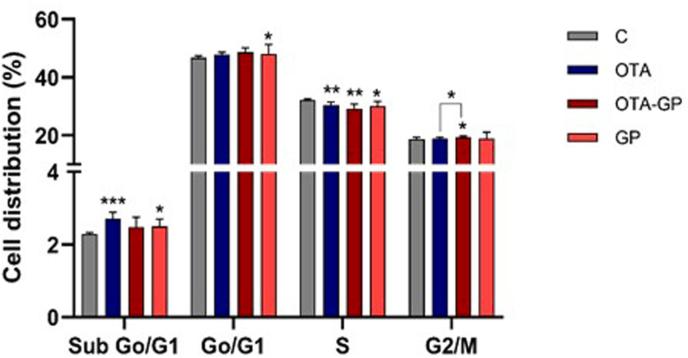
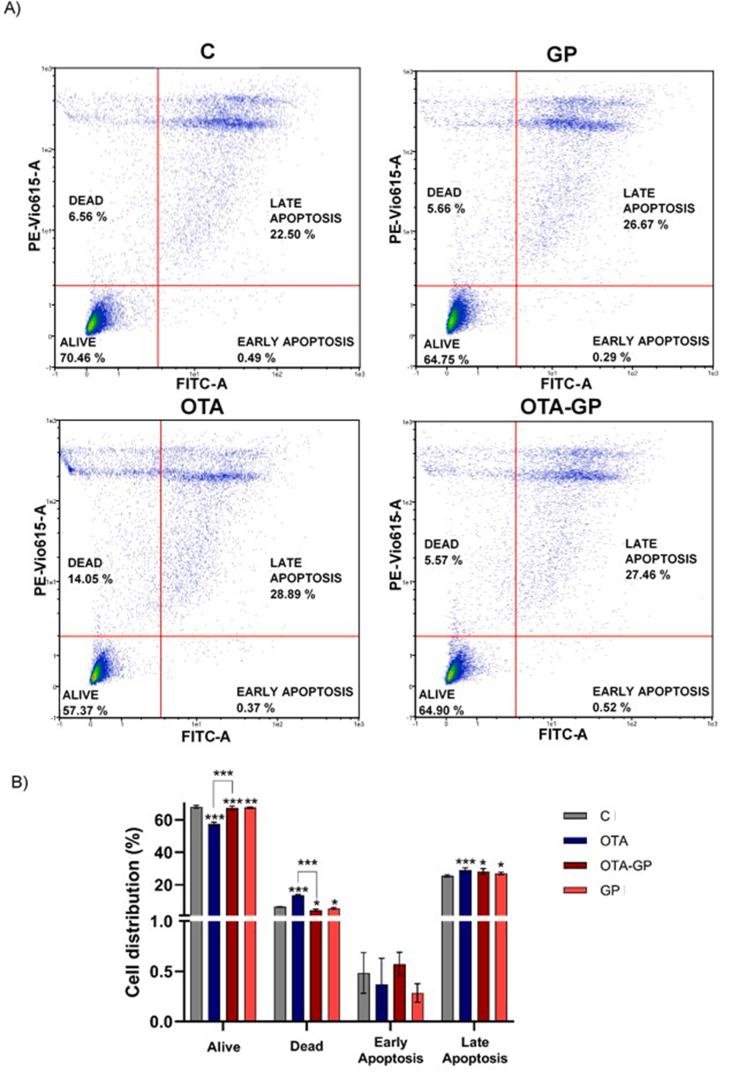
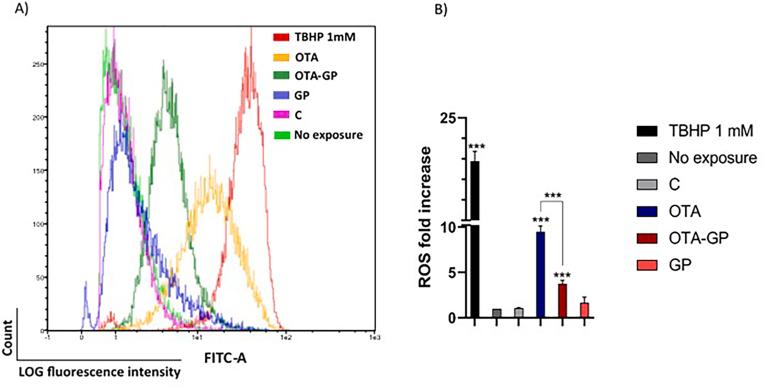
Mycotoxins, secondary metabolites produced by molds, pose significant health risk through contamination of globally consumed cereals. Ochratoxin A (OTA), a prevalent mycotoxin in cereals, is associated with various health hazards, including immunotoxicity. This study explores the bioaccessibility of OTA in bread and its impact on the gastrointestinal barrier. A focus is placed on grape pomace (GP), a by-product of the wine industry, as a potential mitigator of OTA toxicity. Results demonstrate that GP reduces OTA bioaccessibility in the human gastrointestinal system from 94% to 81% at intestinal level, showing promise in limiting the absorption of the harmful toxin. Additionally, GP exhibits cytoprotective effects, enhancing cell viability and mitigating OTA-induced toxicity in both Caco-2 and Jurkat T cells. In view of the above, to understand the mechanisms by which OTA exhibits its toxic effects, flow cytometry was chosen as the main technique for the analysis of cell cycle, reactive oxygen species levels and mitochondrial parameters. Cytofluorimetric evaluation indicates GP's potential in limiting OTA-induced damage at cellular level. The study suggests that GP could serve as functional ingredient to reduce mycotoxin bioaccessibility and toxicity in cereal-based foods, offering a novel and promising approach to enhance food safety and protect public health. The finding highlights the potential of utilizing grape pomace in food formulations to mitigate mycotoxin contamination, providing a valuable contribution to the ongoing efforts to ensure the safety of globally consumed cereal products.
霉菌产生的次级代谢产物——霉菌毒素,通过污染全球消费的谷物对健康构成重大风险。赭曲霉毒素A(OTA)是谷物中普遍存在的霉菌毒素,与包括免疫毒性在内的各种健康危害有关。本研究探讨了OTA在面包中的生物可及性及其对胃肠道屏障的影响。重点关注葡萄酒行业的副产品葡萄皮渣(GP),它是一种潜在的OTA毒性缓解剂。结果表明,GP可将人体胃肠道系统中OTA的生物可及性在肠道水平从94%降低到81%,在限制有害毒素的吸收方面显示出前景。此外,GP具有细胞保护作用,可提高Caco-2和Jurkat T细胞的细胞活力并减轻OTA诱导的毒性。鉴于上述情况,为了解OTA发挥其毒性作用的机制,选择流式细胞术作为分析细胞周期、活性氧水平和线粒体参数的主要技术。细胞荧光分析表明GP在细胞水平上限制OTA诱导损伤的潜力。该研究表明,GP可作为功能性成分来降低谷物类食品中霉菌毒素的生物可及性和毒性,为提高食品安全和保护公众健康提供了一种新颖且有前景的方法。这一发现突出了在食品配方中利用葡萄皮渣减轻霉菌毒素污染的潜力,为确保全球消费谷物产品安全的持续努力做出了宝贵贡献。




 Zotero 插件