
布瑞索西布治疗非囊性纤维化支气管扩张症:ASPEN方案及基线特征
Brensocatib in non-cystic fibrosis bronchiectasis: ASPEN protocol and baseline characteristics.
作者信息
Chalmers James D, Burgel Pierre-Régis, Daley Charles L, De Soyza Anthony, Haworth Charles S, Mauger David, Mange Kevin, Teper Ariel, Fernandez Carlos, Conroy Dan, Metersky Mark
机构信息
Division of Molecular and Clinical Medicine, University of Dundee, Dundee, UK.
Hôpital Cochin and Cystic Fibrosis National Reference Center, Service de Pneumologie, AP-HP and Université Paris-Cité, Inserm U1016-Institut Cochin, Paris, France.
出版信息
ERJ Open Res. 2024 Jul 22;10(4). doi: 10.1183/23120541.00151-2024. eCollection 2024 Jul.
INTRODUCTION
Brensocatib is an investigational, oral, reversible inhibitor of dipeptidyl peptidase-1 shown to prolong time to first exacerbation in adults with bronchiectasis. Outlined here are the clinical trial design, and baseline characteristics and treatment patterns of adult patients enrolled in the phase 3 ASPEN trial (NCT04594369).
METHODS
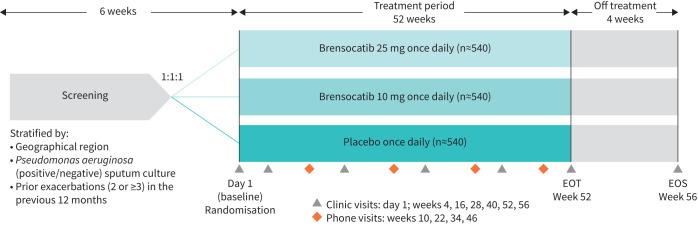
The ASPEN trial is a global study enrolling patients with a clinical history consistent with bronchiectasis (cough, chronic sputum production and/or recurrent respiratory infections), diagnosis confirmed radiologically and ≥2 exacerbations in the prior 12 months. It was designed to evaluate the impact of two brensocatib doses (10 mg and 25 mg) on exacerbation rate over a 52-week treatment period placebo. Comprehensive clinical data, including demographics, disease severity, lung function, status and quality of life, were collected at baseline.
RESULTS
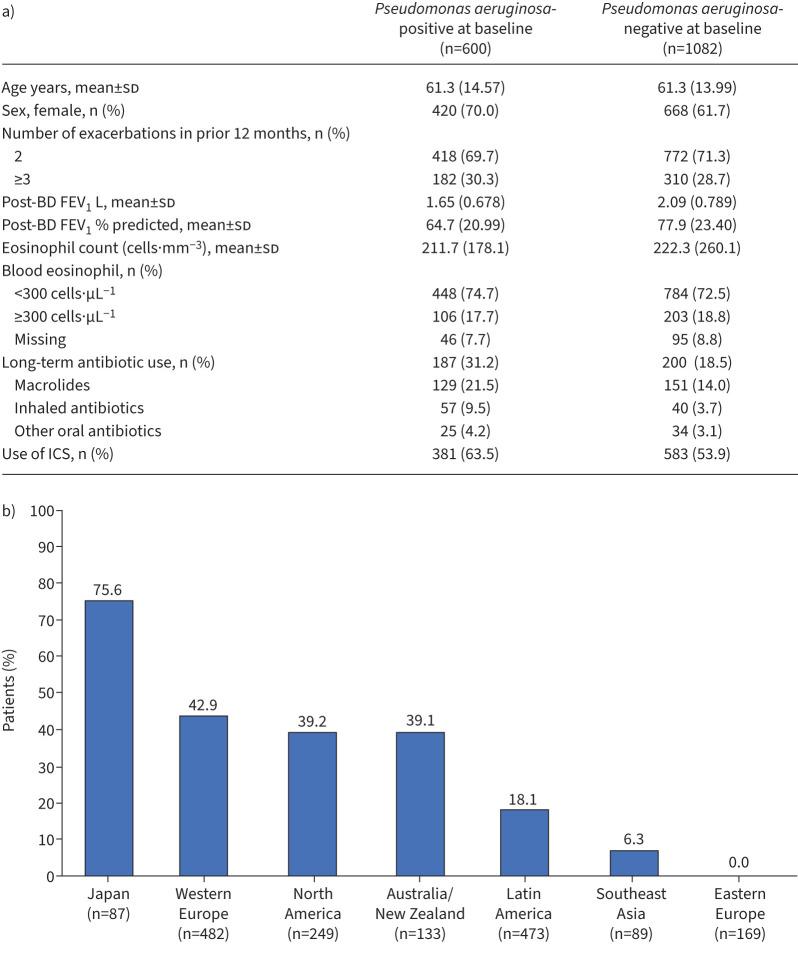
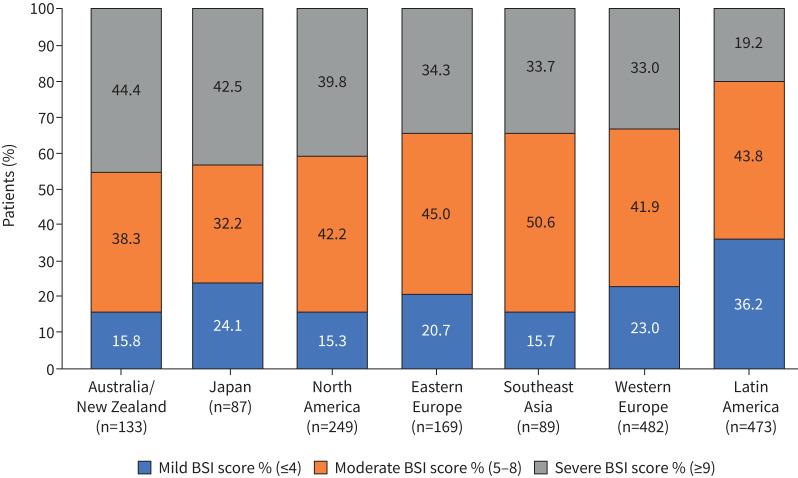
1682 adults from 35 countries were randomised from December 2020 to March 2023. Mean age was 61.3 years and 64.7% were female. ∼70% had moderate-to-severe Bronchiectasis Severity Index (BSI) scores, 29.3% had ≥3 exacerbations in the prior 12 months and 35.7% were positive for . Mean BSI scores were highest in Australia/New Zealand (8.3) and lowest in Latin America (5.9). Overall, the most common aetiology was idiopathic (58.4%). In positive negative patients, lung function was lower, with greater long-term macrolide (21.5% 14.0%) and inhaled corticosteroid use (63.5% 53.9%). There was wide regional variation in long-term antibiotic use in patients with bronchiectasis and .
DISCUSSION
ASPEN baseline characteristics and treatment profiles were representative of a global bronchiectasis population.
简介
布伦索卡特ib是一种正在研究的口服可逆性二肽基肽酶-1抑制剂,已证明可延长支气管扩张症成人患者首次病情加重的时间。本文概述了3期ASPEN试验(NCT04594369)的临床试验设计、成年患者的基线特征和治疗模式。
方法
ASPEN试验是一项全球性研究,纳入有支气管扩张症临床病史(咳嗽、慢性咳痰和/或反复呼吸道感染)、经放射学确诊且在过去12个月内有≥2次病情加重的患者。该试验旨在评估两种布伦索卡特ib剂量(10毫克和25毫克)在52周治疗期内对病情加重率的影响 安慰剂。在基线时收集了包括人口统计学、疾病严重程度、肺功能、 状况和生活质量在内的综合临床数据。
结果
2020年12月至2023年3月,来自35个国家的1682名成年人被随机分组。平均年龄为61.3岁,64.7%为女性。约70%的患者支气管扩张严重指数(BSI)评分为中重度,29.3%的患者在过去12个月内有≥3次病情加重,35.7%的患者 呈阳性。平均BSI评分在澳大利亚/新西兰最高(8.3),在拉丁美洲最低(5.9)。总体而言,最常见的病因是特发性(58.4%)。在 阳性 阴性患者中,肺功能较低,长期使用大环内酯类药物(21.5% 14.0%)和吸入性糖皮质激素的比例较高(63.5% 53.9%)。支气管扩张症患者长期使用抗生素的情况在各地区存在很大差异。
讨论
ASPEN试验的基线特征和治疗情况代表了全球支气管扩张症患者群体。


 Zotero 插件