
二肽基肽酶4(DPP-4)的多重作用及其对骨代谢的药理抑制作用:综述
The multiple actions of dipeptidyl peptidase 4 (DPP-4) and its pharmacological inhibition on bone metabolism: a review.
作者信息
Pechmann L M, Pinheiro F I, Andrade V F C, Moreira C A
机构信息
Universidade Federal do Paraná, Setor de Ciências da Saúde, Endocrine Division (SEMPR), Centro de Diabetes Curitiba, Academic Research Center Pro Renal Institute, Curitiba, Brazil.
Biotechnology at Universidade Potiguar and Discipline of Ophthalmology at the Federal University of Rio Grande do Norte (UFRN), Natal, Brazil.
出版信息
Diabetol Metab Syndr. 2024 Jul 25;16(1):175. doi: 10.1186/s13098-024-01412-x.
BACKGROUND
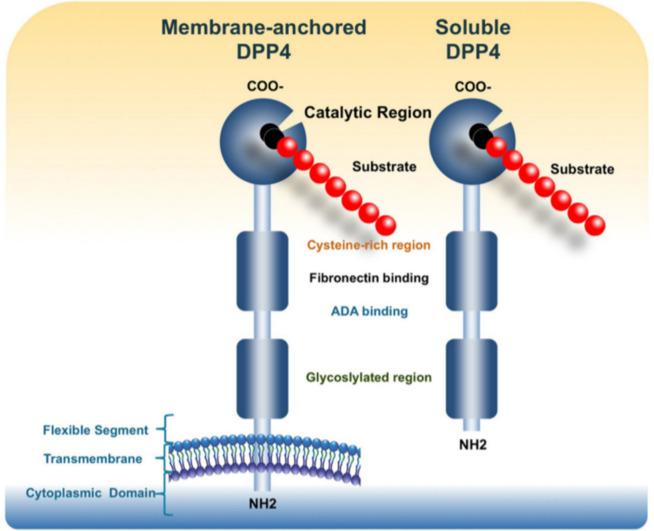
Dipeptidyl peptidase 4 (DPP-4) plays a crucial role in breaking down various substrates. It also has effects on the insulin signaling pathway, contributing to insulin resistance, and involvement in inflammatory processes like obesity and type 2 diabetes mellitus. Emerging effects of DPP-4 on bone metabolism include an inverse relationship between DPP-4 activity levels and bone mineral density, along with an increased risk of fractures.
MAIN BODY
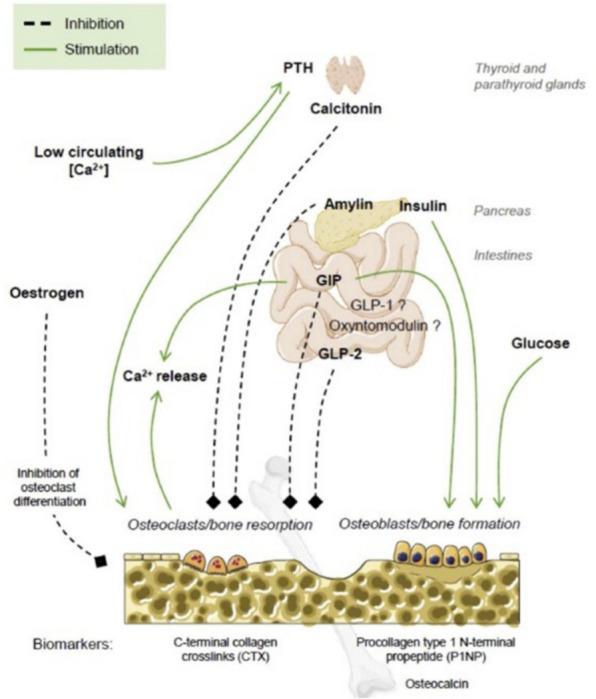
The influence of DPP-4 on bone metabolism occurs through two axes. The entero-endocrine-osseous axis involves gastrointestinal substrates for DPP-4, including glucose-dependent insulinotropic polypeptide (GIP) and glucagon-like peptides 1 (GLP-1) and 2 (GLP-2). Studies suggest that supraphysiological doses of exogenous GLP-2 has a significant inhibitory effect on bone resorption, however the specific mechanism by which GLP-2 influences bone metabolism remains unknown. Of these, GIP stands out for its role in bone formation. Other gastrointestinal DPP-4 substrates are pancreatic peptide YY and neuropeptide Y-both bind to the same receptors and appear to increase bone resorption and decrease bone formation. Adipokines (e.g., leptin and adiponectin) are regulated by DPP-4 and may influence bone remodeling and energy metabolism in a paracrine manner. The pancreatic-endocrine-osseous axis involves a potential link between DPP-4, bone, and energy metabolism through the receptor activator of nuclear factor kappa B ligand (RANKL), which induces DPP-4 expression in osteoclasts, leading to decreased GLP-1 levels and increased blood glucose levels. Inhibitors of DPP-4 participate in the pancreatic-endocrine-osseous axis by increasing endogenous GLP-1. In addition to their glycemic effects, DPP-4 inhibitors have the potential to decrease bone resorption, increase bone formation, and reduce the incidence of osteoporosis and fractures. Still, many questions on the interactions between DPP-4 and bone remain unanswered, particularly regarding the effects of DPP-4 inhibition on the skeleton of older individuals.
CONCLUSION
The elucidation of the intricate interactions and impact of DPP-4 on bone is paramount for a proper understanding of the body's mechanisms in regulating bone homeostasis and responses to internal stimuli. This understanding bears significant implications in the investigation of conditions like osteoporosis, in which disruptions to these signaling pathways occur. Further research is essential to uncover the full extent of DPP-4's effects on bone metabolism and energy regulation, paving the way for novel therapeutic interventions targeting these pathways, particularly in older individuals.
背景
二肽基肽酶4(DPP - 4)在分解各种底物中起关键作用。它还对胰岛素信号通路有影响,导致胰岛素抵抗,并参与肥胖和2型糖尿病等炎症过程。DPP - 4对骨代谢的新作用包括DPP - 4活性水平与骨矿物质密度呈负相关,以及骨折风险增加。
主体内容
DPP - 4对骨代谢的影响通过两个轴发生。肠 - 内分泌 - 骨轴涉及DPP - 4的胃肠道底物,包括葡萄糖依赖性促胰岛素多肽(GIP)和胰高血糖素样肽1(GLP - 1)及2(GLP - 2)。研究表明,超生理剂量的外源性GLP - 2对骨吸收有显著抑制作用,然而GLP - 2影响骨代谢的具体机制仍不清楚。其中,GIP因其在骨形成中的作用而突出。其他胃肠道DPP - 4底物是胰多肽和神经肽Y,二者都与相同受体结合,似乎会增加骨吸收并减少骨形成。脂肪因子(如瘦素和脂联素)受DPP - 4调节,并可能以旁分泌方式影响骨重塑和能量代谢。胰腺 - 内分泌 - 骨轴涉及DPP - 4、骨和能量代谢之间通过核因子κB受体活化因子配体(RANKL)的潜在联系,RANKL诱导破骨细胞中DPP - 4表达,导致GLP - 1水平降低和血糖水平升高。DPP - 4抑制剂通过增加内源性GLP - 1参与胰腺 - 内分泌 - 骨轴。除了其降糖作用外,DPP - 4抑制剂还有可能减少骨吸收、增加骨形成,并降低骨质疏松症和骨折的发生率。尽管如此,关于DPP - 4与骨之间相互作用的许多问题仍未得到解答,特别是关于DPP - 4抑制对老年人骨骼的影响。
结论
阐明DPP - 4与骨之间复杂的相互作用及其影响对于正确理解身体调节骨稳态和对内部刺激反应的机制至关重要。这种理解在骨质疏松症等疾病的研究中具有重要意义,在这些疾病中这些信号通路会发生紊乱。进一步的研究对于揭示DPP - 4对骨代谢和能量调节的全面影响至关重要,为针对这些通路的新型治疗干预铺平道路,特别是在老年人中。

 Zotero 插件