
骨髓增殖性肿瘤的全基因组DNA甲基化关联研究为基因调控紊乱提供了见解。
Epigenome-wide DNA Methylation Association Study of CHIP Provides Insight into Perturbed Gene Regulation.
作者信息
Levy Daniel, Kirmani Sara, Huan Tianxiao, Van Amburg Joseph, Joehanes Roby, Uddin Md Mesbah, Nguyen Ngoc Quynh, Yu Bing, Brody Jennifer, Fornage Myriam, Bressler Jan, Sotoodehnia Nona, Ong David, Puddu Fabio, Floyd James, Ballantyne Christie, Psaty Bruce, Raffield Laura, Natarajan Pradeep, Conneely Karen, Carson April, Lange Leslie, Ferrier Kendra, Heard-Costa Nancy, Murabito Joanne, Bick Alexander
机构信息
Framingham Heart Study, Framingham, MA, 01702, USA; Population Sciences Branch, Division of Intramural Research, National Heart, Lung, and Blood Institute, National Institutes of Health.
Framingham Heart Study, Framingham, MA, 01702, USA; Population Sciences Branch, Division of Intramural Research, National Heart, Lung, and Blood Institute, National Institutes of Health, Bethesda.
出版信息
Res Sq. 2024 Jul 16:rs.3.rs-4656898. doi: 10.21203/rs.3.rs-4656898/v1.
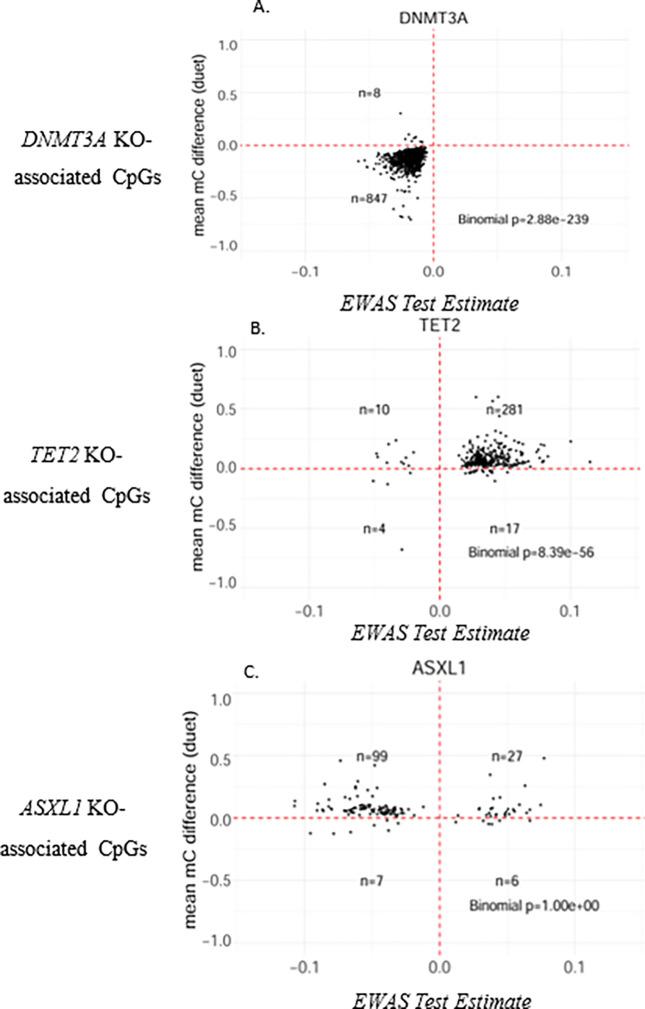
With age, hematopoietic stem cells can acquire somatic mutations in leukemogenic genes that confer a proliferative advantage in a phenomenon termed "clonal hematopoiesis of indeterminate potential" (CHIP). How these mutations confer a proliferative advantage and result in increased risk for numerous age-related diseases remains poorly understood. We conducted a multiracial meta-analysis of epigenome-wide association studies (EWAS) of CHIP and its subtypes in four cohorts (N=8196) to elucidate the molecular mechanisms underlying CHIP and illuminate how these changes influence cardiovascular disease risk. The EWAS findings were functionally validated using human hematopoietic stem cell (HSC) models of CHIP. A total of 9615 CpGs were associated with any CHIP, 5990 with DNMT3A CHIP, 5633 with TET2 CHIP, and 6078 with ASXL1 CHIP (P <1×10). CpGs associated with CHIP subtypes overlapped moderately, and the genome-wide DNA methylation directions of effect were opposite for TET2 and DNMT3A CHIP, consistent with their opposing effects on global DNA methylation. There was high directional concordance between the CpGs shared from the meta-EWAS and human edited CHIP HSCs. Expression quantitative trait methylation analysis further identified transcriptomic changes associated with CHIP-associated CpGs. Causal inference analyses revealed 261 CHIP-associated CpGs associated with cardiovascular traits and all-cause mortality (FDR adjusted p-value <0.05). Taken together, our study sheds light on the epigenetic changes impacted by CHIP and their associations with age-related disease outcomes. The novel genes and pathways linked to the epigenetic features of CHIP may serve as therapeutic targets for preventing or treating CHIP-mediated diseases.
随着年龄增长,造血干细胞可在致白血病基因中获得体细胞突变,这些突变在一种称为“不确定潜能的克隆性造血”(CHIP)的现象中赋予增殖优势。这些突变如何赋予增殖优势并导致多种与年龄相关疾病的风险增加,目前仍知之甚少。我们对四个队列(N = 8196)中CHIP及其亚型的全表观基因组关联研究(EWAS)进行了多种族荟萃分析,以阐明CHIP背后的分子机制,并阐明这些变化如何影响心血管疾病风险。EWAS的研究结果使用CHIP的人类造血干细胞(HSC)模型进行了功能验证。共有9615个CpG与任何CHIP相关,5990个与DNMT3A CHIP相关,5633个与TET2 CHIP相关,6078个与ASXL1 CHIP相关(P <1×10)。与CHIP亚型相关的CpG有适度重叠,TET2和DNMT3A CHIP在全基因组DNA甲基化效应方向上相反,这与其对整体DNA甲基化的相反作用一致。荟萃EWAS和人类编辑的CHIP HSCs共享的CpG之间存在高度的方向一致性。表达定量性状甲基化分析进一步确定了与CHIP相关CpG相关的转录组变化。因果推断分析揭示了261个与心血管性状和全因死亡率相关的CHIP相关CpG(FDR调整后p值<0.05)。综上所述,我们的研究揭示了受CHIP影响的表观遗传变化及其与年龄相关疾病结局的关联。与CHIP表观遗传特征相关的新基因和途径可能成为预防或治疗CHIP介导疾病的治疗靶点。


 Zotero 插件