
探索非病毒方法将 CRISPR-Cas 核糖核蛋白递送至造血干细胞。
Exploring non-viral methods for the delivery of CRISPR-Cas ribonucleoprotein to hematopoietic stem cells.
机构信息
Hematology and blood transfusion science department, School of Allied Medical Sciences, Tehran University of Medical Sciences, Tehran, Iran.
School of Pharmacy & Bioengineering, Guy Hilton Research Centre (GHRC), Keele University, Staffordshire, ST4 7QB, UK.
出版信息
Stem Cell Res Ther. 2024 Jul 29;15(1):233. doi: 10.1186/s13287-024-03848-4.
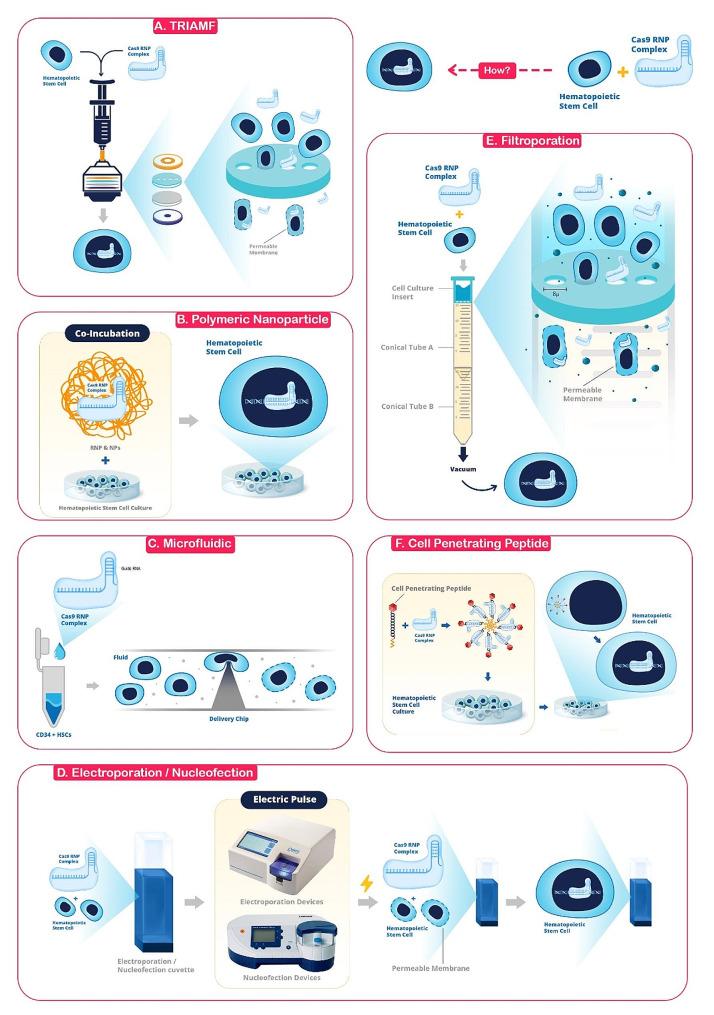
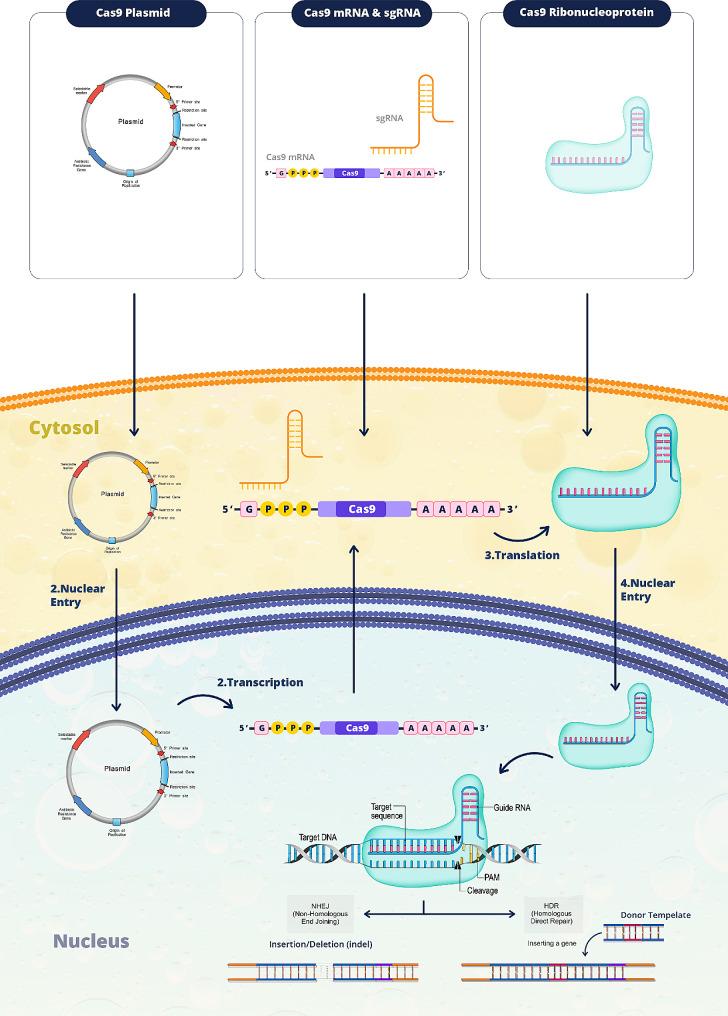
Gene manipulation of hematopoietic stem cells (HSCs) using the CRISPR/Cas system as a potent genome editing tool holds immense promise for addressing hematologic disorders. An essential hurdle in advancing this treatment lies in effectively delivering CRISPR/Cas to HSCs. While various delivery formats exist, Ribonucleoprotein complex (RNP) emerges as a particularly efficient option. RNP complexes offer enhanced gene editing capabilities, devoid of viral vectors, with rapid activity and minimized off-target effects. Nevertheless, novel delivery methods such as microfluidic-based techniques, filtroporation, nanoparticles, and cell-penetrating peptides are continually evolving. This study aims to provide a comprehensive review of these methods and the recent research on delivery approaches of RNP complexes to HSCs.
利用 CRISPR/Cas 系统对造血干细胞 (HSCs) 进行基因操作作为一种强大的基因组编辑工具,为治疗血液系统疾病带来了巨大的希望。推进这种治疗方法的一个重要障碍在于如何有效地将 CRISPR/Cas 递送到 HSCs 中。虽然存在各种递送方式,但核糖核蛋白复合物 (RNP) 作为一种特别有效的选择脱颖而出。RNP 复合物具有增强的基因编辑能力,无病毒载体,活性迅速,脱靶效应最小。然而,基于微流控技术、滤过转染、纳米颗粒和细胞穿透肽等新型递送方法仍在不断发展。本研究旨在对这些方法以及最近关于 RNP 复合物递送到 HSCs 的研究进行全面综述。
 Zotero 插件