
联合药物治疗在 2 型糖尿病相关慢性肾脏病中的肾脏和心血管保护作用。
Kidney and cardiovascular-protective benefits of combination drug therapies in chronic kidney disease associated with type 2 diabetes.
机构信息
Baylor Research Institute and Baylor Heart Hospital, Dallas, TX, USA.
Division of Renal Medicine, Department of Internal Medicine, Emory School of Medicine, Atlanta, GA, USA.
出版信息
BMC Nephrol. 2024 Aug 1;25(1):248. doi: 10.1186/s12882-024-03652-5.
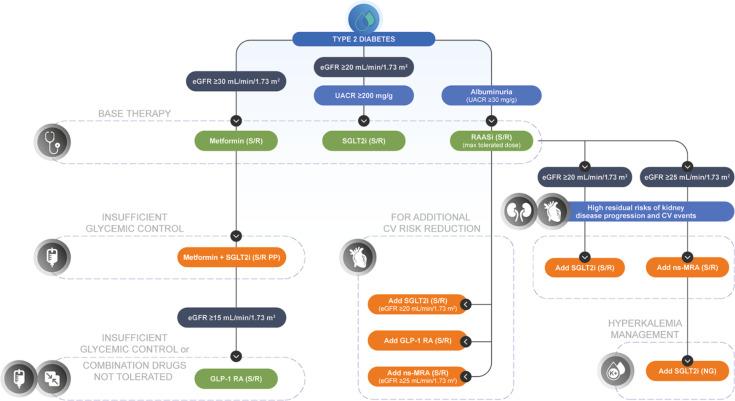
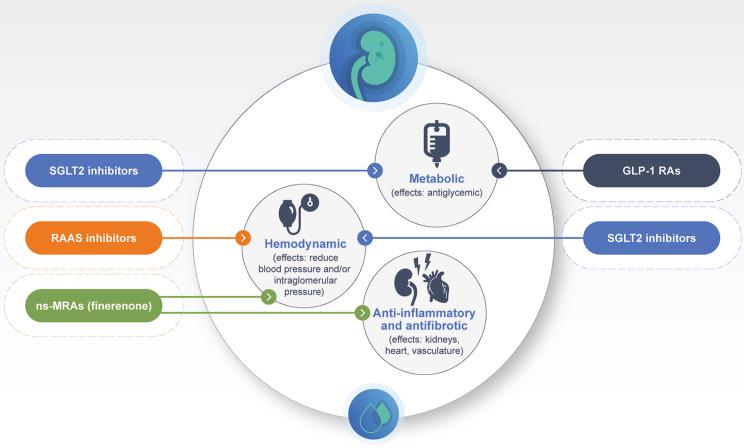
Given the substantial burden of chronic kidney disease associated with type 2 diabetes, an aggressive approach to treatment is required. Despite the benefits of guideline-directed therapy, there remains a high residual risk of continuing progression of chronic kidney disease and of cardiovascular events. Historically, a linear approach to pharmacologic management of chronic kidney disease has been used, in which drugs are added, then adjusted, optimized, or stopped in a stepwise manner based on their efficacy, toxicity, effects on a patient's quality of life, and cost. However, there are disadvantages to this approach, which may result in missing a window of opportunity to slow chronic kidney disease progression. Instead, a pillar approach has been proposed to enable earlier treatment that simultaneously targets multiple pathways involved in disease progression. Combination therapy in patients with chronic kidney disease associated with type 2 diabetes is being investigated in several clinical trials. In this article, we discuss current treatment options for patients with chronic kidney disease associated with type 2 diabetes and provide a rationale for tailored combinations of therapies with complementary mechanisms of action to optimize therapy using a pillar-based treatment strategy. [This article includes a plain language summary as an additional file].
鉴于 2 型糖尿病相关的慢性肾脏病负担沉重,需要采取积极的治疗方法。尽管有指南指导的治疗带来的益处,但慢性肾脏病的持续进展和心血管事件的风险仍然很高。从历史上看,人们采用线性方法来进行慢性肾脏病的药物治疗管理,根据药物的疗效、毒性、对患者生活质量的影响以及成本,以逐步的方式添加、调整、优化或停止药物。然而,这种方法存在一些缺点,可能会错失减缓慢性肾脏病进展的机会。相反,人们提出了一种支柱方法,以实现更早的治疗,同时针对疾病进展涉及的多个途径。在一些临床试验中,正在研究 2 型糖尿病相关的慢性肾脏病患者的联合治疗。在本文中,我们讨论了 2 型糖尿病相关慢性肾脏病患者的当前治疗选择,并提供了一个基于机制互补的治疗策略,对具有互补作用机制的疗法进行个体化组合的理由,以优化治疗。[本文附有一个通俗易懂的概要作为补充文件]。

 Zotero 插件