
基于嵌合抗原受体 T 淋巴细胞的细胞疗法;自杀基因在机制论证、应用和生物安全性增强方面的作用:消除副作用的新机遇。
CAR-T lymphocyte-based cell therapies; mechanistic substantiation, applications and biosafety enhancement with suicide genes: new opportunities to melt side effects.
机构信息
ETSIAAB, Universidad Politécnica de Madrid, Madrid, Spain.
Laboratorio Cancer Stem Cell, HST group, Centro de Tecnología Biomédica, Universidad Politécnica de Madrid, Madrid, Spain.
出版信息
Front Immunol. 2024 Jul 18;15:1333150. doi: 10.3389/fimmu.2024.1333150. eCollection 2024.
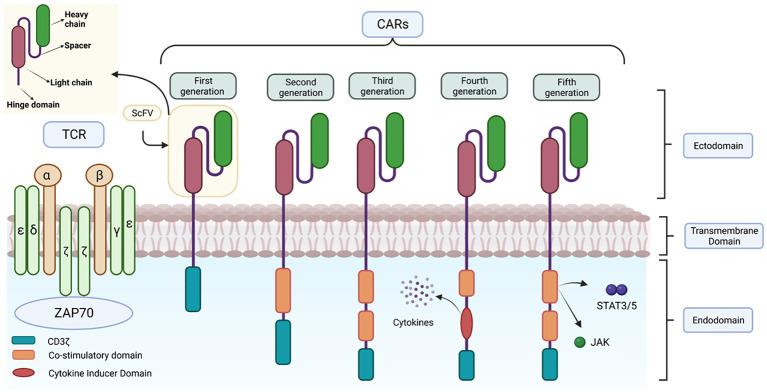
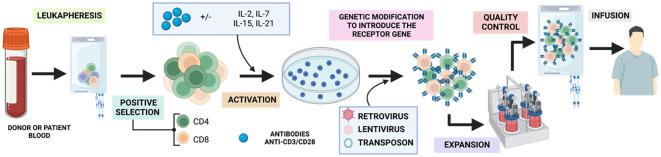
Immunotherapy has made significant strides in cancer treatment with strategies like checkpoint blockade antibodies and adoptive T cell transfer. Chimeric antigen receptor T cells (CAR-T) have emerged as a promising approach to combine these strategies and overcome their limitations. This review explores CAR-T cells as a living drug for cancer treatment. CAR-T cells are genetically engineered immune cells designed to target and eliminate tumor cells by recognizing specific antigens. The study involves a comprehensive literature review on CAR-T cell technology, covering structure optimization, generations, manufacturing processes, and gene therapy strategies. It examines CAR-T therapy in haematologic cancers and solid tumors, highlighting challenges and proposing a suicide gene-based mechanism to enhance safety. The results show significant advancements in CAR-T technology, particularly in structure optimization and generation. The manufacturing process has improved for broader clinical application. However, a series of inherent challenges and side effects still need to be addressed. In conclusion, CAR-T cells hold great promise for cancer treatment, but ongoing research is crucial to improve efficacy and safety for oncology patients. The proposed suicide gene-based mechanism offers a potential solution to mitigate side effects including cytokine release syndrome (the most common toxic side effect of CAR-T therapy) and the associated neurotoxicity.
免疫疗法在癌症治疗方面取得了重大进展,策略包括检查点阻断抗体和过继性 T 细胞转移。嵌合抗原受体 T 细胞(CAR-T)作为一种结合这些策略并克服其局限性的有前途的方法已经出现。本综述探讨了 CAR-T 细胞作为治疗癌症的活药物。CAR-T 细胞是经过基因工程改造的免疫细胞,通过识别特定抗原来靶向和消除肿瘤细胞。这项研究涉及对 CAR-T 细胞技术的全面文献回顾,涵盖结构优化、代际、制造工艺和基因治疗策略。它检查了 CAR-T 疗法在血液癌症和实体肿瘤中的应用,强调了挑战,并提出了一种基于自杀基因的机制来提高安全性。结果表明,CAR-T 技术取得了重大进展,特别是在结构优化和代际方面。制造工艺的改进使其更广泛地应用于临床。然而,仍需要解决一系列固有的挑战和副作用。总之,CAR-T 细胞在癌症治疗方面具有巨大的潜力,但需要开展进一步的研究来提高肿瘤患者的疗效和安全性。所提出的基于自杀基因的机制为减轻副作用提供了一种潜在的解决方案,包括细胞因子释放综合征(CAR-T 治疗最常见的毒性副作用)和相关的神经毒性。







 Zotero 插件