
基于组学的胃癌分子分类的最新进展(综述)。
Current development of molecular classifications of gastric cancer based on omics (Review).
机构信息
The Second Clinical Medical College of Zhejiang Chinese Medical University, Hangzhou, Zhejiang 310053, P.R. China.
Department of Gastric Surgery, Zhejiang Cancer Hospital, Hangzhou Institute of Medicine (HIM), Chinese Academy of Sciences, Hangzhou, Zhejiang 310022, P.R. China.
出版信息
Int J Oncol. 2024 Sep;65(3). doi: 10.3892/ijo.2024.5677. Epub 2024 Aug 2.
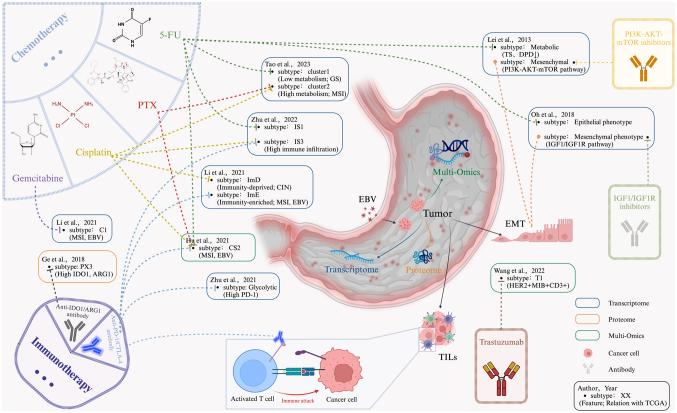
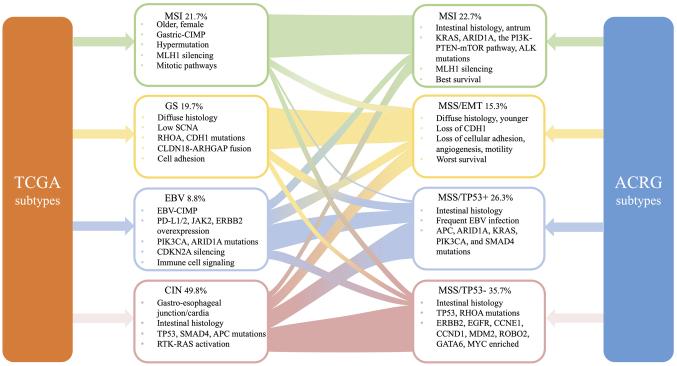
Gastric cancer (GC) is a complex and heterogeneous disease with significant phenotypic and genetic variation. Traditional classification systems rely mainly on the evaluation of clinical pathological features and conventional biomarkers and might not capture the diverse clinical processes of individual GCs. The latest discoveries in omics technologies such as next‑generation sequencing, proteomics and metabolomics have provided crucial insights into potential genetic alterations and biological events in GC. Clustering strategies for identifying subtypes of GC might offer new tools for improving GC treatment and clinical trial outcomes by enabling the development of therapies tailored to specific subtypes. However, the feasibility and therapeutic significance of implementing molecular classifications of GC in clinical practice need to addressed. The present review examines the current molecular classifications, delineates the prevailing landscape of clinically relevant molecular features, analyzes their correlations with traditional GC classifications, and discusses potential clinical applications.
胃癌(GC)是一种复杂且异质性的疾病,具有显著的表型和遗传变异。传统的分类系统主要依赖于临床病理特征和常规生物标志物的评估,可能无法捕捉到个体 GC 的不同临床过程。组学技术(如下一代测序、蛋白质组学和代谢组学)的最新发现为 GC 中的潜在遗传改变和生物学事件提供了重要的见解。用于识别 GC 亚型的聚类策略可能通过开发针对特定亚型的治疗方法,为改善 GC 治疗和临床试验结果提供新的工具。然而,在临床实践中实施 GC 分子分类的可行性和治疗意义仍需要进一步探讨。本综述探讨了当前的分子分类,阐述了具有临床相关性的分子特征的流行趋势,分析了它们与传统 GC 分类的相关性,并讨论了潜在的临床应用。
 Zotero 插件