
2 型糖尿病患者的听力学特征。
Audiological profile of patients with type 2 diabetes mellitus.
机构信息
Discipline of Audiology, Faculty of Health Sciences, University of KwaZulu-Natal, Durban.
出版信息
S Afr J Commun Disord. 2024 Jul 31;71(1):e1-e13. doi: 10.4102/sajcd.v71i1.1035.
BACKGROUND
South Africa shows a high prevalence of type 2 diabetes with reported association with auditory dysfunction.
OBJECTIVES
To describe the audiological profile of adults with this metabolic condition.
METHOD
Employing a descriptive research design, 35 individuals with type 2 diabetes, selected through purposive sampling, underwent a basic audiological assessment in addition to extended high-frequency (EHF) audiometry, distortion product otoacoustic emissions (DPOAE) testing and neurological auditory brainstem response (ABR) test.
RESULTS
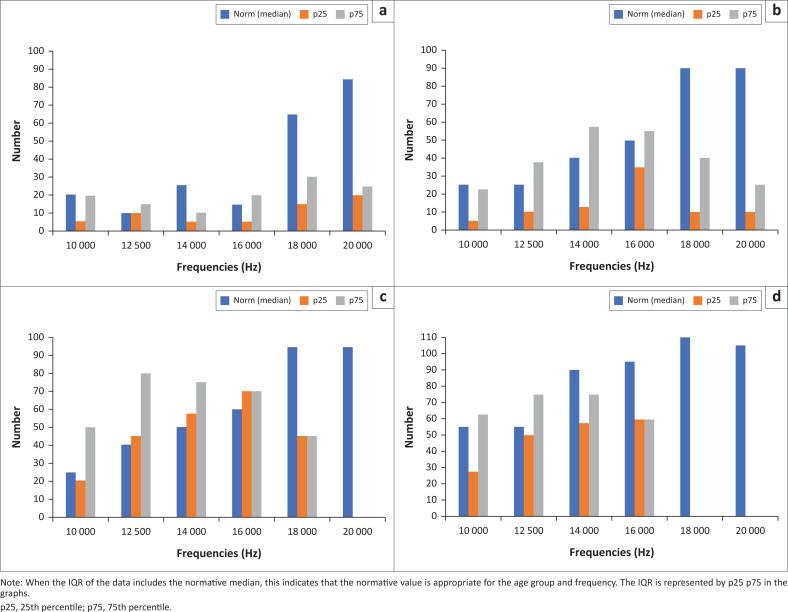
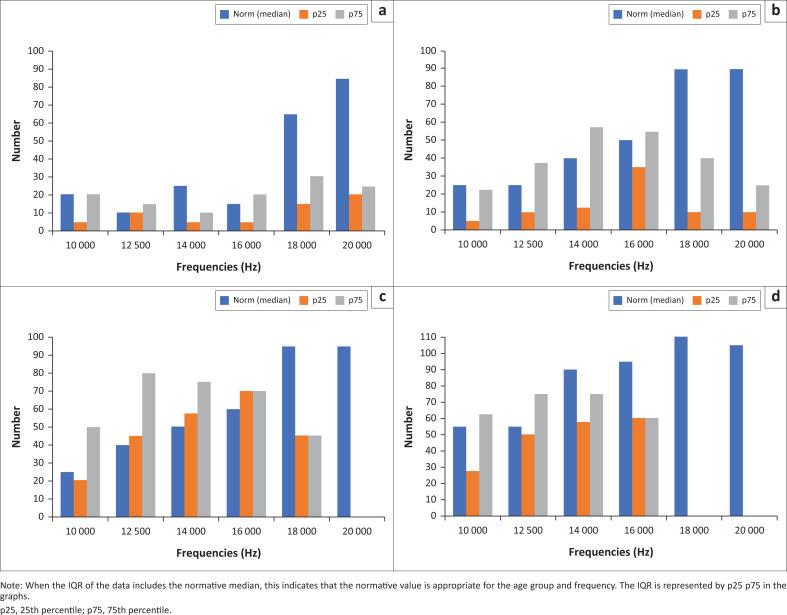
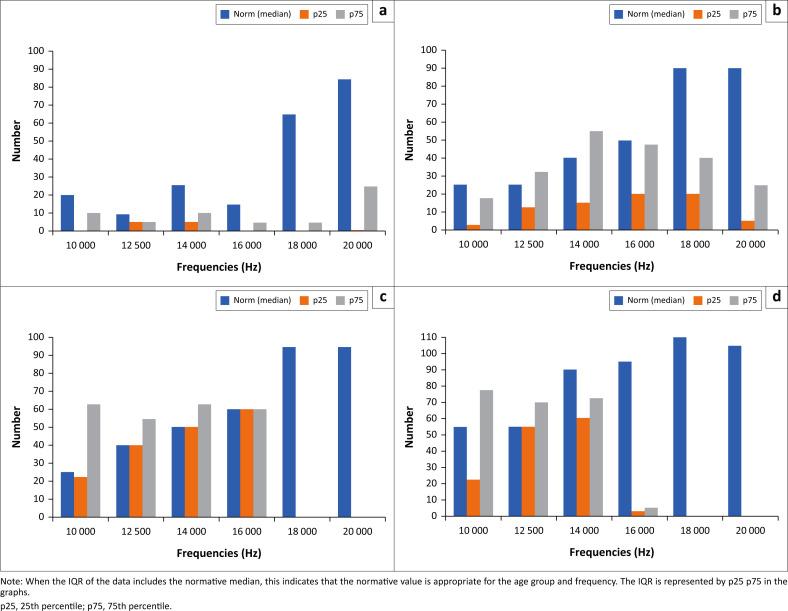
This study revealed a 31.4% prevalence of hearing loss with 81.8% being sensorineural in nature. Poor hearing thresholds were observed at 16 kHz (n = 19; 54.3%), 18 kHz (n = 24; 68.6%) and 20 kHz (n = 30; 85.7%) in the right ear and at 16 kHz (n = 20; 57.1%), 18 kHz (n = 24; 68.6%) and 20 kHz (n = 30; 85.7%) in the left ear. Absent DPOAEs were observed at 6 kHz (n = 20; 51.7%) and 8 kHz (n = 24; 68.6%) in the right ear and at 6 kHz (n = 17; 48.6%) and 8 kHz (n = 29; 82.9%) in the left ear, possibly indicating that type 2 diabetes specifically targets higher frequency hearing. The ABR results revealed a delayed absolute latency of wave III bilaterally (right ear -69%; left ear - 51%), suggesting an impact of this metabolic disease on retro-cochlear pathways.
CONCLUSION
Hearing loss should be recognised as a comorbidity accompanying type 2 diabetes, which indicates the need for routine comprehensive audiological assessments to facilitate early detection and intervention.Contribution: The present findings have implications for audiology clinical protocols; diabetes related health policies and patient education.
背景
南非 2 型糖尿病的患病率较高,有报道称其与听觉功能障碍有关。
目的
描述患有这种代谢疾病的成年人的听力学特征。
方法
采用描述性研究设计,通过目的抽样选择了 35 名 2 型糖尿病患者,除了进行基本的听力学评估外,还进行了扩展高频(EHF)听力测试、畸变产物耳声发射(DPOAE)测试和神经听觉脑干反应(ABR)测试。
结果
本研究显示听力损失的患病率为 31.4%,其中 81.8%为感音神经性。右耳在 16 kHz(n=19;54.3%)、18 kHz(n=24;68.6%)和 20 kHz(n=30;85.7%)以及左耳在 16 kHz(n=20;57.1%)、18 kHz(n=24;68.6%)和 20 kHz(n=30;85.7%)处的听力阈值较差。右耳在 6 kHz(n=20;51.7%)和 8 kHz(n=24;68.6%)以及左耳在 6 kHz(n=17;48.6%)和 8 kHz(n=29;82.9%)处观察到 DPOAE 缺失,这可能表明 2 型糖尿病专门针对高频听力。ABR 结果显示双侧 III 波的绝对潜伏期延迟(右耳-69%;左耳-51%),提示这种代谢性疾病对耳蜗后途径有影响。
结论
应将听力损失视为 2 型糖尿病的一种合并症,这表明需要进行常规的全面听力评估,以促进早期发现和干预。
贡献
本研究结果对听力学临床方案、糖尿病相关卫生政策和患者教育具有重要意义。

 Zotero 插件