
全球 60 岁及以上人群因饮用高糖含糖饮料导致心血管疾病的负担:2019 年全球疾病负担研究分析。
The global burden of cardiovascular disease attributable to diet high in sugar-sweetened beverages among people aged 60 years and older: an analysis for the global burden of disease study 2019.
机构信息
Shanghai Ninth People's Hospital, School of Medicine, Shanghai Jiao Tong University, Shanghai, China.
Shanghai Putuo People's Hospital, Putuo, China.
出版信息
Front Public Health. 2024 Jul 19;12:1366286. doi: 10.3389/fpubh.2024.1366286. eCollection 2024.
OBJECTIVES
This study aimed to quantify the global cardiovascular disease (CVD) burden attributable to diet high in sugar-sweetened beverages (SSB) among adults aged 60 years and older using data from the Global Burden of Disease (GBD) Study 2019.
METHODS
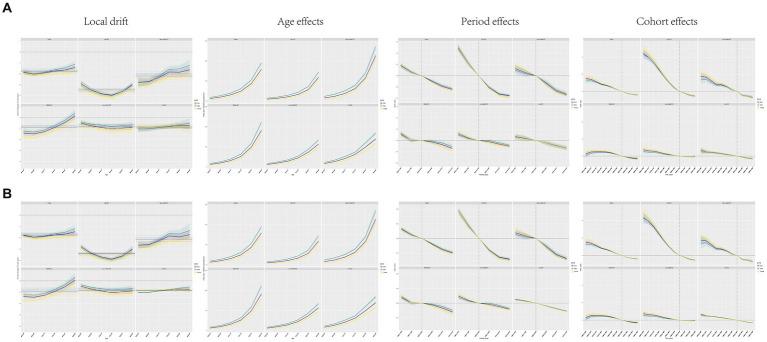
We extracted data on CVD mortality, disability-adjusted life-years (DALYs), and risk-factor exposures from the GBD 2019 study for people aged 60 and older. Age-period-cohort models were used to estimate the overall annual percentage change in mortality and DALY rate (net drift, % per year), mortality and DALY rate for each age group from 1990 to 2019 (local drift, % per year), longitudinal age-specific rate corrected for period bias (age effect), and mortality and Daly rate for each age group from 1990 to 2019 (local drift, % per year). And period/cohort relative risk (period/cohort effect).
RESULTS
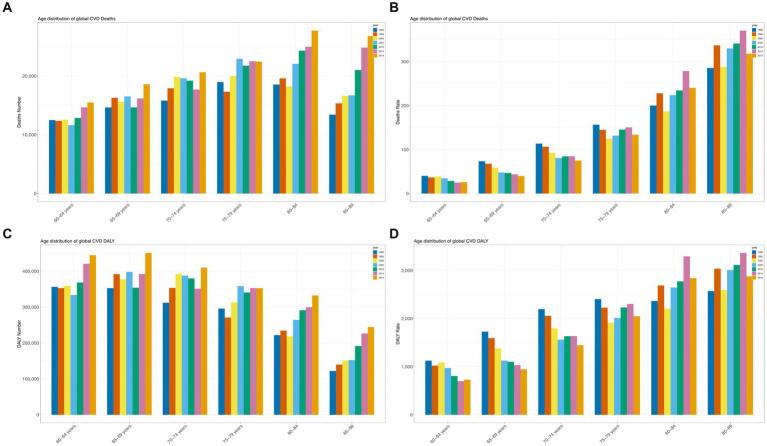
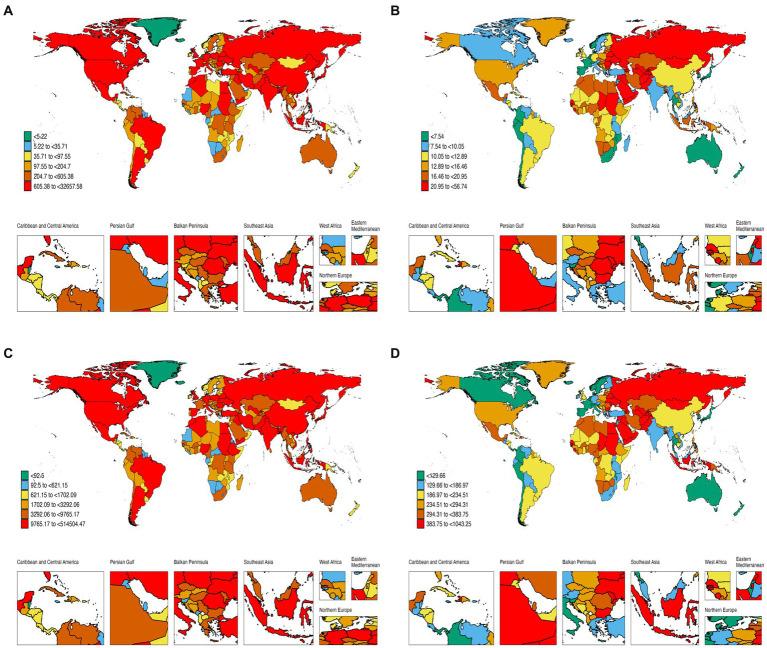
Between 1990 and 2019, global age-standardized CVD mortality (ASMR) and disability-adjusted life years (DALY) rates attributable to high SSB intake decreased, with larger reductions in high-SDI regions. ASMR declined from 19.5 to 13 per 100,000 (estimated annual percentage change (EAPC): -1.46%) and ASDR declined from 345.8 to 220.6 per 100,000 (EAPC: -1.66%). Age-period-cohort analysis showed CVD deaths and DALYs increased exponentially with age, peaking at 85-89 years. Period effects indicated declining CVD mortality and DALY rates since 1999, especially in higher-SDI regions. Cohort effects demonstrated consistent risk declines across successive generations born between 1900 and 1959. Predictions suggest continuing decreases through 2045 globally, but slower declines in lower-SDI regions.
CONCLUSION
In conclusion, this comprehensive assessment of global CVD burden among older adults attributable to high SSB intake highlights major achievements but also persistent areas needing attention. Favorable declining mortality and DALY rate trends reflect substantial progress in CVD control amid population growth and aging.
目的
本研究旨在利用 2019 年全球疾病负担(GBD)研究的数据,量化 60 岁及以上成年人因高糖饮料(SSB)摄入导致的心血管疾病(CVD)负担。
方法
我们从 GBD 2019 研究中提取了 60 岁及以上人群的 CVD 死亡率、残疾调整生命年(DALY)和风险因素暴露数据。使用年龄-时期-队列模型估计了 1990 年至 2019 年死亡率和 DALY 率的总体年变化率(净漂移,每年%)、1990 年至 2019 年每个年龄组的死亡率和 DALY 率(本地漂移,每年%)、纵向年龄特异性率校正时期偏倚(年龄效应)以及 1990 年至 2019 年每个年龄组的死亡率和 DALY 率(本地漂移,每年%)。以及时期/队列相对风险(时期/队列效应)。
结果
1990 年至 2019 年间,全球标准化心血管疾病死亡率(ASMR)和归因于高 SSB 摄入的残疾调整生命年(DALY)率呈下降趋势,高 SD 地区的降幅更大。ASMR 从 19.5 降至 13/10 万(估计年变化百分比(EAPC):-1.46%),ASDR 从 345.8 降至 220.6/10 万(EAPC:-1.66%)。年龄-时期-队列分析显示,CVD 死亡人数和 DALY 随年龄呈指数增长,在 85-89 岁达到峰值。时期效应表明,自 1999 年以来,CVD 死亡率和 DALY 率呈下降趋势,尤其是在高 SD 地区。队列效应表明,出生于 1900 年至 1959 年的连续几代人风险持续下降。预测表明,全球范围内到 2045 年将继续下降,但在低 SD 地区下降速度较慢。
结论
综上所述,这项对高 SSB 摄入导致的老年人群心血管疾病负担的全球综合评估突出了主要成就,但也突出了仍需关注的领域。死亡率和 DALY 率下降的有利趋势反映了在人口增长和老龄化背景下,心血管疾病控制取得了实质性进展。


 Zotero 插件