
衰老相关神经退行性疾病中的神经元调节性细胞死亡:关键途径及治疗潜力
Neuronal regulated cell death in aging-related neurodegenerative diseases: key pathways and therapeutic potentials.
作者信息
Song Run, Yin Shiyi, Wu Jiannan, Yan Junqiang
机构信息
Department of Neurology, The First Affiliated Hospital, College of Clinical Medicine of Henan University of Science and Technology, Luoyang, Henan Province, China.
Neuromolecular Biology Laboratory, The First Affiliated Hospital, College of Clinical Medicine of Henan University of Science and Technology, Luoyang, Henan Province, China.
出版信息
Neural Regen Res. 2025 Aug 1;20(8):2245-2263. doi: 10.4103/NRR.NRR-D-24-00025. Epub 2024 Jul 29.
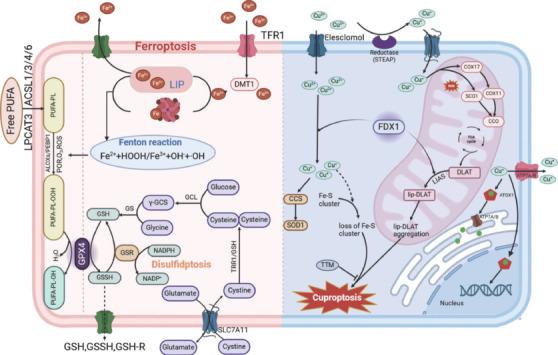
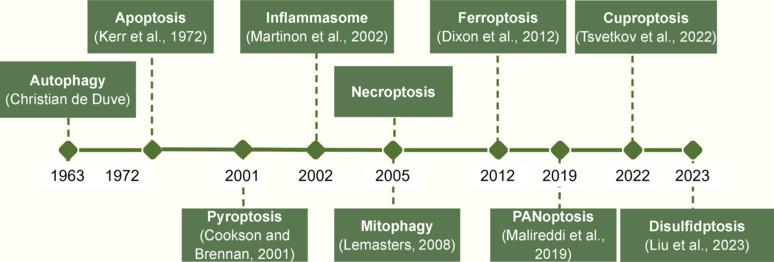
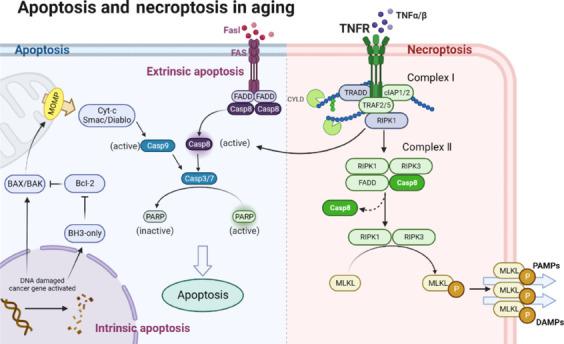
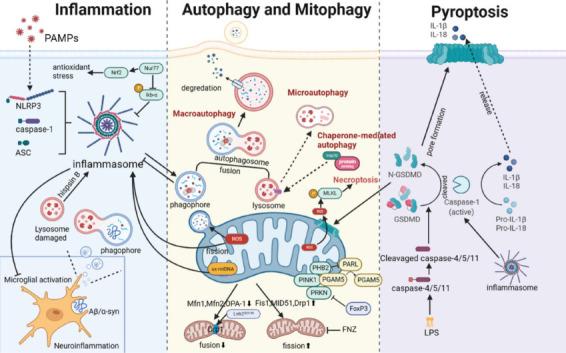
Regulated cell death (such as apoptosis, necroptosis, pyroptosis, autophagy, cuproptosis, ferroptosis, disulfidptosis) involves complex signaling pathways and molecular effectors, and has been proven to be an important regulatory mechanism for regulating neuronal aging and death. However, excessive activation of regulated cell death may lead to the progression of aging-related diseases. This review summarizes recent advances in the understanding of seven forms of regulated cell death in age-related diseases. Notably, the newly identified ferroptosis and cuproptosis have been implicated in the risk of cognitive impairment and neurodegenerative diseases. These forms of cell death exacerbate disease progression by promoting inflammation, oxidative stress, and pathological protein aggregation. The review also provides an overview of key signaling pathways and crosstalk mechanisms among these regulated cell death forms, with a focus on ferroptosis, cuproptosis, and disulfidptosis. For instance, FDX1 directly induces cuproptosis by regulating copper ion valency and dihydrolipoamide S-acetyltransferase aggregation, while copper mediates glutathione peroxidase 4 degradation, enhancing ferroptosis sensitivity. Additionally, inhibiting the Xc- transport system to prevent ferroptosis can increase disulfide formation and shift the NADP + /NADPH ratio, transitioning ferroptosis to disulfidptosis. These insights help to uncover the potential connections among these novel regulated cell death forms and differentiate them from traditional regulated cell death mechanisms. In conclusion, identifying key targets and their crosstalk points among various regulated cell death pathways may aid in developing specific biomarkers to reverse the aging clock and treat age-related neurodegenerative conditions.
程序性细胞死亡(如细胞凋亡、坏死性凋亡、焦亡、自噬、铜死亡、铁死亡、二硫化物诱导的细胞死亡)涉及复杂的信号通路和分子效应器,并且已被证明是调节神经元衰老和死亡的重要调节机制。然而,程序性细胞死亡的过度激活可能导致衰老相关疾病的进展。本综述总结了在与年龄相关疾病中对七种程序性细胞死亡形式理解的最新进展。值得注意的是,新发现的铁死亡和铜死亡与认知障碍和神经退行性疾病的风险有关。这些细胞死亡形式通过促进炎症、氧化应激和病理性蛋白质聚集来加剧疾病进展。该综述还概述了这些程序性细胞死亡形式之间的关键信号通路和相互作用机制,重点关注铁死亡、铜死亡和二硫化物诱导的细胞死亡。例如,FDX1通过调节铜离子价态和二氢硫辛酰胺S - 乙酰转移酶聚集直接诱导铜死亡,而铜介导谷胱甘肽过氧化物酶4降解,增强铁死亡敏感性。此外,抑制Xc - 转运系统以防止铁死亡可增加二硫键形成并改变NADP + /NADPH比值,将铁死亡转变为二硫化物诱导的细胞死亡。这些见解有助于揭示这些新型程序性细胞死亡形式之间的潜在联系,并将它们与传统的程序性细胞死亡机制区分开来。总之,确定各种程序性细胞死亡途径中的关键靶点及其相互作用点可能有助于开发特定的生物标志物,以逆转衰老时钟并治疗与年龄相关的神经退行性疾病。
 Zotero 插件