
微生物漆酶在木质纤维素生物质转化为生物乙醇中的作用。
Role of microbial laccases in valorization of lignocellulosic biomass to bioethanol.
作者信息
Haq Ikram Ul, Saleem Aroona, Chaudhary Rida, Alessa Abdulrahman H, Nawaz Ali, Du Chenyu
机构信息
Institute of Industrial Biotechnology (IIIB), GC University Lahore, Lahore, Pakistan.
Department of Biology, Faculty of Science, University of Tabuk, Tabuk, Saudi Arabia.
出版信息
Front Bioeng Biotechnol. 2024 Jul 23;12:1441075. doi: 10.3389/fbioe.2024.1441075. eCollection 2024.
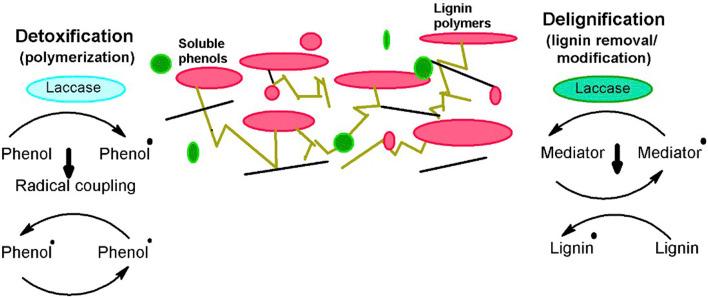
The persistent expansion in world energy and synthetic compounds requires the improvement of renewable alternatives in contrast to non-sustainable energy wellsprings. Lignocellulose is an encouraging feedstock to be utilized in biorefineries for its conversion into value-added products, including biomaterials, biofuels and several bio-based synthetic compounds. Aside from all categories, biofuel, particularly bioethanol is the most substantial fuel derived from lignocellulosic biomass and can be obtained through microbial fermentation. Generally, extreme settings are required for lignocellulosic pretreatment which results in the formation of inhibitors during biomassdegradation. Occasionally, lignin polymers also act as inhibitors and are left untreated during the pretreatment, engendering inefficient hydrolysis. The valorization of lignocellulosic biomass by laccases can be viewed as a fundamental trend for improving bioethanol production. However, one of the main obstacles for developing commercially viable biofuel industries is the cost of enzymes, which can be resolved by utilizing laccases derived from microbial sources. Microbial laccases have been considered an exceptionally integral asset for delignification and detoxification of pretreated LCB, which amplify the resultant fermentation and saccharification processes. This review provides a summary of microbial laccases and their role in valorizing LCB to bioethanol, compelling enthralling applications in bio-refining industries all across the globe.
世界能源和合成化合物的持续增长需要开发可再生替代能源,以取代不可持续的能源。木质纤维素是一种很有前景的原料,可用于生物精炼厂,将其转化为高附加值产品,包括生物材料、生物燃料和几种生物基合成化合物。在所有类别中,生物燃料,特别是生物乙醇,是从木质纤维素生物质中获取的最重要燃料,可通过微生物发酵获得。一般来说,木质纤维素预处理需要极端条件,这会在生物质降解过程中形成抑制剂。偶尔,木质素聚合物也会起到抑制剂的作用,在预处理过程中未得到处理,导致水解效率低下。漆酶对木质纤维素生物质的增值作用可被视为提高生物乙醇产量的一个基本趋势。然而,发展具有商业可行性的生物燃料产业的主要障碍之一是酶的成本,这可以通过利用微生物来源的漆酶来解决。微生物漆酶被认为是预处理木质纤维素生物质脱木质素和解毒的一种非常重要的资产,它可以增强随后的发酵和糖化过程。本文综述了微生物漆酶及其在将木质纤维素生物质转化为生物乙醇中的作用,在全球生物精炼行业中具有引人入胜的应用前景。





 Zotero 插件