
细胞培养的水产食品:海鲜的新兴生产系统
Cell-cultivated aquatic food products: emerging production systems for seafood.
作者信息
Goswami Mukunda, Ovissipour Reza, Bomkamp Claire, Nitin Nitin, Lakra Wazir, Post Mark, Kaplan David L
机构信息
Fish Genetics and Biotechnology Division, ICAR-Central Institute of Fisheries Education, PanchMarg, Of Yari Road, Versova, Andheri West, Mumbai, 400061, India.
Department of Food Science and Technology, Texas A&M University, College Station, TX, 77843, USA.
出版信息
J Biol Eng. 2024 Aug 7;18(1):43. doi: 10.1186/s13036-024-00436-1.
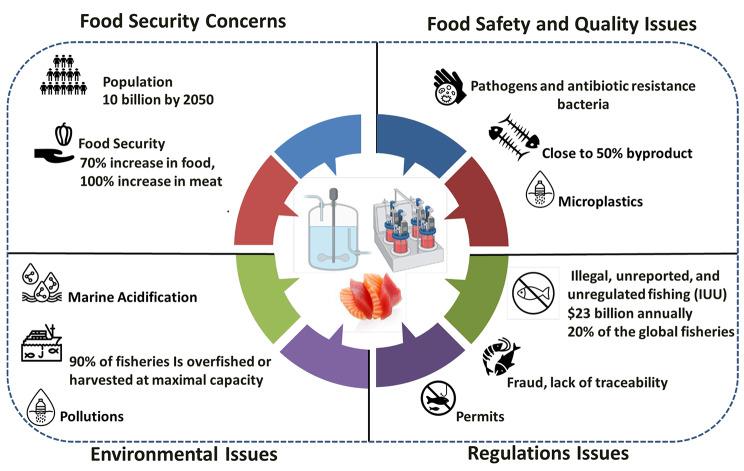
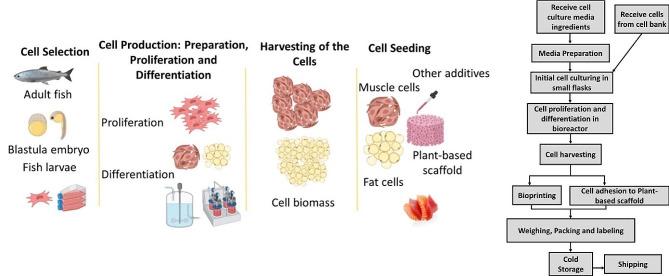
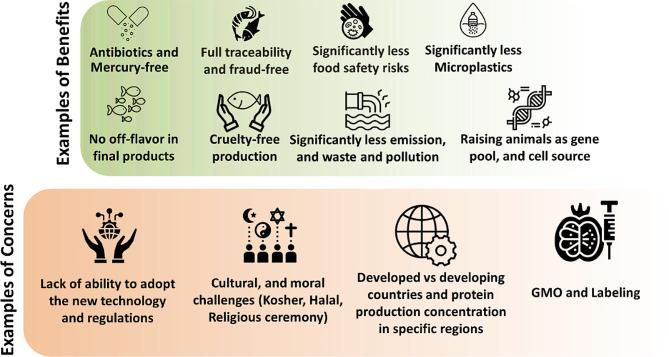
The demand for fish protein continues to increase and currently accounts for 17% of total animal protein consumption by humans. About 90% of marine fish stocks are fished at or above maximum sustainable levels, with aquaculture propagating as one of the fastest growing food sectors to address some of this demand. Cell-cultivated seafood production is an alternative approach to produce nutritionally-complete seafood products to meet the growing demand. This cellular aquaculture approach offers a sustainable, climate resilient and ethical biotechnological approach as an alternative to conventional fishing and fish farming. Additional benefits include reduced antibiotic use and the absence of mercury. Cell-cultivated seafood also provides options for the fortification of fish meat with healthier compositions, such as omega-3 fatty acids and other beneficial nutrients through scaffold, media or cell approaches. This review addresses the biomaterials, production processes, tissue engineering approaches, processing, quality, safety, regulatory, and social aspects of cell-cultivated seafood, encompassing where we are today, as well as the road ahead. The goal is to provide a roadmap for the science and technology required to bring cellular aquaculture forward as a mainstream food source.
对鱼类蛋白质的需求持续增长,目前占人类动物蛋白总消费量的17%。约90%的海洋鱼类种群的捕捞量达到或超过了最大可持续产量水平,水产养殖作为增长最快的食品行业之一不断发展,以满足部分此类需求。细胞培育海鲜生产是一种生产营养齐全的海鲜产品以满足不断增长的需求的替代方法。这种细胞水产养殖方法提供了一种可持续、适应气候变化且符合伦理的生物技术方法,可替代传统捕捞和养鱼业。其他好处包括减少抗生素使用以及无汞。细胞培育海鲜还提供了通过支架、培养基或细胞方法用更健康的成分(如omega-3脂肪酸和其他有益营养素)强化鱼肉的选择。本综述探讨了细胞培育海鲜的生物材料、生产过程、组织工程方法、加工、质量、安全、监管和社会方面,涵盖了我们目前的状况以及未来的发展道路。目标是为推动细胞水产养殖成为主流食物来源所需的科学技术提供路线图。


 Zotero 插件