
新冠疫情期间夸祖鲁-纳塔尔省残疾与非残疾年轻女性的生计状况
Livelihoods of young women with and without disabilities in KwaZulu-Natal during COVID-19.
作者信息
Hanass-Hancock Jill, Nzuza Ayanda, Willan Samantha, Padayachee Thesandree, Machisa Mercilene, Carpenter Bradley
机构信息
Gender and Health Research Unit, South African Medical Research Council, Durban, South Africa.
School of Health Science, University of KwaZulu-Natal, Durban, South Africa.
出版信息
Afr J Disabil. 2024 Jul 19;13:1400. doi: 10.4102/ajod.v13i0.1400. eCollection 2024.
BACKGROUND
Persons with disabilities are more likely to have poorer livelihood outcomes, including food insecurity. Inequalities are heightened for young women with disabilities, especially in times of crisis.
OBJECTIVES
To understand the livelihood experience of young South African women with and without disabilities during the coronavirus pandemic (COVID-19).
METHOD
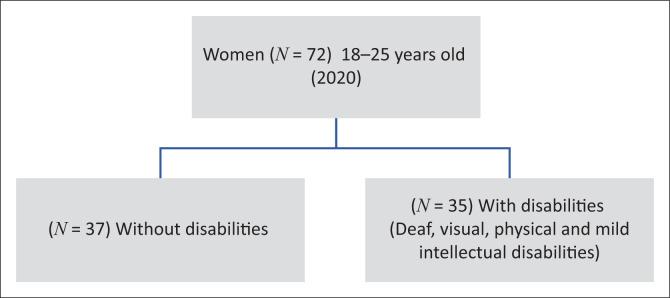
We conducted a longitudinal study with 72 young women with and without disabilities enrolled in tertiary institutions in eThekwini, South Africa. We undertook a series of in-depth interviews collecting quantitative and qualitative data, prompting participants' experiences during the COVID-19 pandemic, including living arrangements, impact on education, access to resources and food security.
RESULTS
Participants reported livelihood changes related to living arrangements, education, income, and social connectedness during the pandemic. Social grants (old-age pension, child support, disability grant) and student stipends were critical financial resources to ensure food security. Participants with disabilities were more likely to experience food insecurities and moderate hunger, with their households having less access to mitigating resources such as land or livestock. Deaf participants also reported social isolation.
CONCLUSION
The study shows that social protection mechanisms mitigated the financial impact of the lockdown for all recipients but that participants with disabilities still struggled more than others to ensure food security. These additional challenges may be related to pre-existing inequalities, with participants with disabilities and their households having less access to natural resources and financial stability.
CONTRIBUTION
This paper focuses on young women with and without disabilities and provides insight into the similarities and differences in their experiences.
背景
残疾人更有可能面临较差的生计状况,包括粮食不安全。残疾年轻女性面临的不平等状况更为突出,尤其是在危机时期。
目的
了解南非残疾和非残疾年轻女性在冠状病毒病(COVID-19)大流行期间的生计经历。
方法
我们对南非伊泰夸尼市高等院校的72名残疾和非残疾年轻女性进行了一项纵向研究。我们进行了一系列深入访谈,收集定量和定性数据,了解参与者在COVID-19大流行期间的经历,包括生活安排、对教育的影响、资源获取和粮食安全。
结果
参与者报告了大流行期间在生活安排、教育、收入和社会联系方面的生计变化。社会补助金(养老金、儿童抚养费、残疾补助金)和学生津贴是确保粮食安全的关键财政资源。残疾参与者更有可能经历粮食不安全和中度饥饿,他们的家庭获得土地或牲畜等缓解资源的机会较少。失聪参与者也报告了社会隔离情况。
结论
该研究表明,社会保护机制减轻了封锁对所有受助者的经济影响,但残疾参与者在确保粮食安全方面仍比其他人面临更多困难。这些额外的挑战可能与先前存在的不平等有关,残疾参与者及其家庭获得自然资源和金融稳定的机会较少。
贡献
本文关注残疾和非残疾年轻女性,深入探讨了她们经历中的异同。
 Zotero 插件