
尿苷生物合成的破坏改变了.中的β-1,3-葡聚糖的掩蔽。
Disruption to uridine biosynthesis alters β-1,3-glucan masking in .
机构信息
Department of Microbiology, University of Tennessee, Knoxville, Tennessee, USA.
Integrated Program in Biomedical Sciences, College of Graduate Health Sciences, University of Tennessee Health Science Center, Memphis, Tennessee, USA.
出版信息
mSphere. 2024 Sep 25;9(9):e0028724. doi: 10.1128/msphere.00287-24. Epub 2024 Aug 8.
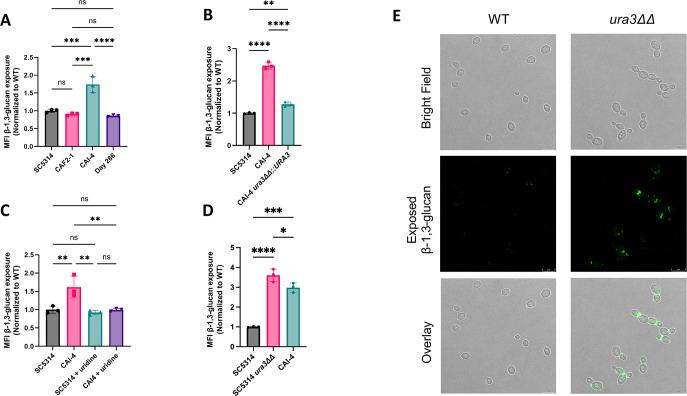
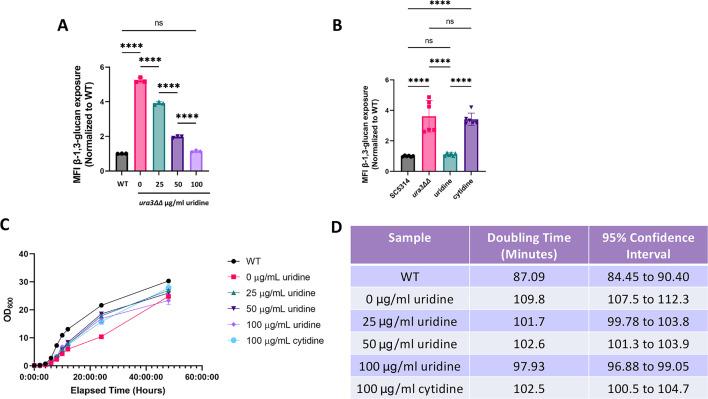
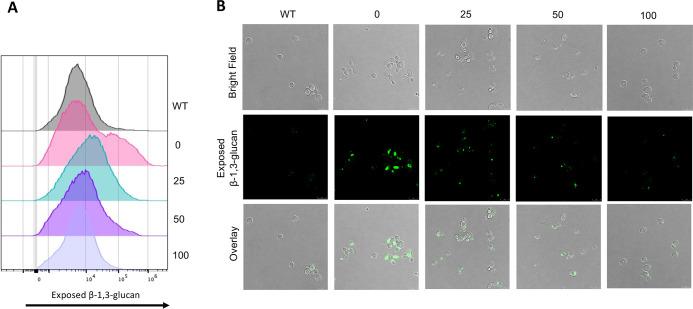
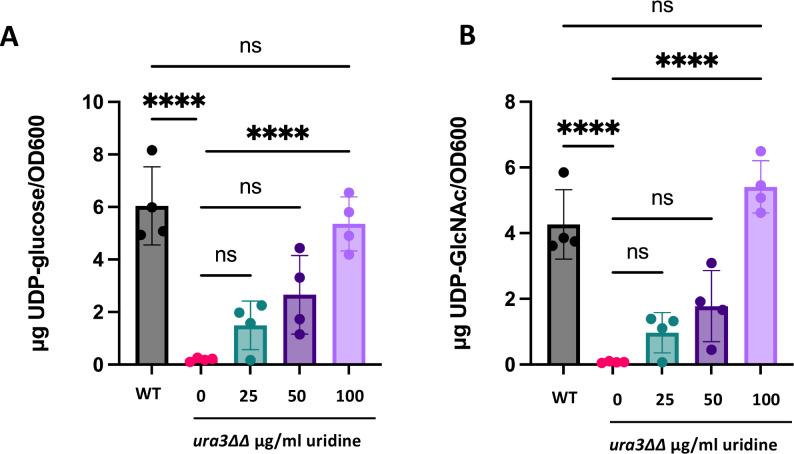
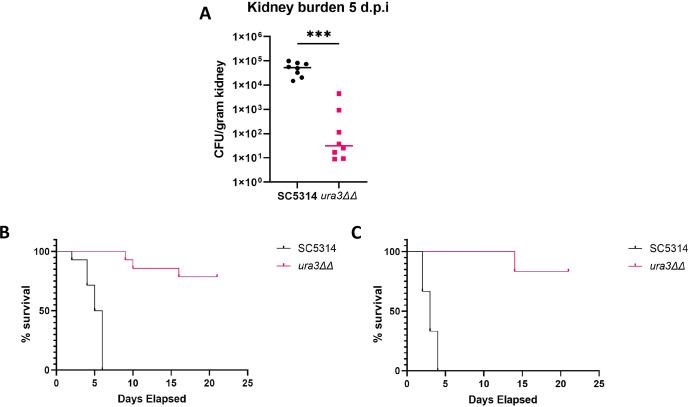
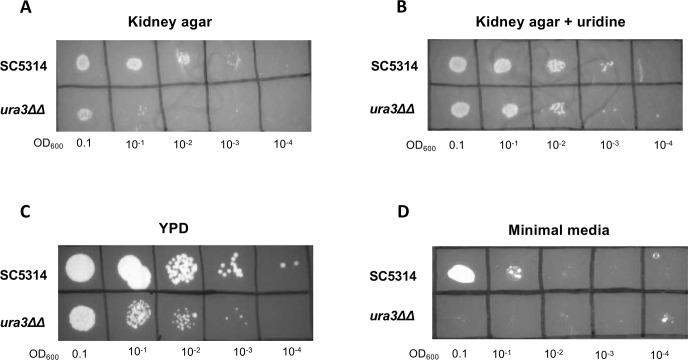
The uridine derivatives UDP-glucose and UDP--acetylglucosamine are important for cell wall construction as they are the precursors for the synthesis of β-1,3-glucan and chitin, respectively. Previous studies have demonstrated attenuated virulence of uridine auxotrophs in mice, which has been attributed to insufficient uridine levels for growth in the host. We have discovered that uridine deprivation in the uridine auxotroph ΔΔ disrupts cell wall architecture by increasing surface mannans, exposing β-1,3-glucan and chitin, and decreasing UDP-sugar levels. Cell wall architecture and UDP-sugars can be rescued with uridine supplementation. The cell wall architectural disruptions in the ΔΔ mutant also impact immune activation since the mutant elicited greater TNFα secretion from RAW264.7 macrophages than wild type. To determine if cell wall defects contributed to decreased virulence in the ΔΔ mutant, we used a murine model of systemic infection. Mice infected with the ΔΔ mutant exhibited increased survival and reduced kidney fungal burden compared with mice infected with wild type. However, suppression of the immune response with cyclophosphamide did not rescue virulence in mice infected with the ΔΔ mutant, indicating the attenuation in virulence of uridine auxotrophs can be attributed to decreased growth in the host but not increased exposure of β-1,3-glucan. Moreover, the ΔΔ mutant is unable to grow on kidney agar, which demonstrates its inability to colonize the kidneys due to poor growth. Thus, although uridine auxotrophy elicits changes to cell wall architecture that increase the exposure of immunogenic polymers, metabolic fitness costs more strongly drive the observed virulence attenuation.IMPORTANCE is a common cause of bloodstream infections (candidemia). Treatment of these bloodstream infections is made difficult because of increasing antifungal resistance and drug toxicity. Thus, new tactics are needed for antifungal drug development, with immunotherapy being of particular interest. The cell wall of is composed of highly immunogenic polymers, particularly β-1,3-glucan. However, β-1,3-glucan is naturally masked by an outer layer of mannoproteins, which hampers the detection of the fungus by the host immune system. Alteration in cell wall components has been shown to increase β-1,3-glucan exposure; however, it is unknown how the inability to synthesize precursors to cell wall components affects unmasking. Here, we demonstrate how cell wall architecture is altered in response to a deficit in precursors for cell wall synthesis and how uridine is a crucial component of these precursors.
尿苷衍生物 UDP-葡萄糖和 UDP-N-乙酰葡萄糖胺对于细胞壁的构建很重要,因为它们分别是β-1,3-葡聚糖和几丁质合成的前体。先前的研究表明,尿嘧啶营养缺陷型在小鼠中的毒力减弱,这归因于宿主中生长所需的尿嘧啶水平不足。我们发现,尿嘧啶营养缺陷型ΔΔ中的尿嘧啶剥夺通过增加表面甘露聚糖、暴露β-1,3-葡聚糖和几丁质以及降低 UDP-糖水平来破坏细胞壁结构。用尿嘧啶补充可以挽救细胞壁结构和 UDP-糖。ΔΔ突变体的细胞壁结构破坏也会影响免疫激活,因为突变体从 RAW264.7 巨噬细胞中引发的 TNFα 分泌比野生型更多。为了确定细胞壁缺陷是否导致ΔΔ突变体毒力降低,我们使用了系统性感染的小鼠模型。与感染野生型的小鼠相比,感染ΔΔ突变体的小鼠的存活率增加,肾脏真菌负担减少。然而,用环磷酰胺抑制免疫反应并不能挽救感染ΔΔ突变体的小鼠的毒力,这表明尿嘧啶营养缺陷型的毒力减弱归因于宿主中生长减少,而不是β-1,3-葡聚糖暴露增加。此外,ΔΔ突变体不能在肾脏琼脂上生长,这表明由于生长不良,它无法在肾脏中定植。因此,尽管尿嘧啶营养缺陷型引起细胞壁结构的变化,增加了免疫原性聚合物的暴露,但代谢适应性成本更强烈地导致了观察到的毒力减弱。
假丝酵母菌是一种常见的血流感染(念珠菌血症)病原体。由于抗真菌药物耐药性和药物毒性的增加,这些血流感染的治疗变得更加困难。因此,需要新的策略来开发抗真菌药物,免疫疗法尤其受到关注。假丝酵母菌的细胞壁由高度免疫原性的聚合物组成,特别是β-1,3-葡聚糖。然而,β-1,3-葡聚糖被外层甘露聚糖自然掩盖,这阻碍了宿主免疫系统对真菌的检测。细胞壁成分的改变已被证明会增加β-1,3-葡聚糖的暴露;然而,尚不清楚细胞成分前体合成能力的丧失如何影响去掩蔽。在这里,我们展示了细胞壁结构如何响应细胞壁合成前体的缺乏而发生改变,以及尿嘧啶如何成为这些前体的关键组成部分。




 Zotero 插件