
磷酸化效率对高危型 HPV 蛋白 E7 致癌特性的影响。
The effect of phosphorylation efficiency on the oncogenic properties of the protein E7 from high-risk HPV.
机构信息
Department of Chemistry, Point Loma Nazarene University, 3900 Lomaland Drive, San Diego, 92126, CA, USA.
Department of Biology, Point Loma Nazarene University, 3900 Lomaland Drive, San Diego, 92126, CA, USA.
出版信息
Virus Res. 2024 Oct;348:199446. doi: 10.1016/j.virusres.2024.199446. Epub 2024 Aug 14.
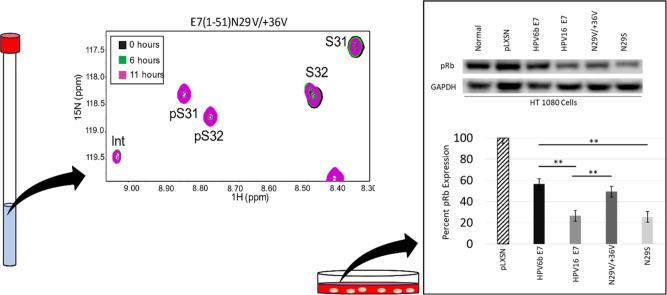
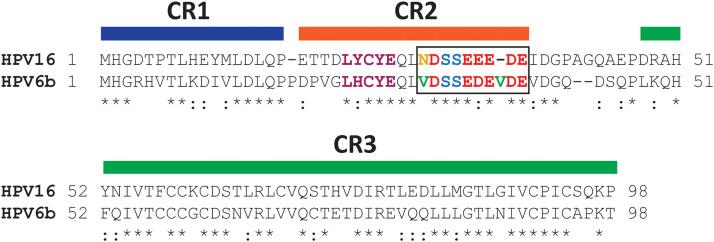
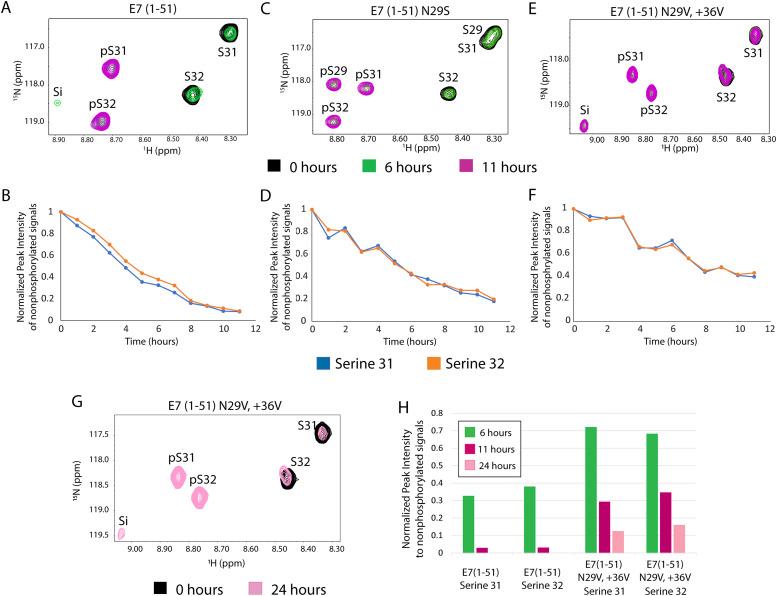
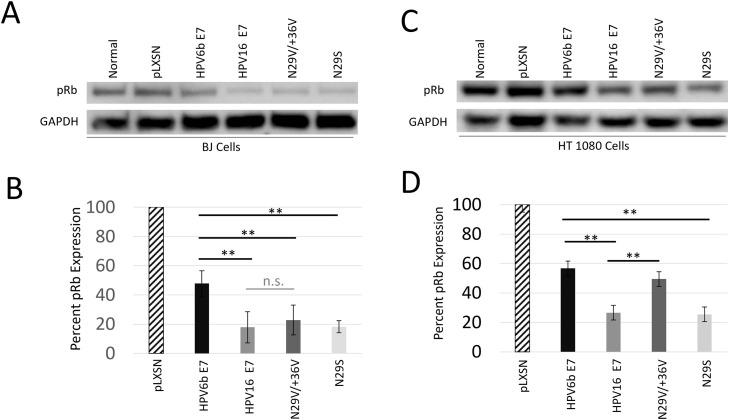
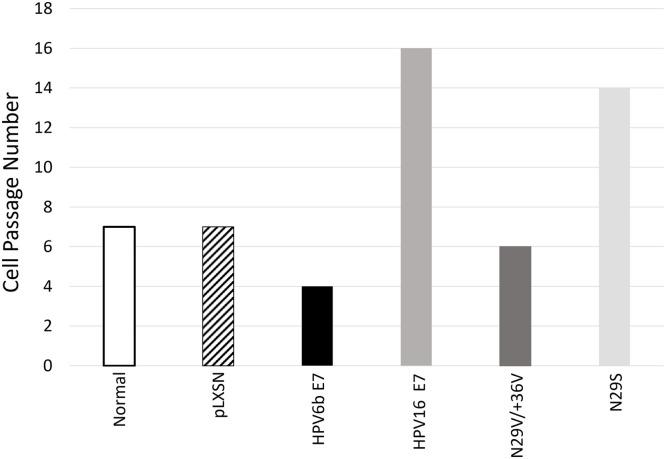
The Human papillomavirus (HPV) causes tumors in part by hijacking the host cell cycle and forcing uncontrolled cellular division. While there are >200 genotypes of HPV, 15 are classified as high-risk and have been shown to transform infected cells and contribute to tumor formation. The remaining low-risk genotypes are not considered oncogenic and result in benign skin lesions. In high-risk HPV, the oncoprotein E7 contributes to the dysregulation of cell cycle regulatory mechanisms. High-risk E7 is phosphorylated in cells at two conserved serine residues by Casein Kinase 2 (CK2) and this phosphorylation event increases binding affinity for cellular proteins such as the tumor suppressor retinoblastoma (pRb). While low-risk E7 possesses similar serine residues, it is phosphorylated to a lesser degree in cells and has decreased binding capabilities. When E7 binding affinity is decreased, it is less able to facilitate complex interactions between proteins and therefore has less capability to dysregulate the cell cycle. By comparing E7 protein sequences from both low- and high-risk HPV variants and using site-directed mutagenesis combined with NMR spectroscopy and cell-based assays, we demonstrate that the presence of two key nonpolar valine residues within the CK2 recognition sequence, present in low-risk E7, reduces serine phosphorylation efficiency relative to high-risk E7. This results in significant loss of the ability of E7 to degrade the retinoblastoma tumor suppressor protein, thus also reducing the ability of E7 to increase cellular proliferation and reduce senescence. This provides additional insight into the differential E7-mediated outcomes when cells are infected with high-risk verses low-risk HPV. Understanding these oncogenic differences may be important to developing targeted treatment options for HPV-induced cancers.
人乳头瘤病毒(HPV)通过劫持宿主细胞周期并强制进行不受控制的细胞分裂在一定程度上引起肿瘤。虽然 HPV 有 >200 种基因型,但 15 种被归类为高危型,并且已被证明可以转化感染细胞并促进肿瘤形成。其余低危型基因型不被认为具有致癌性,导致良性皮肤损伤。在高危 HPV 中,癌蛋白 E7 有助于细胞周期调节机制的失调。细胞中的酪蛋白激酶 2(CK2)在两个保守丝氨酸残基上将高危型 E7 磷酸化,这一磷酸化事件增加了与细胞蛋白如肿瘤抑制蛋白视网膜母细胞瘤(pRb)的结合亲和力。虽然低危型 E7 具有相似的丝氨酸残基,但在细胞中被磷酸化的程度较低,结合能力降低。当 E7 的结合亲和力降低时,它就更难以促进蛋白质之间的复杂相互作用,因此更难以扰乱细胞周期。通过比较低危和高危 HPV 变体的 E7 蛋白序列,并使用定点突变结合 NMR 光谱和基于细胞的测定,我们证明了 CK2 识别序列中存在的两个关键非极性缬氨酸残基存在于低危型 E7 中,相对于高危型 E7 降低了丝氨酸磷酸化效率。这导致 E7 降解视网膜母细胞瘤肿瘤抑制蛋白的能力显著丧失,从而也降低了 E7 增加细胞增殖和减少衰老的能力。这为当细胞感染高危型与低危型 HPV 时 E7 介导的不同结果提供了更多的见解。了解这些致癌差异可能对开发针对 HPV 诱导癌症的靶向治疗方案很重要。



 Zotero 插件