
海洋中新型、活跃且未培养的烃类降解微生物。
Novel, active, and uncultured hydrocarbon-degrading microbes in the ocean.
机构信息
Department of Earth, Ocean and Atmospheric Science, Florida State University, Tallahassee, Florida, USA.
Australian Centre for Ecogenomics, School of Chemistry and Molecular Biosciences, University of Queensland, St. Lucia, Queensland, Australia.
出版信息
Appl Environ Microbiol. 2024 Sep 18;90(9):e0122424. doi: 10.1128/aem.01224-24. Epub 2024 Aug 23.
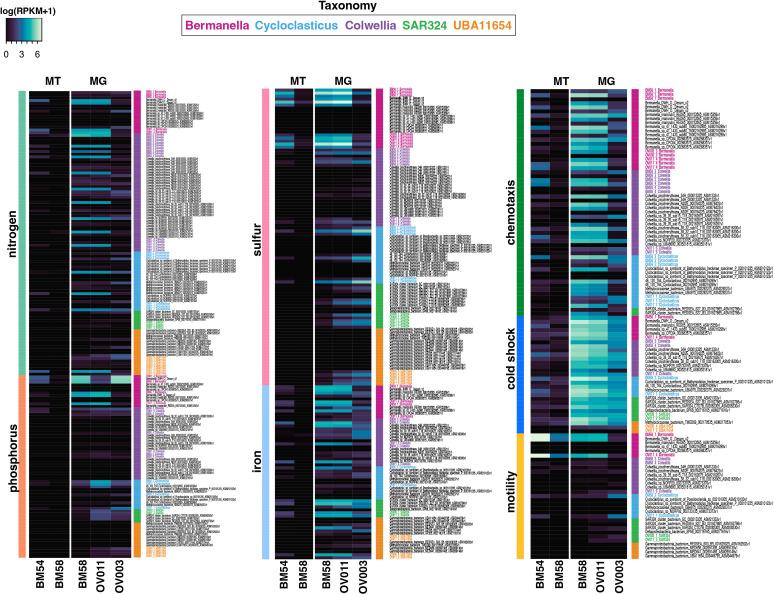
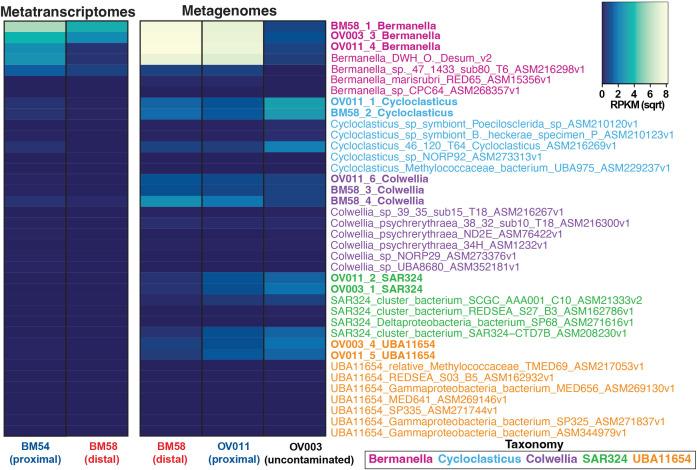
Given the vast quantity of oil and gas input to the marine environment annually, hydrocarbon degradation by marine microorganisms is an essential ecosystem service. Linkages between taxonomy and hydrocarbon degradation capabilities are largely based on cultivation studies, leaving a knowledge gap regarding the intrinsic ability of uncultured marine microbes to degrade hydrocarbons. To address this knowledge gap, metagenomic sequence data from the Deepwater Horizon (DWH) oil spill deep-sea plume was assembled to which metagenomic and metatranscriptomic reads were mapped. Assembly and binning produced new DWH metagenome-assembled genomes that were evaluated along with their close relatives, all of which are from the marine environment (38 total). These analyses revealed globally distributed hydrocarbon-degrading microbes with clade-specific substrate degradation potentials that have not been reported previously. For example, methane oxidation capabilities were identified in all . Furthermore, all encoded and expressed genes for non-gaseous -alkane degradation; however, DWH encoded alkane hydroxylase, not alkane 1-monooxygenase. All but one previously unrecognized DWH plume member in the SAR324 and UBA11654 have the capacity for aromatic hydrocarbon degradation. In contrast, were diverse in the hydrocarbon substrates they could degrade. All clades encoded nutrient acquisition strategies and response to cold temperatures, while sensory and acquisition capabilities were clade specific. These novel insights regarding hydrocarbon degradation by uncultured planktonic microbes provides missing data, allowing for better prediction of the fate of oil and gas when hydrocarbons are input to the ocean, leading to a greater understanding of the ecological consequences to the marine environment.IMPORTANCEMicrobial degradation of hydrocarbons is a critically important process promoting ecosystem health, yet much of what is known about this process is based on physiological experiments with a few hydrocarbon substrates and cultured microbes. Thus, the ability to degrade the diversity of hydrocarbons that comprise oil and gas by microbes in the environment, particularly in the ocean, is not well characterized. Therefore, this study aimed to utilize non-cultivation-based 'omics data to explore novel genomes of uncultured marine microbes involved in degradation of oil and gas. Analyses of newly assembled metagenomic data and previously existing genomes from other marine data sets, with metagenomic and metatranscriptomic read recruitment, revealed globally distributed hydrocarbon-degrading marine microbes with clade-specific substrate degradation potentials that have not been previously reported. This new understanding of oil and gas degradation by uncultured marine microbes suggested that the global ocean harbors a diversity of hydrocarbon-degrading bacteria, which can act as primary agents regulating ecosystem health.
鉴于每年有大量的石油和天然气输入海洋环境,海洋微生物对碳氢化合物的降解是一种重要的生态系统服务。分类学与碳氢化合物降解能力之间的联系主要基于培养研究,因此对于未培养的海洋微生物降解碳氢化合物的内在能力存在知识空白。为了解决这一知识空白,我们对深海地平线(DWH)溢油深海羽流的宏基因组序列数据进行了组装,并将宏基因组和宏转录组读数映射到这些数据上。组装和分箱产生了新的 DWH 宏基因组组装基因组,并与它们的近亲一起进行了评估,这些近亲均来自海洋环境(共 38 个)。这些分析揭示了具有特定分支降解潜力的全球分布的碳氢化合物降解微生物,这些潜力以前没有报道过。例如,所有. 都具有甲烷氧化能力。此外,所有 都编码和表达了非气态 -烷烃降解的基因;然而,DWH 编码烷烃羟化酶,而不是烷烃 1-单加氧酶。除了一个以前未被识别的 DWH 羽流成员外,SAR324 和 UBA11654 中的所有成员都具有芳烃降解的能力。相比之下, 在它们可以降解的碳氢化合物底物方面是多样化的。所有分支都编码了获取营养的策略和对低温的反应,而感官和获取能力则是分支特异性的。这些关于未培养浮游微生物降解碳氢化合物的新见解提供了缺失的数据,从而可以更好地预测当碳氢化合物输入海洋时石油和天然气的命运,从而更好地了解对海洋环境的生态后果。重要性碳氢化合物的微生物降解是促进生态系统健康的一个至关重要的过程,但我们对这一过程的了解很大程度上是基于对少数碳氢化合物底物和培养微生物的生理实验。因此,环境中微生物对构成石油和天然气的各种碳氢化合物的降解能力还没有得到很好的描述,特别是在海洋中。因此,本研究旨在利用非培养的“组学”数据来探索参与降解石油和天然气的未培养海洋微生物的新型基因组。对新组装的宏基因组数据和以前来自其他海洋数据集的基因组数据进行分析,通过宏基因组和宏转录组读数招募,揭示了具有特定分支降解潜力的全球分布的海洋碳氢化合物降解微生物,这些潜力以前没有报道过。对未培养海洋微生物降解石油和天然气的这种新认识表明,全球海洋蕴藏着多种能够作为调节生态系统健康的主要因子的碳氢化合物降解细菌。



 Zotero 插件