
嗜酸性粒细胞和嗜酸性粒细胞增多症药物与结直肠癌风险相关:一项孟德尔随机研究。
Eosinophils and drugs for eosinophilia are associated with the risk of colorectal cancer: a Mendelian randomization study.
机构信息
Cancer Clinical Research Ward, The First Affiliated Hospital of Jinzhou Medical University, Jinzhou, China.
Department of Oncology, The First Affiliated Hospital of Jinzhou Medical University, Jinzhou, China.
出版信息
Aging (Albany NY). 2024 Aug 23;16(16):12050-12062. doi: 10.18632/aging.206081.
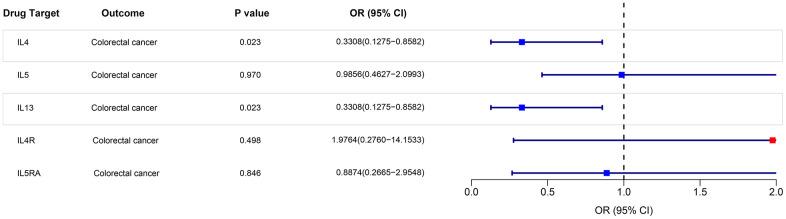
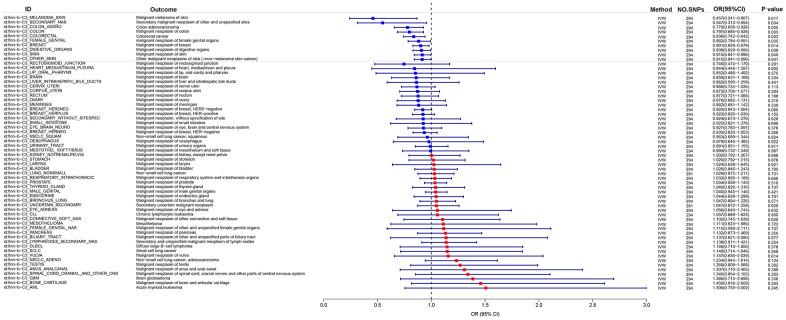
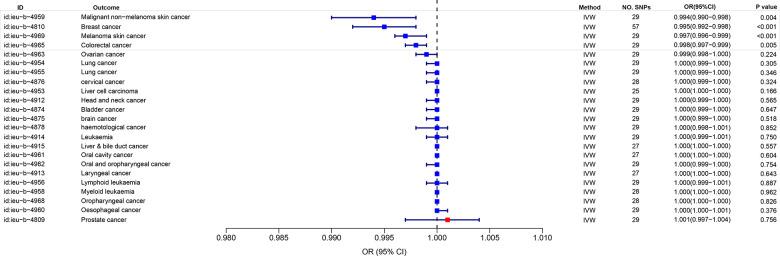
Eosinophils have the potential to exhibit both anti-tumor properties and tumor-promoting effects. However, the impact of eosinophil levels in the bloodstream on tumorigenesis risk remains inadequately explored. Furthermore, investigations regarding the association between drugs regulating eosinophils and cancer risk are currently absent. In this study, we conducted a Mendelian randomization (MR) analysis utilizing eosinophil count and eosinophil percentage as exposures. In both cohorts, a significant association was observed between eosinophil count and the risk of colorectal cancer and skin malignancies. However, upon conducting a sensitivity analysis, heterogeneity was detected specifically in relation to skin malignancies. Subsequent reverse Mendelian randomization analysis did not indicate any evidence of reverse causality. Furthermore, the multivariate Mendelian randomization analysis results suggested that eosinophils act as a mediating factor in reducing the risk of colorectal cancer and skin malignancies in individuals with asthma. And the use of drugs that modulate eosinophilia may increase the risk of colorectal cancer. It is evident that the statistical evidence supporting a negative correlation between eosinophils count and the susceptibility to colorectal cancer is particularly robust. And, it is plausible to suggest that pharmaceutical interventions aimed at modulating eosinophilia may potentially heighten the risk of colorectal cancer. Hence, it is imperative to exercise caution and remain mindful of the potential risk of colorectal cancer when employing these medications.
嗜酸性粒细胞具有抗肿瘤特性和促进肿瘤生长的双重潜力。然而,血液中嗜酸性粒细胞水平对肿瘤发生风险的影响尚未得到充分探索。此外,目前尚无关于调节嗜酸性粒细胞的药物与癌症风险之间关联的研究。在这项研究中,我们进行了孟德尔随机化(MR)分析,将嗜酸性粒细胞计数和嗜酸性粒细胞百分比作为暴露因素。在两个队列中,均观察到嗜酸性粒细胞计数与结直肠癌和皮肤恶性肿瘤风险之间存在显著关联。然而,在进行敏感性分析时,仅在皮肤恶性肿瘤方面发现了异质性。随后的反向孟德尔随机化分析并未表明存在反向因果关系的证据。此外,多变量孟德尔随机化分析结果表明,嗜酸性粒细胞在哮喘患者中降低结直肠癌和皮肤恶性肿瘤风险方面起中介作用。调节嗜酸性粒细胞的药物的使用可能会增加结直肠癌的风险。有统计学证据表明,嗜酸性粒细胞计数与结直肠癌易感性之间呈负相关,这一证据尤其可靠。因此,可以推测,旨在调节嗜酸性粒细胞的药物干预可能会增加结直肠癌的风险。因此,在使用这些药物时,必须谨慎并注意结直肠癌的潜在风险。


 Zotero 插件