
比较连续、间歇和累积运动与等量运动负荷的效果:女性运动后过量耗氧量。
A comparison of continuous, interval, and accumulated workouts with equalized exercise volume: excess post-exercise oxygen consumption in women.
机构信息
Department of Sports Medicine and Science, Graduate School, Konkuk University, Seoul, Republic of Korea.
Physical Activity and Performance Institute (PAPI), Konkuk University, Seoul, Republic of Korea.
出版信息
BMC Womens Health. 2024 Aug 24;24(1):466. doi: 10.1186/s12905-024-03299-2.
BACKGROUND
Despite the well-known health benefits of exercise, women's participation in exercise is low worldwide. As women are at risk of developing various chronic diseases as they age, suggesting effective exercise methods that can maximize energy consumption is needed to prevent such conditions. Excess post-exercise oxygen consumption (EPOC) can maximize energy consumption. In this crossover, randomized controlled trial, we aimed to compare the EPOC for different exercise modalities including continuous exercise (CE), interval exercise (IE), and accumulated exercise (AE) that spent the homogenized energy expenditure during exercise in healthy women.
METHODS
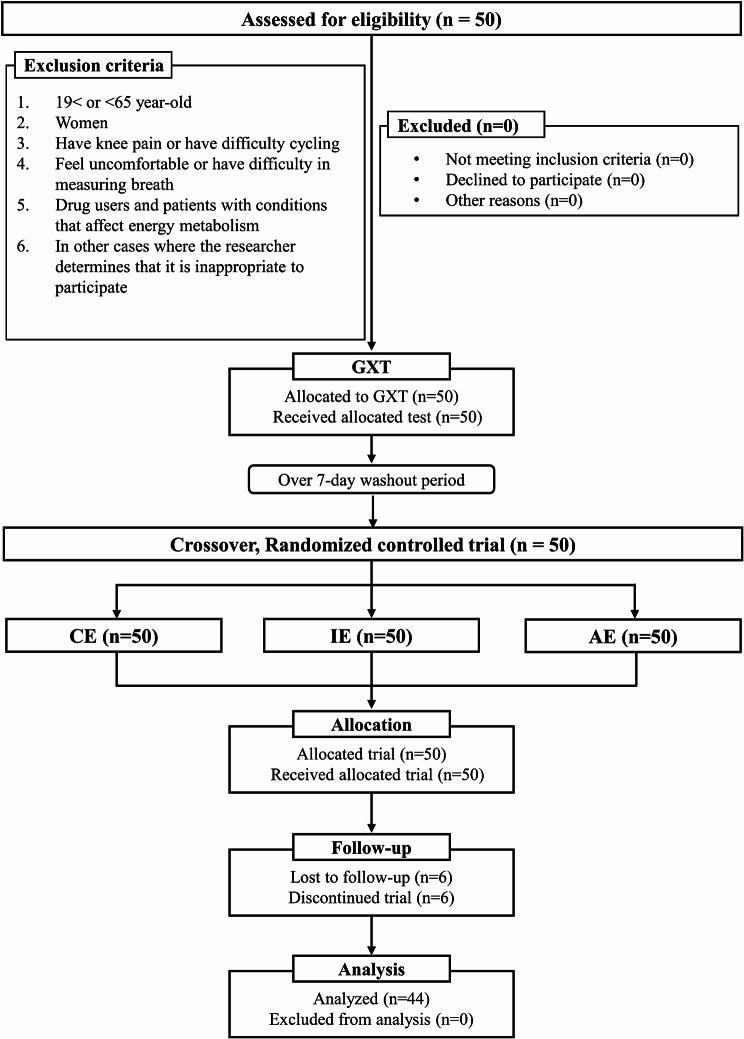
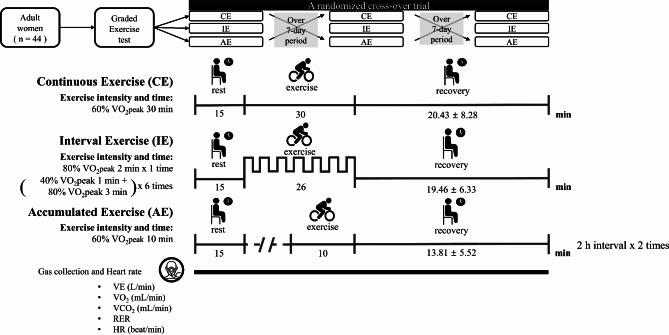
Forty-four participants (age, 36.09 ± 11.73 years) were recruited and randomly allocated to three groups. The intensity of each modality was set as follows: CE was performed for 30 min at 60% peak oxygen uptake (VOpeak). IE was performed once for 2 min at 80% VOpeak, followed by 3 min at 80% VOpeak, and 1 min at 40% VOpeak, for a total of six times over 26 min. AE was performed for 10 min with a 60% VOpeak and was measured thrice a day.
RESULTS
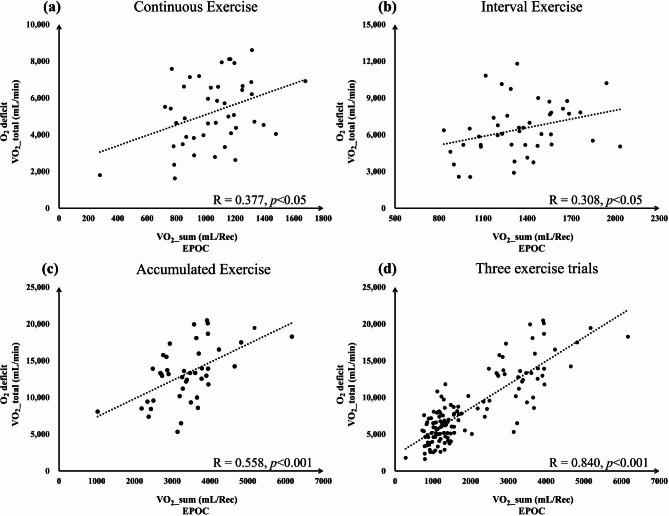
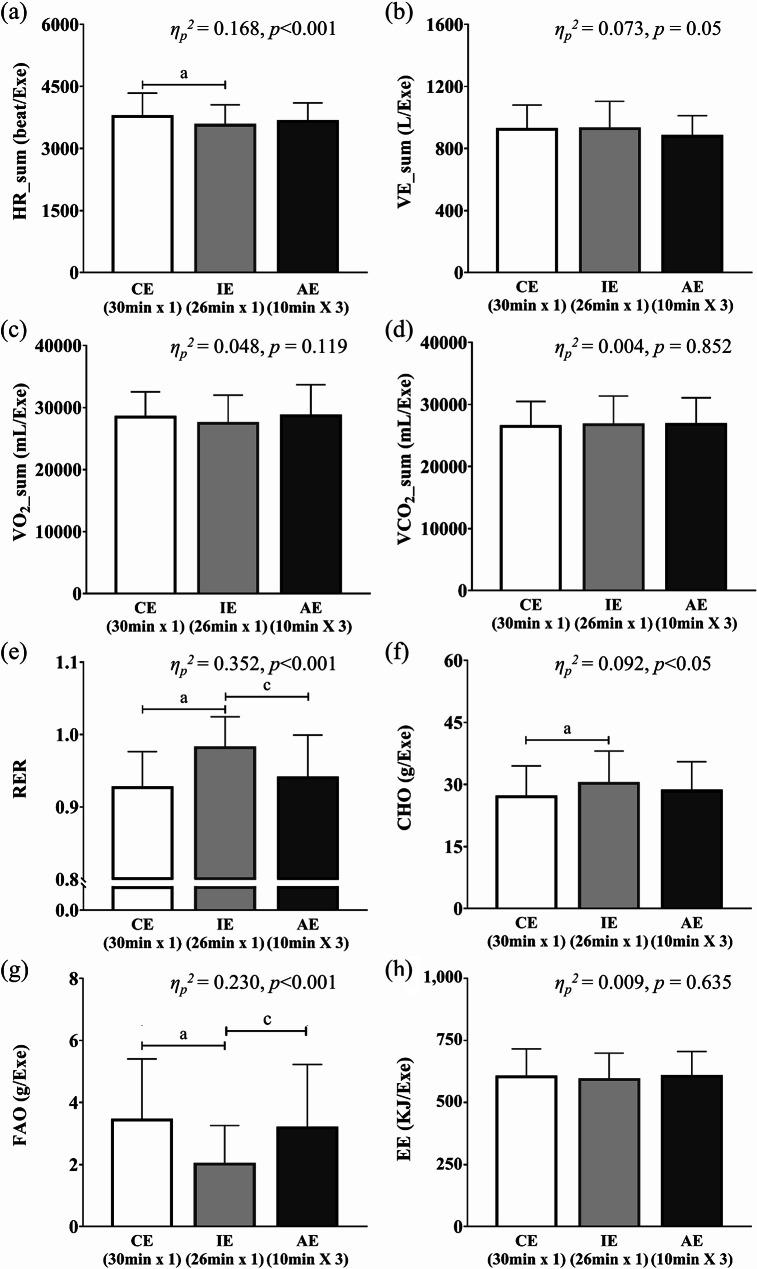
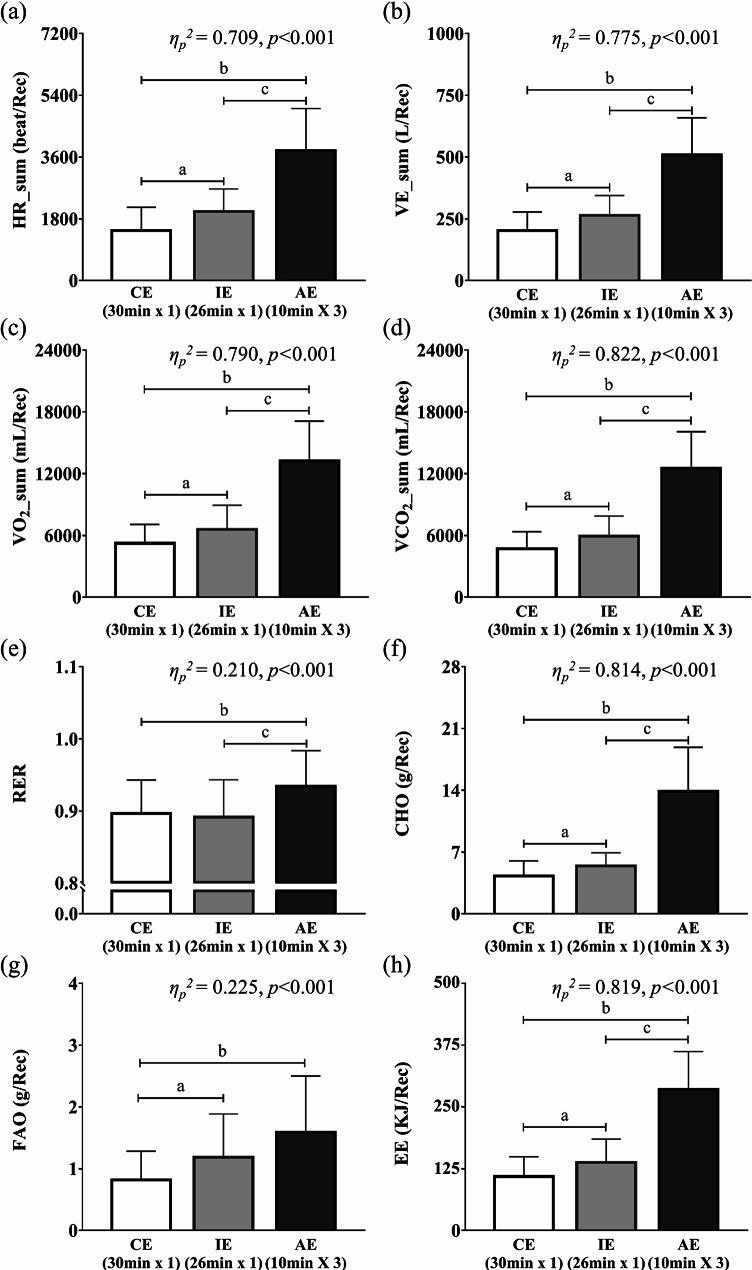
During exercise, energy metabolism was higher for IE and CE than that for AE. However, this was reversed for AE during EPOC. Consequently, the greatest energy metabolism was shown for AE during total time (exercise and EPOC).
CONCLUSIONS
By encouraging regular exercises, AE can help maintain and improve body composition by increasing compliance with exercise participation, given its short exercise times, and by efficiently increasing energy consumption through the accumulation of EPOC.
TRIAL REGISTRATION
Clinical number (KCT0007298), 18/05/2022, Institutional Review Board of Konkuk University (7001355-202201-E-160).
背景
尽管运动对健康有诸多益处,但全世界女性的运动参与度仍然较低。随着女性年龄的增长,她们面临着各种慢性疾病的风险,因此需要提出有效的运动方法,以最大限度地消耗能量,预防这些疾病。运动后过量耗氧量(EPOC)可以最大限度地消耗能量。在这项交叉、随机对照试验中,我们旨在比较不同运动方式(包括持续运动、间歇运动和累积运动)的 EPOC,这些运动方式在运动期间消耗了相同的能量,研究对象为健康女性。
方法
招募了 44 名参与者(年龄为 36.09±11.73 岁),并将其随机分配到三组。每种运动方式的强度设定如下:持续运动持续 30 分钟,强度为 60%峰值摄氧量(VOpeak);间歇运动一次性进行 2 分钟,强度为 80%VOpeak,然后进行 3 分钟,强度为 80%VOpeak,1 分钟,强度为 40%VOpeak,共进行 6 次,持续 26 分钟;累积运动强度为 60%VOpeak,每次运动 10 分钟,每天测量 3 次。
结果
在运动期间,IE 和 CE 的能量代谢高于 AE,但在 EPOC 期间则相反,AE 的能量代谢更高。因此,在总时间(运动和 EPOC)内,AE 的能量代谢最高。
结论
通过鼓励定期运动,AE 可以通过增加对运动参与的依从性来帮助维持和改善身体成分,因为它的运动时间较短,并且通过积累 EPOC 来有效地增加能量消耗。
试验注册
临床编号(KCT0007298),2022 年 5 月 18 日,韩国孔敬大学机构审查委员会(7001355-202201-E-160)。


 Zotero 插件