
常染色质功能相关基因的快速进化。
Prevalent Fast Evolution of Genes Involved in Heterochromatin Functions.
机构信息
Department of Ecology and Evolutionary Biology, University of California, Irvine, CA, USA.
Division of Basic Sciences, Fred Hutchinson Cancer Center, Seattle, WA, USA.
出版信息
Mol Biol Evol. 2024 Sep 4;41(9). doi: 10.1093/molbev/msae181.
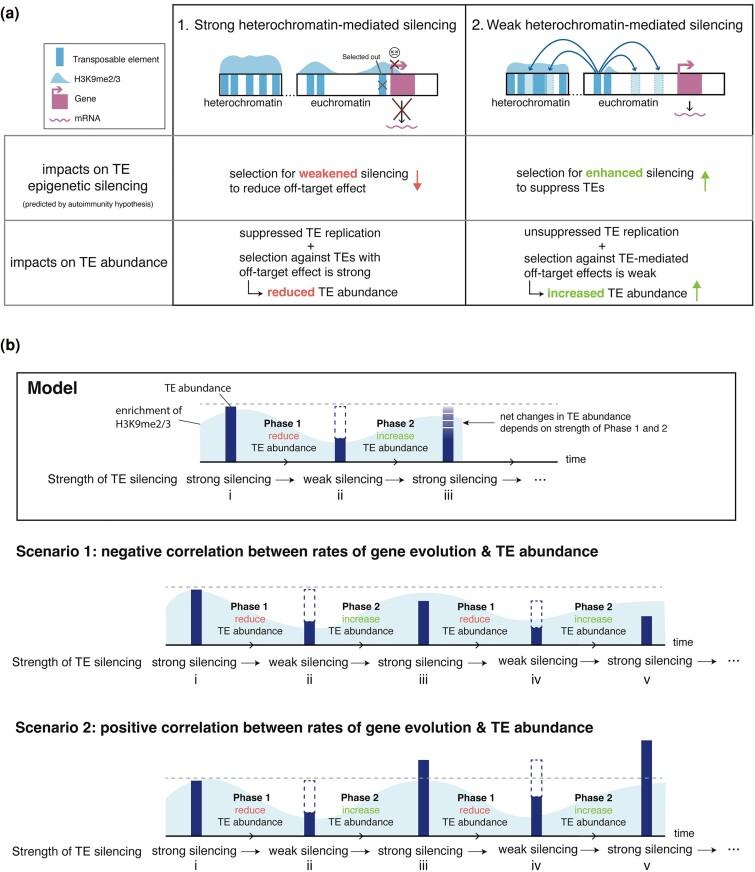
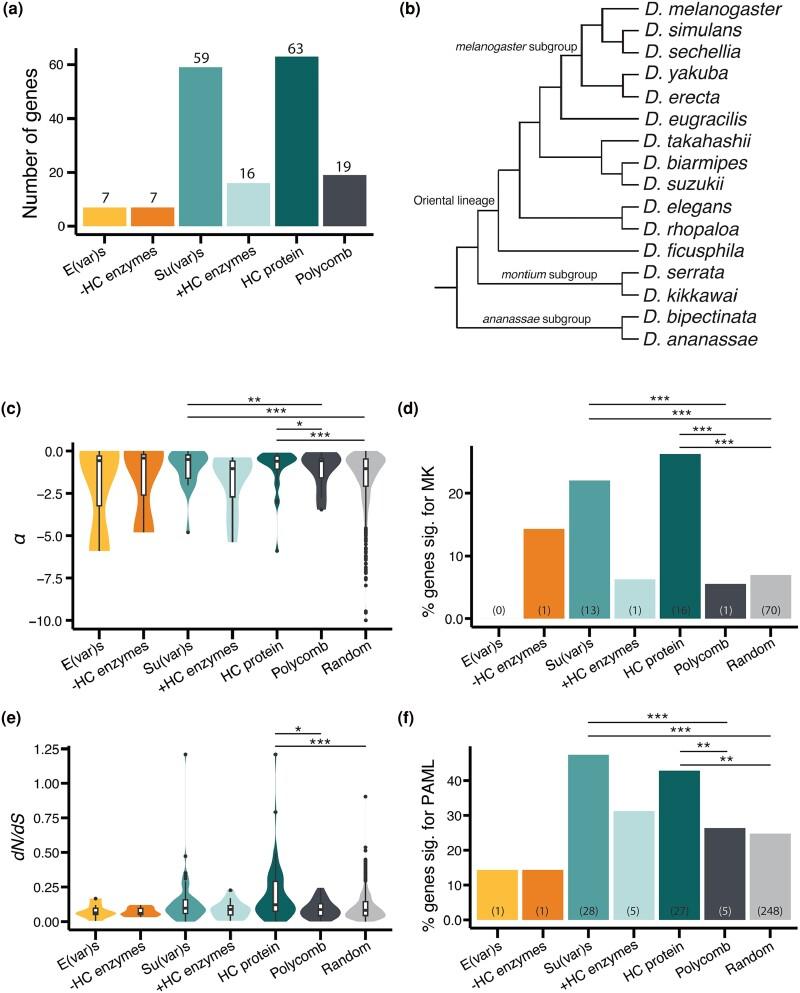
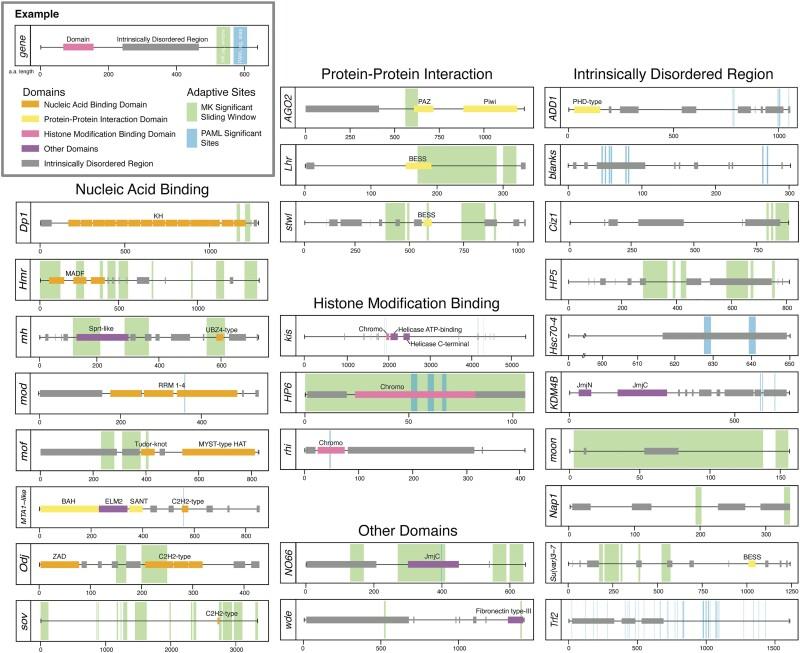
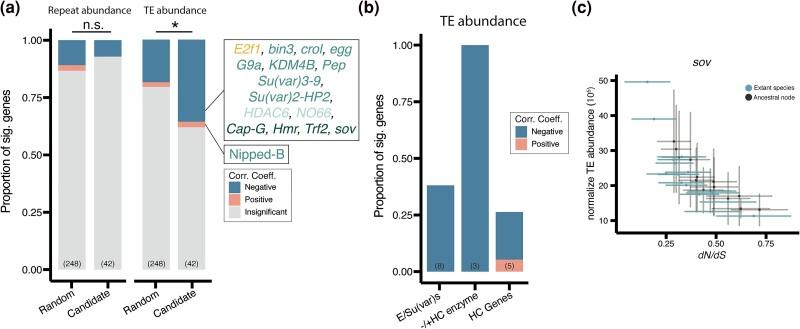
Heterochromatin is a gene-poor and repeat-rich genomic compartment universally found in eukaryotes. Despite its low transcriptional activity, heterochromatin plays important roles in maintaining genome stability, organizing chromosomes, and suppressing transposable elements. Given the importance of these functions, it is expected that genes involved in heterochromatin regulation would be highly conserved. Yet, a handful of these genes were found to evolve rapidly. To investigate whether these previous findings are anecdotal or general to genes modulating heterochromatin, we compile an exhaustive list of 106 candidate genes involved in heterochromatin functions and investigate their evolution over short and long evolutionary time scales in Drosophila. Our analyses find that these genes exhibit significantly more frequent evolutionary changes, both in the forms of amino acid substitutions and gene copy number change, when compared to genes involved in Polycomb-based repressive chromatin. While positive selection drives amino acid changes within both structured domains with diverse functions and intrinsically disordered regions, purifying selection may have maintained the proportions of intrinsically disordered regions of these proteins. Together with the observed negative associations between the evolutionary rate of these genes and the genomic abundance of transposable elements, we propose an evolutionary model where the fast evolution of genes involved in heterochromatin functions is an inevitable outcome of the unique functional roles of heterochromatin, while the rapid evolution of transposable elements may be an effect rather than cause. Our study provides an important global view of the evolution of genes involved in this critical cellular domain and provides insights into the factors driving the distinctive evolution of heterochromatin.
异染色质是一种基因贫乏、重复丰富的基因组区室,普遍存在于真核生物中。尽管异染色质转录活性较低,但它在维持基因组稳定性、组织染色体和抑制转座元件方面发挥着重要作用。鉴于这些功能的重要性,预计参与异染色质调控的基因将高度保守。然而,有少数几个基因被发现进化迅速。为了研究这些先前的发现是偶然的还是普遍适用于调节异染色质的基因,我们编制了一份详尽的 106 个候选基因列表,这些基因参与异染色质功能,并在果蝇中研究它们在短时间和长时间进化尺度上的进化。我们的分析发现,与参与 Polycomb 基序抑制染色质的基因相比,这些基因在氨基酸取代和基因拷贝数变化的形式上表现出更频繁的进化变化。虽然正选择驱动具有不同功能的结构域和固有无序区的氨基酸变化,但纯化选择可能维持了这些蛋白质固有无序区的比例。结合这些基因的进化率与转座元件基因组丰度之间观察到的负相关性,我们提出了一个进化模型,即参与异染色质功能的基因的快速进化是异染色质独特功能角色的必然结果,而转座元件的快速进化可能是一种结果而不是原因。我们的研究提供了一个重要的全局视角,了解参与这一关键细胞域的基因的进化,并深入了解驱动异染色质独特进化的因素。

 Zotero 插件