
人类代谢疾病中的 T 细胞衰老。
T-Cell Senescence in Human Metabolic Diseases.
机构信息
Laboratory of Endocrinology and Immune System, Chungnam National University College of Medicine, Daejeon, Korea.
Department of Medical Science, Chungnam National University College of Medicine, Daejeon, Korea.
出版信息
Diabetes Metab J. 2024 Sep;48(5):864-881. doi: 10.4093/dmj.2024.0140. Epub 2024 Aug 28.
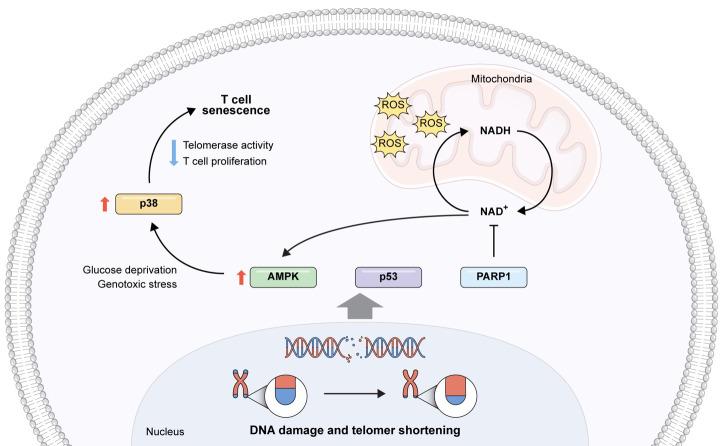
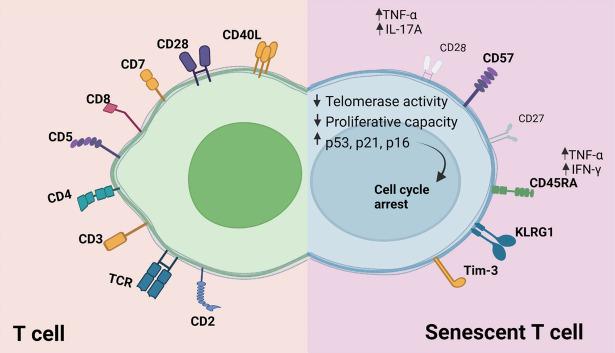
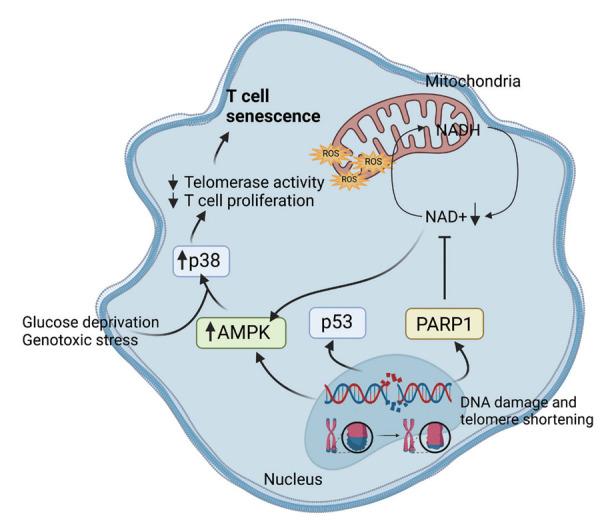
Immunosenescence denotes a state of dysregulated immune cell function characterized by a confluence of factors, including arrested cell cycle, telomere shortening, markers of cellular stress, mitochondrial dysfunction, loss of proteostasis, epigenetic reprogramming, and secretion of proinflammatory mediators. This state primarily manifests during the aging process but can also be induced in various pathological conditions, encompassing chronic viral infections, autoimmune diseases, and metabolic disorders. Age-associated immune system alterations extend to innate and adaptive immune cells, with T-cells exhibiting heightened susceptibility to immunosenescence. In particular, senescent T-cells have been identified in the context of metabolic disorders such as obesity, diabetes, and cardiovascular diseases. Recent investigations suggest a direct link between T-cell senescence, inflammation, and insulin resistance. The perturbation of biological homeostasis by senescent T-cells appears intricately linked to the initiation and progression of metabolic diseases, particularly through inflammation-mediated insulin resistance. Consequently, senescent T-cells are emerging as a noteworthy therapeutic target. This review aims to elucidate the intricate relationship between metabolic diseases and T-cell senescence, providing insights into the potential roles of senescent T-cells in the pathogenesis of metabolic disorders. Through a comprehensive examination of current research findings, this review seeks to contribute to a deeper understanding of the complex interplay between immunosenescence and metabolic health.
免疫衰老表示免疫细胞功能失调的状态,其特征是多种因素的融合,包括细胞周期停滞、端粒缩短、细胞应激标志物、线粒体功能障碍、蛋白质稳态丧失、表观遗传重编程和促炎介质的分泌。这种状态主要在衰老过程中表现出来,但也可以在各种病理条件下诱导,包括慢性病毒感染、自身免疫性疾病和代谢紊乱。与年龄相关的免疫系统改变扩展到先天和适应性免疫细胞,T 细胞对免疫衰老表现出更高的易感性。特别是,在肥胖、糖尿病和心血管疾病等代谢紊乱的情况下已经鉴定出衰老的 T 细胞。最近的研究表明,T 细胞衰老、炎症和胰岛素抵抗之间存在直接联系。衰老 T 细胞对生物体内稳态的干扰似乎与代谢疾病的发生和进展密切相关,特别是通过炎症介导的胰岛素抵抗。因此,衰老的 T 细胞成为一个值得关注的治疗靶点。本综述旨在阐明代谢疾病与 T 细胞衰老之间的复杂关系,深入了解衰老 T 细胞在代谢紊乱发病机制中的潜在作用。通过对当前研究结果的全面检查,本综述旨在促进对免疫衰老和代谢健康之间复杂相互作用的更深入理解。
 Zotero 插件