
乳糜泻患者恶性肿瘤的患病率——一项基于美国全国人口的研究
Prevalence of malignant neoplasms in celiac disease patients - a nationwide United States population-based study.
作者信息
Haider Maryam Bilal, Al Sbihi Ali, Reddy Sushmitha Nanja, Green Peter
机构信息
Department of Gastroenterology, Northshore University Health System, Evanston, IL 60201, United States.
Department of Hematology/Oncology, University of Miami Miller School of Medicine, Miami, FL 33101, United States.
出版信息
World J Clin Oncol. 2024 Aug 24;15(8):1048-1060. doi: 10.5306/wjco.v15.i8.1048.
BACKGROUND
Celiac disease (CeD) is an autoimmune disorder triggered by the immune response to gluten in genetically predisposed individuals. Recent research has unveiled a heightened risk of developing specific malignant neoplasms (MN) and various malignancies, including gastrointestinal, lymphomas, skin, and others, in individuals with CeD.
AIM
To investigate the prevalence of MN in hospitalized CeD patients in the United States.
METHODS
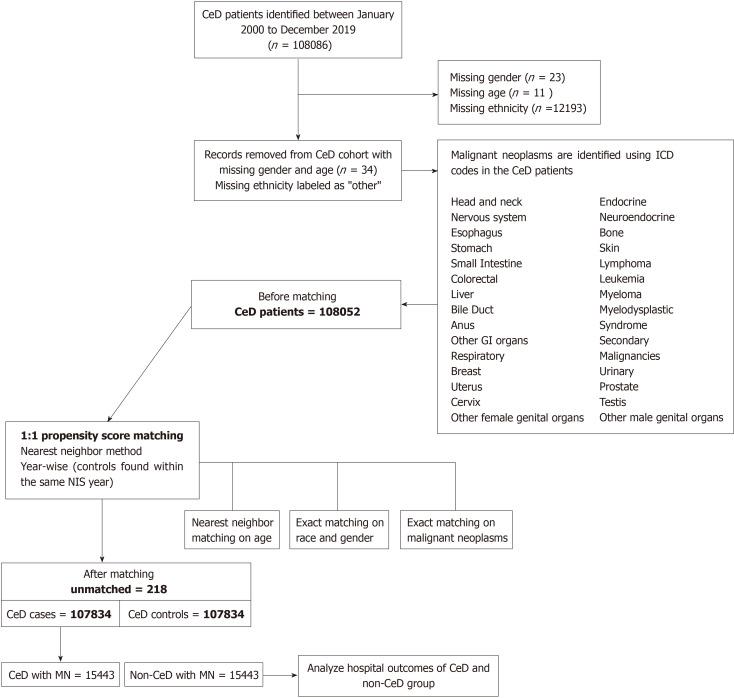
Using data from the National Inpatient Sample spanning two decades, from January 2000 to December 2019, we identified 529842 CeD patients, of which 78128 (14.75%) had MN. Propensity score matching, based on age, sex, race, and calendar year, was employed to compare CeD patients with the general non-CeD population at a 1:1 ratio.
RESULTS
Positive associations were observed for several malignancies, including small intestine, lymphoma, nonmelanoma skin, liver, melanoma skin, pancreas myelodysplastic syndrome, biliary, stomach, and other neuroendocrine tumors (excluding small and large intestine malignant carcinoid), leukemia, uterus, and testis. Conversely, CeD patients exhibited a reduced risk of respiratory and secondary malignancies. Moreover, certain malignancies showed null associations with CeD, including head and neck, nervous system, esophagus, colorectal, anus, breast, malignant carcinoids, bone and connective tissues, myeloma, cervix, and ovary cancers.
CONCLUSION
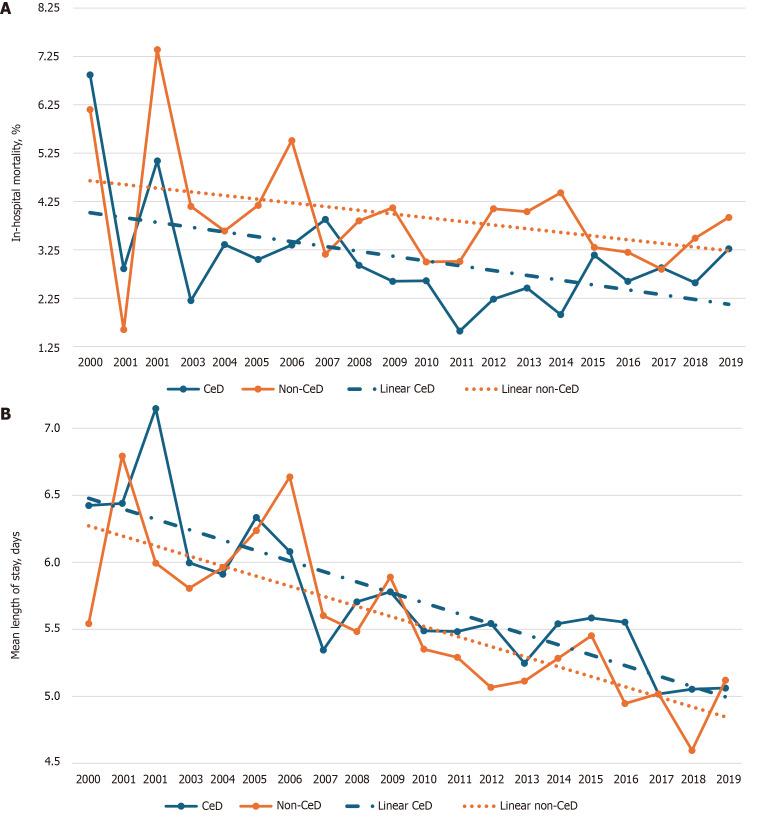
Our study is unique in highlighting the detailed results of positive, negative, or null associations between different hematologic and solid malignancies and CeD. Furthermore, it offers insights into evolving trends in CeD hospital outcomes, shedding light on advancements in its management over the past two decades. These findings contribute valuable information to the understanding of CeD's impact on health and healthcare utilization.
背景
乳糜泻(CeD)是一种自身免疫性疾病,由遗传易感性个体对麸质的免疫反应引发。最近的研究表明,CeD患者发生特定恶性肿瘤(MN)和各种恶性疾病的风险增加,包括胃肠道、淋巴瘤、皮肤等。
目的
调查美国住院CeD患者中MN的患病率。
方法
利用2000年1月至2019年12月这二十年期间的全国住院患者样本数据,我们识别出529842例CeD患者,其中78128例(14.75%)患有MN。采用倾向得分匹配法,根据年龄、性别、种族和日历年份,以1:1的比例将CeD患者与一般非CeD人群进行比较。
结果
观察到几种恶性肿瘤之间存在正相关,包括小肠、淋巴瘤、非黑色素瘤皮肤、肝脏、黑色素瘤皮肤、胰腺骨髓增生异常综合征、胆管、胃和其他神经内分泌肿瘤(不包括小肠和大肠恶性类癌)、白血病、子宫和睾丸。相反,CeD患者发生呼吸道和继发性恶性肿瘤的风险降低。此外,某些恶性肿瘤与CeD无关联,包括头颈、神经系统、食管、结直肠、肛门、乳腺、恶性类癌、骨和结缔组织、骨髓瘤、子宫颈和卵巢癌。
结论
我们的研究独特之处在于突出了不同血液系统和实体恶性肿瘤与CeD之间正、负或无关联的详细结果。此外,它还提供了CeD住院结局的演变趋势,揭示了过去二十年其管理方面的进展。这些发现为理解CeD对健康和医疗利用的影响提供了有价值的信息。

 Zotero 插件