
代谢相关脂肪性肝病中改变的线粒体功能:关键特征与有前景的治疗方法。
Altered Mitochondrial Function in MASLD: Key Features and Promising Therapeutic Approaches.
作者信息
Radosavljevic Tatjana, Brankovic Milica, Samardzic Janko, Djuretić Jasmina, Vukicevic Dusan, Vucevic Danijela, Jakovljevic Vladimir
机构信息
Institute of Pathophysiology "Ljubodrag Buba Mihailovic", Faculty of Medicine, University of Belgrade, 11000 Belgrade, Serbia.
Institute of Pharmacology, Clinical Pharmacology and Toxicology, Faculty of Medicine, University of Belgrade, 11000 Belgrade, Serbia.
出版信息
Antioxidants (Basel). 2024 Jul 26;13(8):906. doi: 10.3390/antiox13080906.
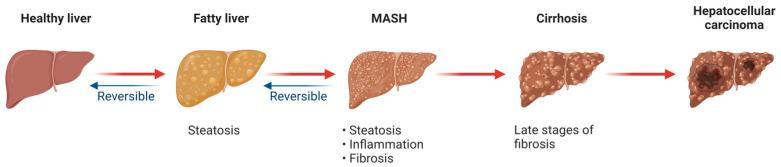
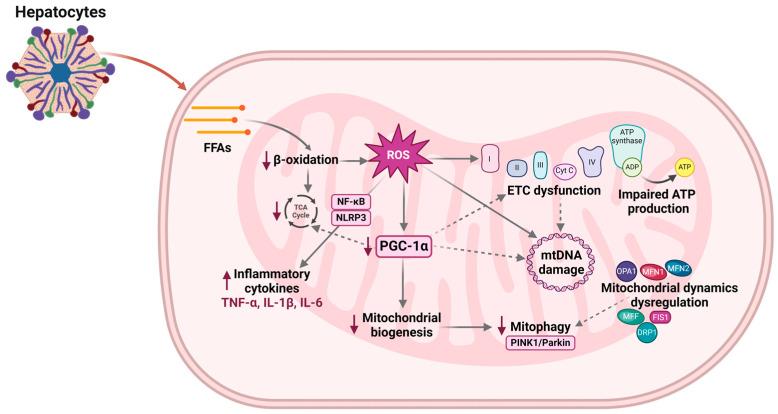
Metabolic dysfunction-associated steatotic liver disease (MASLD), formerly known as nonalcoholic fatty liver disease (NAFLD), encompasses a range of liver conditions from steatosis to nonalcoholic steatohepatitis (NASH). Its prevalence, especially among patients with metabolic syndrome, highlights its growing global impact. The pathogenesis of MASLD involves metabolic dysregulation, inflammation, oxidative stress, genetic factors and, notably, mitochondrial dysfunction. Recent studies underscore the critical role of mitochondrial dysfunction in MASLD's progression. Therapeutically, enhancing mitochondrial function has gained interest, along with lifestyle changes and pharmacological interventions targeting mitochondrial processes. The FDA's approval of resmetirom for metabolic-associated steatohepatitis (MASH) with fibrosis marks a significant step. While resmetirom represents progress, further research is essential to understand MASLD-related mitochondrial dysfunction fully. Innovative strategies like gene editing and small-molecule modulators, alongside lifestyle interventions, can potentially improve MASLD treatment. Drug repurposing and new targets will advance MASLD therapy, addressing its increasing global burden. Therefore, this review aims to provide a better understanding of the role of mitochondrial dysfunction in MASLD and identify more effective preventive and treatment strategies.
代谢功能障碍相关脂肪性肝病(MASLD),以前称为非酒精性脂肪性肝病(NAFLD),涵盖了从脂肪变性到非酒精性脂肪性肝炎(NASH)的一系列肝脏疾病。其患病率,尤其是在代谢综合征患者中的患病率,凸显了其在全球范围内日益增加的影响。MASLD的发病机制涉及代谢失调、炎症、氧化应激、遗传因素,尤其是线粒体功能障碍。最近的研究强调了线粒体功能障碍在MASLD进展中的关键作用。在治疗方面,增强线粒体功能以及针对线粒体过程的生活方式改变和药物干预已引起关注。美国食品药品监督管理局(FDA)批准resmetirom用于治疗伴有纤维化的代谢相关脂肪性肝炎(MASH)是重要的一步。虽然resmetirom代表了进展,但进一步的研究对于全面了解与MASLD相关的线粒体功能障碍至关重要。基因编辑和小分子调节剂等创新策略以及生活方式干预措施可能会改善MASLD的治疗。药物重新利用和新靶点将推动MASLD治疗的发展,应对其日益增加的全球负担。因此,本综述旨在更好地理解线粒体功能障碍在MASLD中的作用,并确定更有效的预防和治疗策略。

 Zotero 插件