
携带 mmu-miR-146a-5p 的血浆外泌体和精神分裂症中 Notch 信号通路介导的突触活动。
Plasma exosomes carrying mmu-miR-146a-5p and Notch signalling pathway-mediated synaptic activity in schizophrenia.
机构信息
From the Departments of Academic Research, Qiqihar Medical University, Qiqihar, PR China (Z. Wang); the School of Basic Medical Sciences, Nanchang University, Nanchang, PR China (Hu); the Community Medicine Department, Faculty of Medicine, Lincoln University College, Malaysia (Alabed); the Department of Psychology, Qiqihar Medical University, Qiqihar, PR China (Wu, Cui, L. Sun, Z. Sun).
From the Departments of Academic Research, Qiqihar Medical University, Qiqihar, PR China (Z. Wang); the School of Basic Medical Sciences, Nanchang University, Nanchang, PR China (Hu); the Community Medicine Department, Faculty of Medicine, Lincoln University College, Malaysia (Alabed); the Department of Psychology, Qiqihar Medical University, Qiqihar, PR China (Wu, Cui, L. Sun, Z. Sun)
出版信息
J Psychiatry Neurosci. 2024 Aug 29;49(4):E265-E281. doi: 10.1503/jpn.230118. Print 2024 Jul-Aug.
BACKGROUND
Schizophrenia is characterized by a complex interplay of genetic and environmental factors, leading to alterations in various molecular pathways that may contribute to its pathogenesis. Recent studies have shown that exosomal microRNAs could play essential roles in various brain disorders; thus, we sought to explore the potential molecular mechanisms through which microRNAs in plasma exosomes are involved in schizophrenia.
METHODS
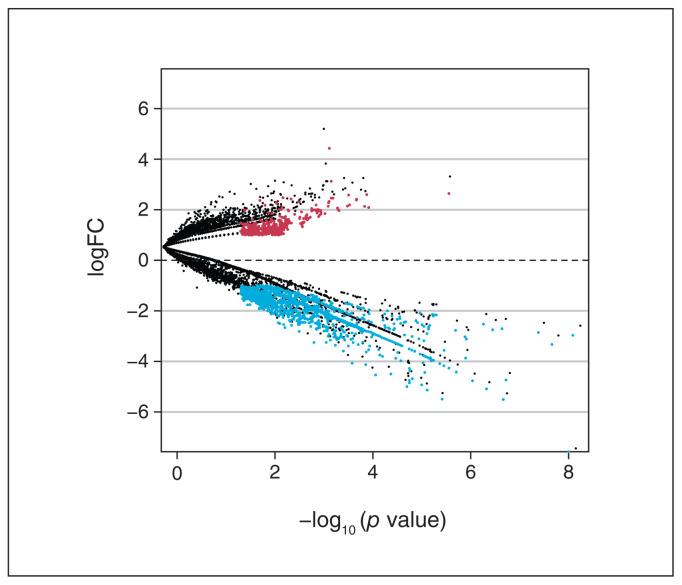
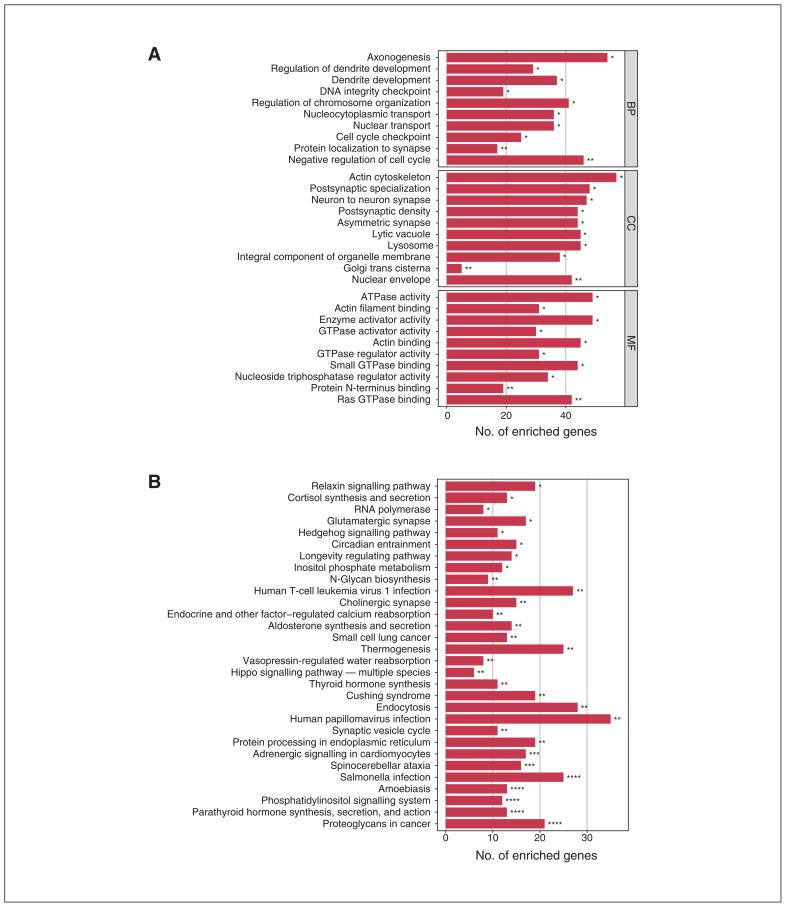
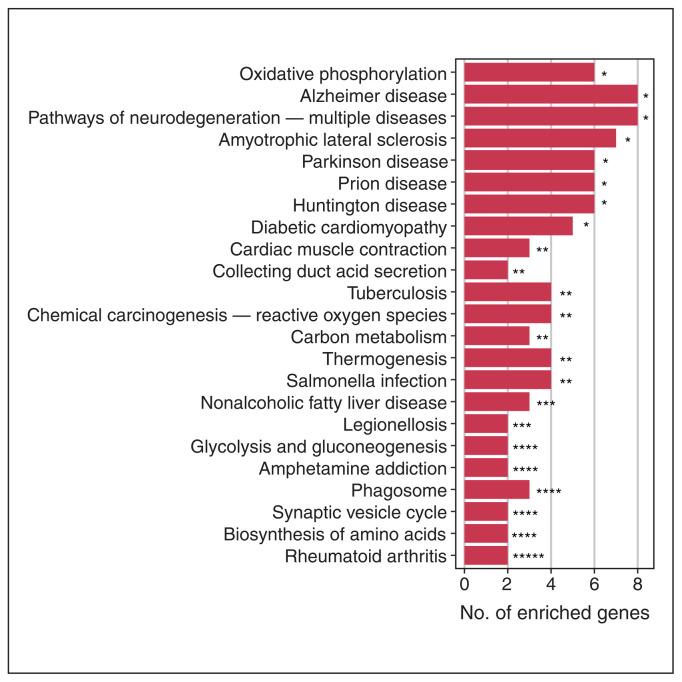
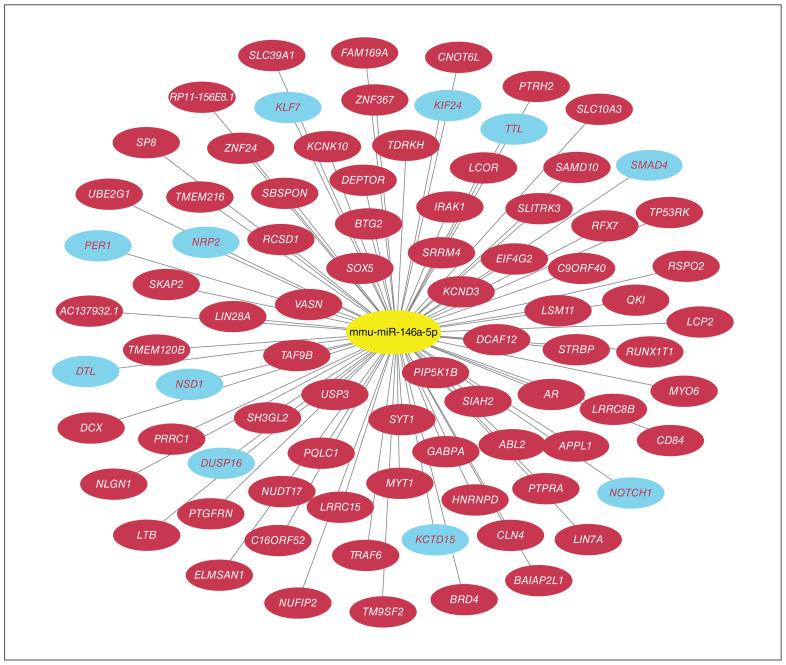
We obtained sequencing data sets (SUB12404730, SUB12422862, and SUB12421357) and transcriptome sequencing data sets (GSE111708, GSE108925, and GSE18981) from mouse models of schizophrenia using the Sequence Read Archive and the Gene Expression Omnibus databases, respectively. We performed differential expression analysis on mRNA to identify differentially expressed genes. We conducted Gene Ontology (GO) functional and Kyoto Encyclopedia of Genes and Genomes (KEGG) pathway enrichment analyses to determine differentially expressed genes. Subsequently, we determined the intersection of differentially expressed microRNAs in plasma exosomes and in prefrontal cortex tissue. We retrieved downstream target genes of mmu-miR-146a-5p from TargetScan and used Cytoscape to visualize and map the microRNA-target gene regulatory network. We conducted in vivo experiments using MK-801-induced mouse schizophrenia models and in vitro experiments using cultured mouse neurons. The role of plasma exosomal miR-146a-5p in schizophrenia was validated using a cell counting kit, detection of lactate dehydrogenase, dual-luciferase assay, quantitative reverse transcription polymerase chain reaction, and Western blot analysis.
RESULTS
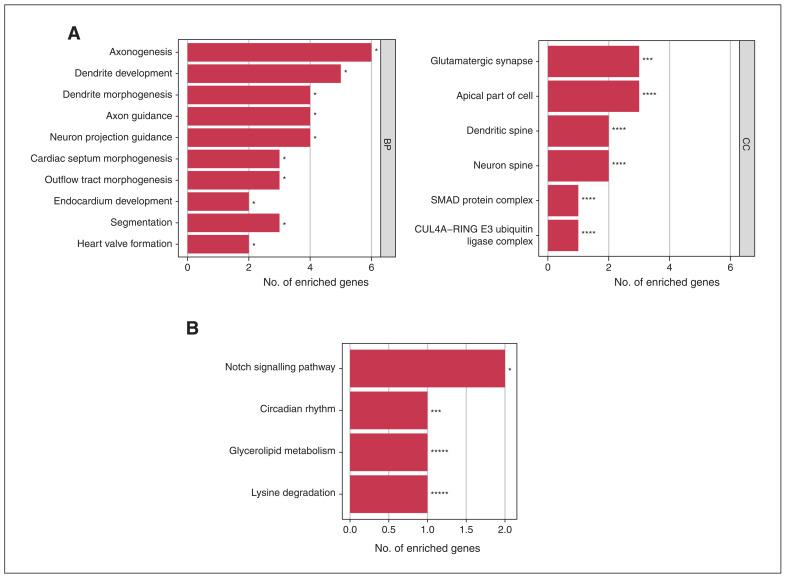
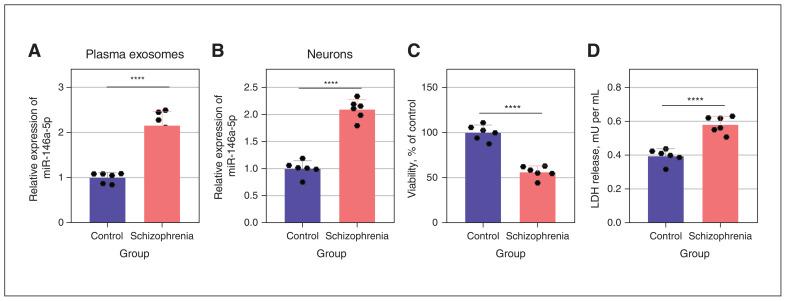
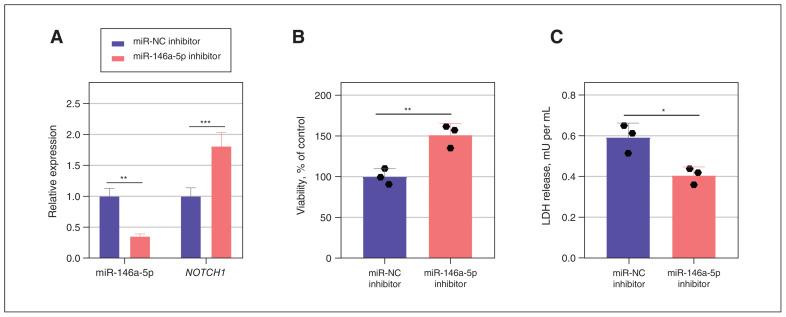
Differential genes were mainly enriched in synaptic regulation-related functions and pathways and were associated with neuronal degeneration. We found that mmu-miR-146a-5p was highly expressed in both prefrontal cortical tissue and plasma exosomes, which may be transferred to lobe cortical vertebral neurons, leading to the synergistic dysregulation of gene network functions and, therefore, promoting schizophrenia development. We found that mmu-miR-146a-5p may inhibit the Notch signalling pathway-mediated synaptic activity of mouse pyramidal neurons in the lobe cortex by targeting , which in turn could promote the onset and development of schizophrenia in mice.
LIMITATIONS
The study's findings are based on animal models and in vitro experiments, which may not fully replicate the complexity of human schizophrenia.
CONCLUSION
Our findings suggest that mmu-miR-146a-5p in plasma-derived exosomes may play an important role in the pathogenesis of schizophrenia. Our results provide new insights into the underlying molecular mechanisms of the disease.
背景
精神分裂症的特征是遗传和环境因素的复杂相互作用,导致各种分子途径的改变,这些改变可能导致其发病机制。最近的研究表明,外泌体 microRNAs 可能在各种脑疾病中发挥重要作用;因此,我们试图探讨 microRNAs 在血浆外泌体中参与精神分裂症的潜在分子机制。
方法
我们分别从精神分裂症小鼠模型的序列读取档案和基因表达综合数据库中获得了测序数据集(SUB12404730、SUB12422862 和 SUB12421357)和转录组测序数据集(GSE111708、GSE108925 和 GSE18981)。我们对 mRNA 进行了差异表达分析,以鉴定差异表达基因。我们进行了基因本体论(GO)功能和京都基因与基因组百科全书(KEGG)通路富集分析,以确定差异表达基因。随后,我们确定了血浆外泌体和前额叶皮层组织中差异表达 microRNAs 的交集。我们从 TargetScan 中检索了 mmu-miR-146a-5p 的下游靶基因,并使用 Cytoscape 可视化和映射了 microRNA-靶基因调控网络。我们使用 MK-801 诱导的小鼠精神分裂症模型进行了体内实验,并使用培养的小鼠神经元进行了体外实验。使用细胞计数试剂盒、检测乳酸脱氢酶、双荧光素酶报告基因检测、定量逆转录聚合酶链反应和 Western blot 分析验证了血浆外泌体 miR-146a-5p 在精神分裂症中的作用。
结果
差异基因主要富集在突触调节相关功能和途径中,与神经元退行性变有关。我们发现 mmu-miR-146a-5p 在前额叶皮质组织和血浆外泌体中均高度表达,可能被转移到外侧皮质椎体神经元,导致基因网络功能的协同失调,从而促进精神分裂症的发展。我们发现,mmu-miR-146a-5p 可能通过靶向 来抑制外侧皮质锥体神经元中的 Notch 信号通路介导的突触活性,从而促进小鼠精神分裂症的发生和发展。
局限性
该研究的发现基于动物模型和体外实验,可能无法完全复制人类精神分裂症的复杂性。
结论
我们的研究结果表明,血浆来源的外泌体中的 mmu-miR-146a-5p 可能在精神分裂症的发病机制中发挥重要作用。我们的研究结果为该疾病的潜在分子机制提供了新的见解。






 Zotero 插件