
聚合酶酸性蛋白 N 端区域的两个氨基酸残基决定了欧亚类禽 H1N1 猪流感病毒在小鼠中的毒力。
Two amino acid residues in the N-terminal region of the polymerase acidic protein determine the virulence of Eurasian avian-like H1N1 swine influenza viruses in mice.
机构信息
State Key Laboratory for Animal Disease Control and Prevention, Harbin Veterinary Research Institute, Chinese Academic Agricultural Sciences, Harbin, China.
出版信息
J Virol. 2024 Oct 22;98(10):e0129324. doi: 10.1128/jvi.01293-24. Epub 2024 Aug 30.
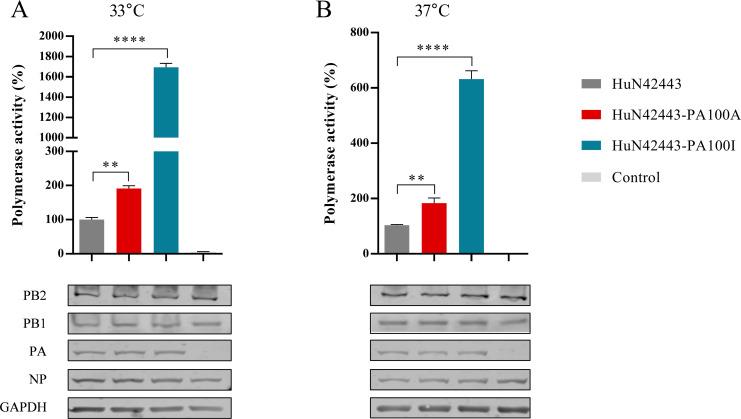
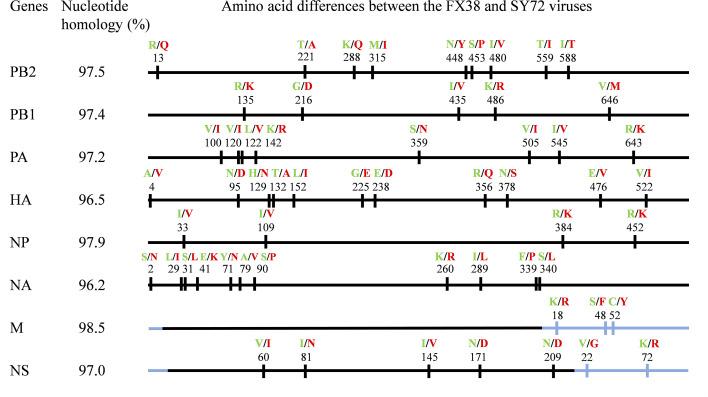
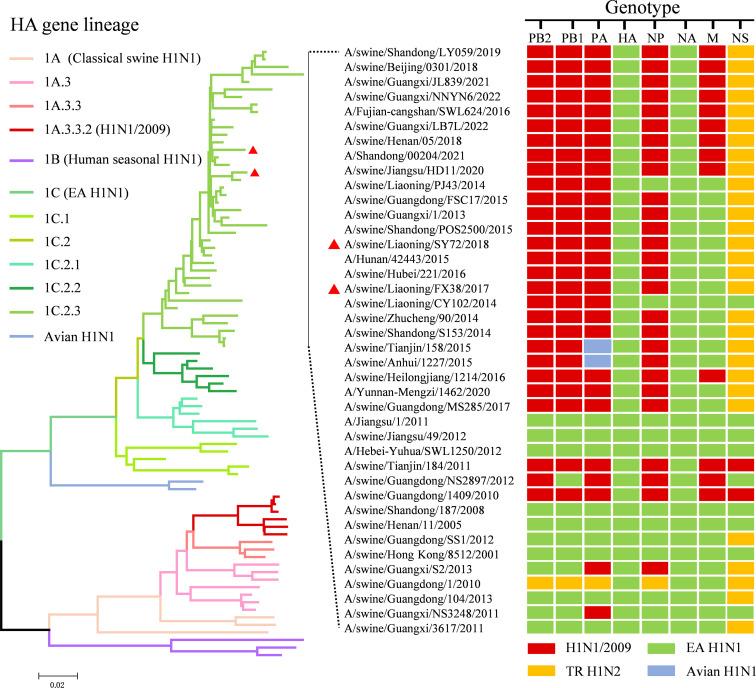
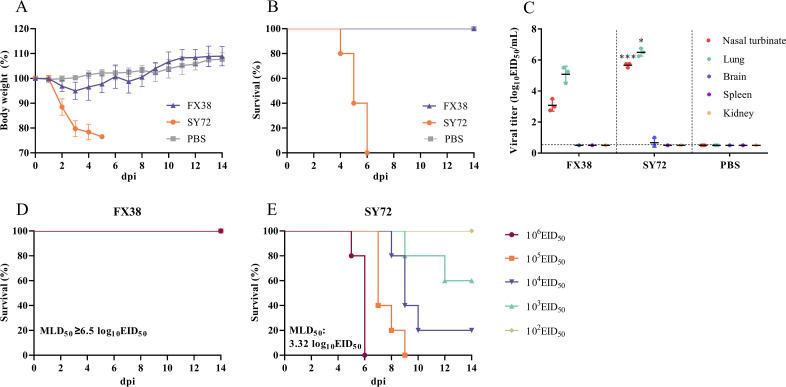
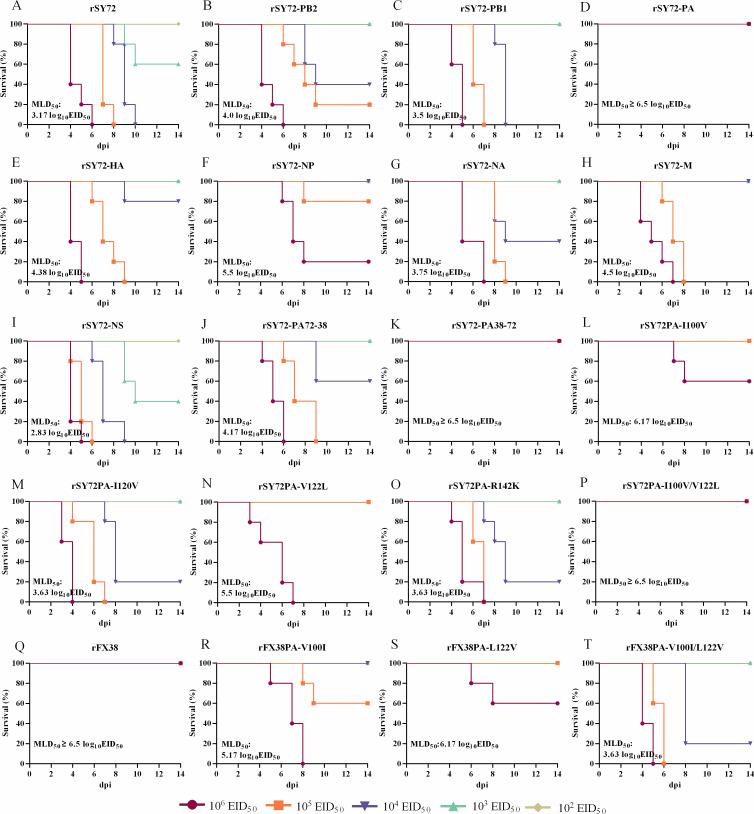
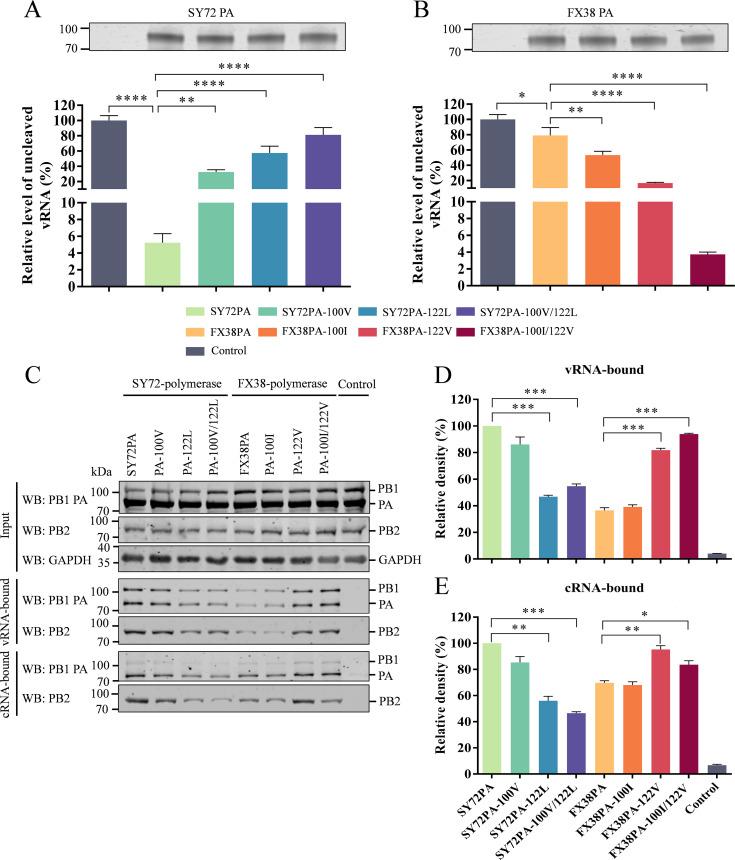
Reassortant Eurasian avian-like H1N1 (rEA H1N1) viruses carrying the internal genes of H1N1/2009 virus have been circulating in pigs for more than 10 years and have caused sporadic human infections. The enhanced virulence phenotype of the rEA H1N1 viruses highlights potential risks to public health. However, the molecular mechanism underlying the viral pathogenicity of the currently circulating rEA H1N1 viruses remains unclear. In this study, we found that two naturally isolated rEA H1N1 swine influenza viruses, A/swine/Liaoning/FX38/2017 (FX38) and A/swine/Liaoning/SY72/2018 (SY72), possessed similar genetic characteristics but exhibited significantly different pathogenicity in a mouse model. Using reverse genetics, we demonstrated that amino acid mutations at positions 100 and 122 in the polymerase acidic (PA) protein had individual and synergistic effects on the polymerase activity and viral replication capacity , as well as the viral pathogenicity in mice. Furthermore, we revealed that amino acid residue 100 in PA influenced the transcription of viral RNA (vRNA) by altering the endonuclease activity, and amino acid residue 122 affected the synthesis of complementary RNA and messenger RNA by altering the RNA-binding ability and endonuclease activity of the PA protein. Taken together, we identified that two naturally occurring amino acid mutations in PA derived from H1N1/2009 virus are crucial determinants of the virulence of rEA H1N1 viruses and revealed the differential mechanism by which these two mutations affect the transcription and replication of vRNA. These findings will extend our understanding of the roles of PA in the virulence of influenza A viruses.IMPORTANCEMultiple genetic determinants are involved in the virulence of influenza A viruses. In this study, we identified two naturally occurring amino acid mutations, located at residues 100 and 122 in the polymerase acidic (PA) protein, which are associated with viral polymerase activity, replication competence, and pathogenicity in mice. In particular, we clarified the specific mechanism by which the two residues play an important role in viral transcription and replication. These findings will help to improve understanding the functions of amino acid residues in the N-terminal region of the PA protein involved in the pathogenicity of influenza A viruses.
重配的欧亚类禽流感 H1N1(rEA H1N1)病毒携带 H1N1/2009 病毒的内部基因,已在猪群中流行超过 10 年,并导致了散发性的人类感染。rEA H1N1 病毒的增强毒力表型突出了对公共卫生的潜在风险。然而,目前流行的 rEA H1N1 病毒的病毒致病性的分子机制尚不清楚。在本研究中,我们发现两种自然分离的 rEA H1N1 猪流感病毒,A/swine/Liaoning/FX38/2017(FX38)和 A/swine/Liaoning/SY72/2018(SY72),具有相似的遗传特征,但在小鼠模型中表现出明显不同的致病性。利用反向遗传学技术,我们证明了聚合酶酸性(PA)蛋白第 100 和 122 位氨基酸的突变对聚合酶活性和病毒复制能力以及小鼠中的病毒致病性具有单独和协同作用。此外,我们揭示了 PA 蛋白中的氨基酸残基 100 通过改变内切酶活性影响病毒 RNA(vRNA)的转录,而氨基酸残基 122 通过改变 RNA 结合能力和内切酶活性影响互补 RNA 和信使 RNA 的合成。总之,我们确定了 PA 中来自 H1N1/2009 病毒的两个自然发生的氨基酸突变是 rEA H1N1 病毒毒力的关键决定因素,并揭示了这两个突变影响 vRNA 转录和复制的差异机制。这些发现将扩展我们对 PA 在流感 A 病毒毒力中的作用的认识。
重要性:流感 A 病毒的毒力涉及多种遗传决定因素。在本研究中,我们鉴定了位于聚合酶酸性(PA)蛋白第 100 和 122 位的两个自然发生的氨基酸突变,这些突变与病毒聚合酶活性、复制能力以及在小鼠中的致病性相关。特别是,我们阐明了这两个残基在病毒转录和复制中发挥重要作用的具体机制。这些发现将有助于提高对流感 A 病毒 PA 蛋白 N 端区域中参与病毒致病性的氨基酸残基的功能的理解。



 Zotero 插件