
聚异丁烯的合成与表征及其对斑马鱼(Danio rerio)发育和内稳态的毒理学影响评价。
Synthesis and characterization of micro-sized polyisobutylene and evaluation of its toxicological effects on the development and homeostasis of zebrafish (Danio rerio).
机构信息
Department of Developmental Biology and Genetics, Indian Institute of Science, Bangalore, India.
Cell Biology and Genetics Unit, Department of Zoology, Faculty of Life Sciences, University of Ilorin, Ilorin, Nigeria.
出版信息
Sci Rep. 2024 Aug 31;14(1):20300. doi: 10.1038/s41598-024-70757-0.
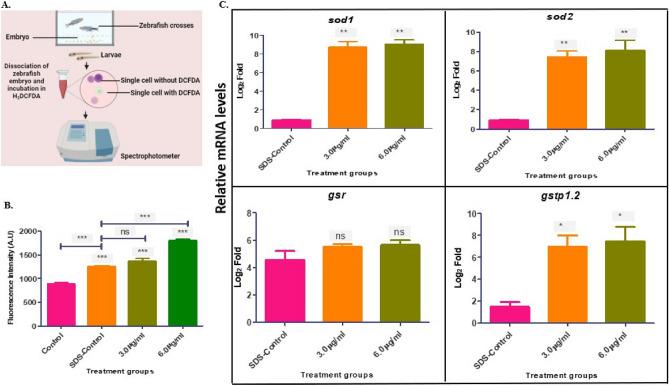
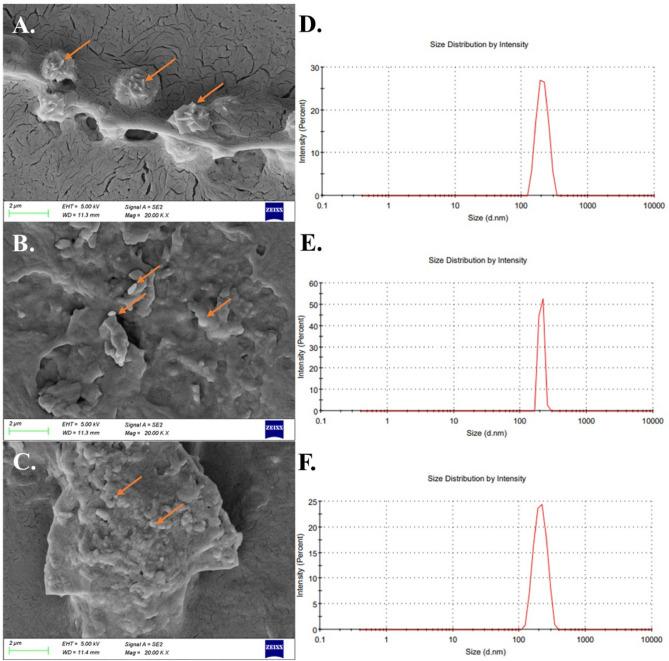
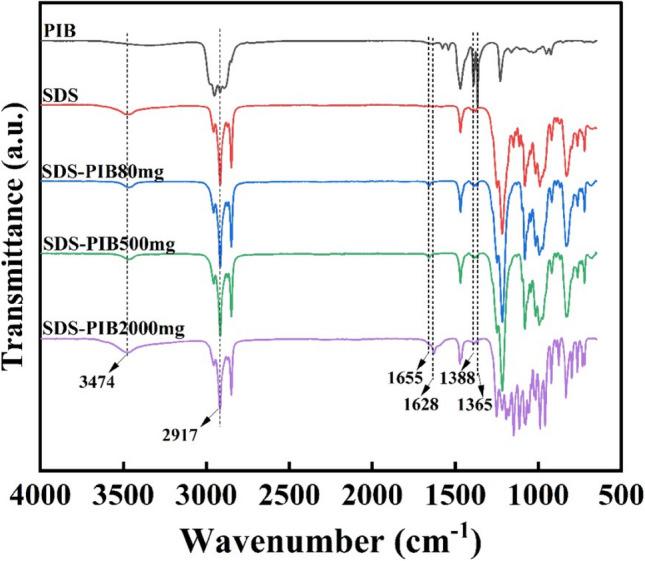
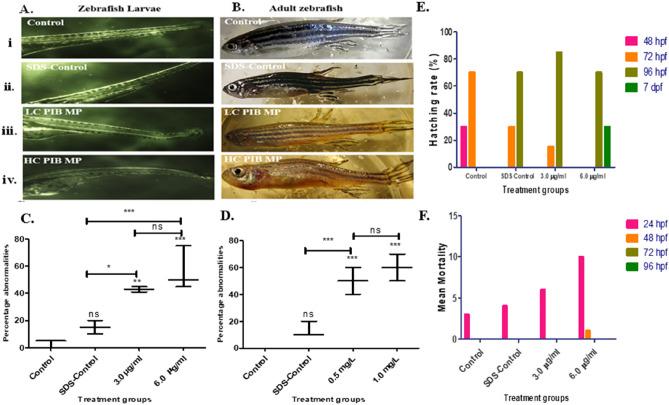
Rampant industrialization has led to widespread reliance on hydrocarbon polymers for various commercial applications. While these synthetic polymers, commonly known as plastics, degrade in slowly in the environments, the toxic effects of their micro-sized particles remain underexplored. In this study, we synthesized polyisobutylene (PIB) microparticles in the lab and evaluated their toxicity and accumulation in a zebrafish model. Pristine and fluorescent PIB-microplastics (MPs), with particle sizes ranging from 2 to 10 μm, were synthesized using the solvent evaporation method. Fourier-transform infrared spectroscopy (FTIR) confirmed the stability of the suspensions. Zebrafish larvae exposed to various concentrations of PIB-MPs exhibited numerous morphological and molecular changes, including delayed hatching, impaired swimming behavior, increased reactive oxygen species levels, altered mRNA levels of genes encoding antioxidant proteins, and reduced survival rates. Dissections revealed PIB-MP accumulation in the guts of larvae and adult fish within 7-21 days, causing damage to the intestinal mucosa. These findings provide insights into how contaminants like PIB can induce pathophysiological defects in aquatic fauna and pose potential health hazards to humans.
工业化的迅猛发展导致人们广泛依赖碳氢聚合物来满足各种商业需求。尽管这些合成聚合物,通常被称为塑料,在环境中降解缓慢,但它们的微颗粒的毒性影响仍未得到充分研究。在这项研究中,我们在实验室中合成了聚异丁烯(PIB)微颗粒,并在斑马鱼模型中评估了它们的毒性和积累。我们使用溶剂蒸发法合成了原始和荧光 PIB 微塑料(MPs),粒径范围为 2 至 10 微米。傅里叶变换红外光谱(FTIR)证实了悬浮液的稳定性。暴露于不同浓度 PIB-MPs 的斑马鱼幼虫表现出多种形态和分子变化,包括孵化延迟、游泳行为受损、活性氧水平升高、编码抗氧化蛋白的基因的 mRNA 水平改变以及存活率降低。解剖结果显示,在 7-21 天内,PIB-MP 在幼虫和成年鱼的肠道中积累,导致肠道黏膜损伤。这些发现深入了解了像 PIB 这样的污染物如何在水生动物中引起病理生理缺陷,并对人类健康构成潜在威胁。



 Zotero 插件