
谱系重编程策略在肝脏再生中的进展和前景。
The Progress and Promise of Lineage Reprogramming Strategies for Liver Regeneration.
机构信息
Beijing Key Laboratory of New Techniques of Tuberculosis Diagnosis and Treatment, Senior Department of Tuberculosis, the Eighth Medical Center of PLA General Hospital, Beijing, China.
Hepatopancreatobiliary Center, Clinical Translational Science Center, Beijing Tsinghua Changgung Hospital, Beijing, China.
出版信息
Cell Mol Gastroenterol Hepatol. 2024;18(6):101395. doi: 10.1016/j.jcmgh.2024.101395. Epub 2024 Aug 30.
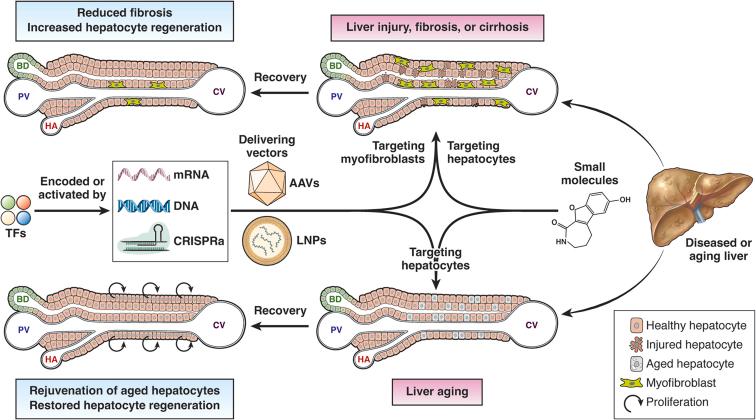
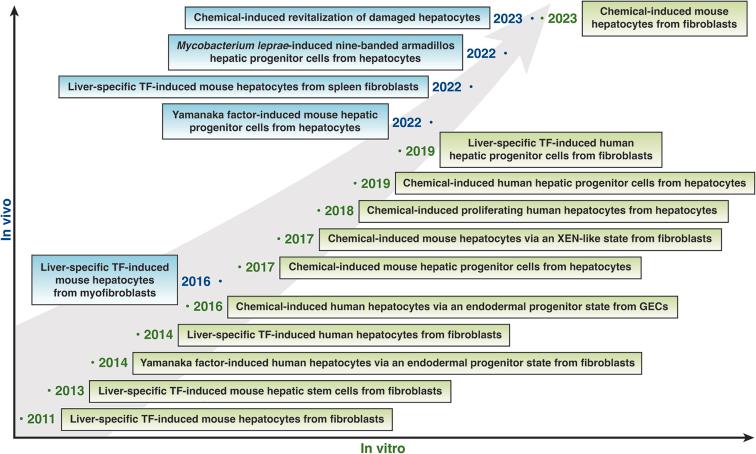
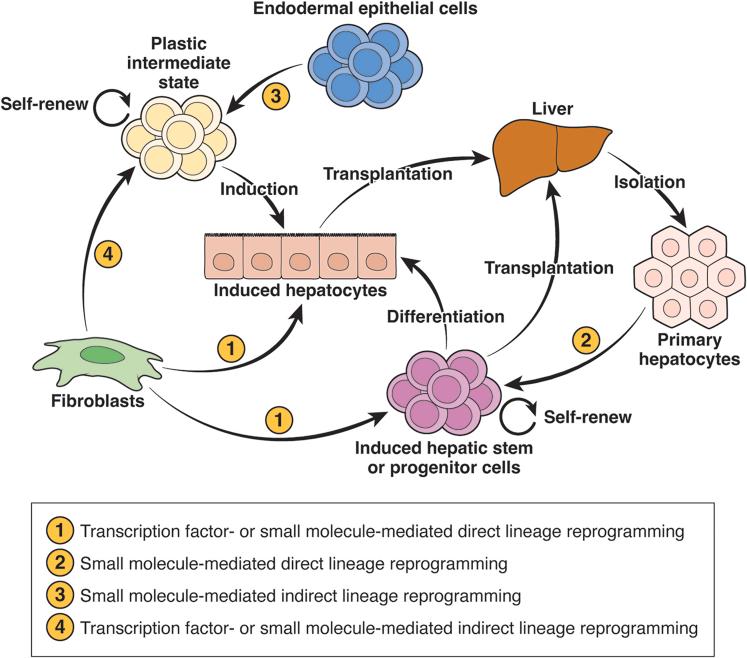
The liver exhibits remarkable regenerative capacity. However, the limited ability of primary human hepatocytes to proliferate in vitro, combined with a compromised regenerative capacity induced by pathological conditions in vivo, presents significant obstacles to effective liver regeneration following liver injuries and diseases. Developing strategies to compensate for the loss of endogenous hepatocytes is crucial for overcoming these challenges, and this remains an active area of investigation. Lineage reprogramming, the process of directly converting one cell type into another bypassing the intermediate pluripotent state, has emerged as a promising method for generating specific cell types for therapeutic purposes in regenerative medicine. Here, we discuss the recent progress and emergent technologies in lineage reprogramming into hepatic cells, and their potential applications in enhancing liver regeneration or treating liver disease models. We also address controversies and challenges that confront this field.
肝脏具有显著的再生能力。然而,原代人肝细胞在体外增殖的能力有限,再加上体内病理条件诱导的再生能力受损,这给肝损伤和疾病后的有效肝脏再生带来了重大障碍。开发补偿内源性肝细胞损失的策略对于克服这些挑战至关重要,这仍然是一个活跃的研究领域。谱系重编程是一种绕过中间多能状态将一种细胞类型直接转化为另一种细胞类型的过程,它已成为一种有前途的方法,可用于生成治疗再生医学中特定细胞类型的方法。在这里,我们讨论了谱系重编程为肝细胞的最新进展和新兴技术,以及它们在增强肝脏再生或治疗肝脏疾病模型方面的潜在应用。我们还讨论了该领域面临的争议和挑战。
 Zotero 插件