
树枝状纳米药物通过扰乱癌症相关成纤维细胞的代谢以实现深度渗透并激活免疫细胞功能,从而增强化学免疫疗法。
Dendritic nanomedicine enhances chemo-immunotherapy by disturbing metabolism of cancer-associated fibroblasts for deep penetration and activating function of immune cells.
作者信息
Li Yunkun, Shen Xiaoding, Ding Haitao, Zhang Yuxin, Pan Dayi, Su Liping, Wu Yahui, Fang Zaixiang, Zhou Jie, Gong Qiyong, Luo Kui
机构信息
Department of Radiology, Huaxi MR Research Center (HMRRC), Frontiers Science Center for Disease-Related Molecular Network, State Key Laboratory of Biotherapy, West China Hospital, Sichuan University, Chengdu 610041, China.
Functional and Molecular Imaging Key Laboratory of Sichuan Province, and Research Unit of Psychoradiology, Chinese Academy of Medical Sciences, Chengdu 610041, China.
出版信息
Acta Pharm Sin B. 2024 Aug;14(8):3680-3696. doi: 10.1016/j.apsb.2024.03.010. Epub 2024 Mar 9.
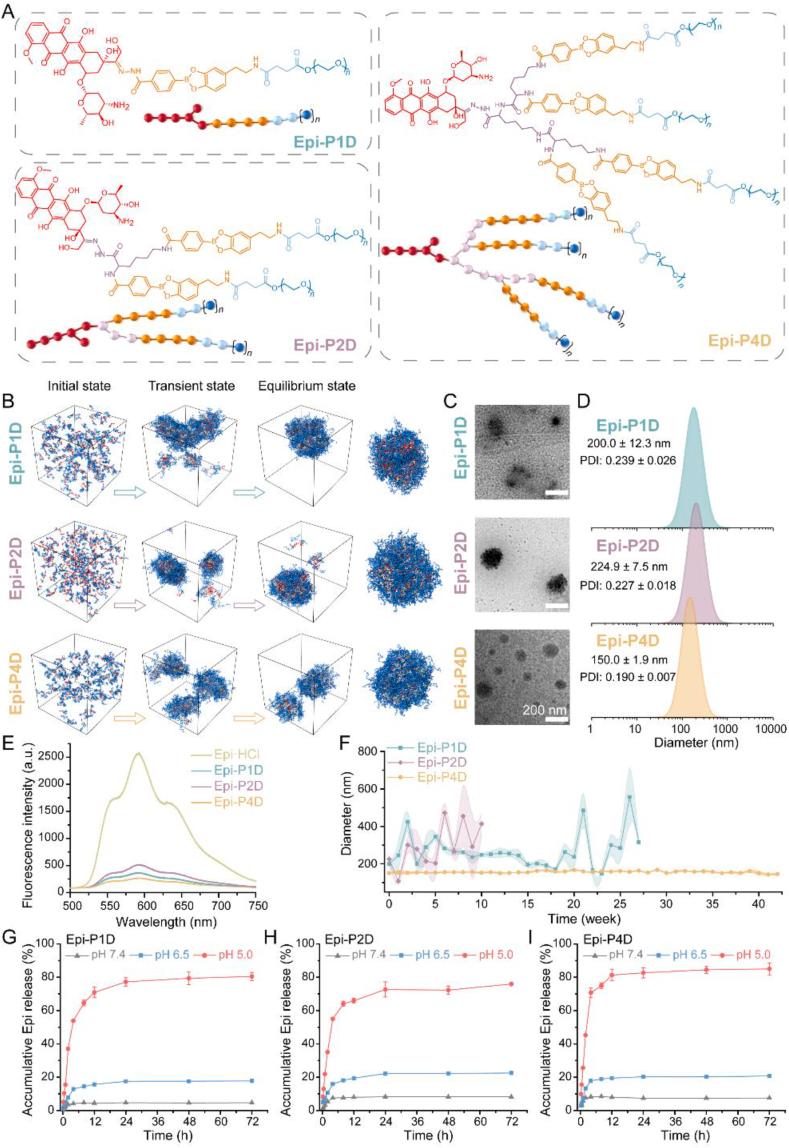
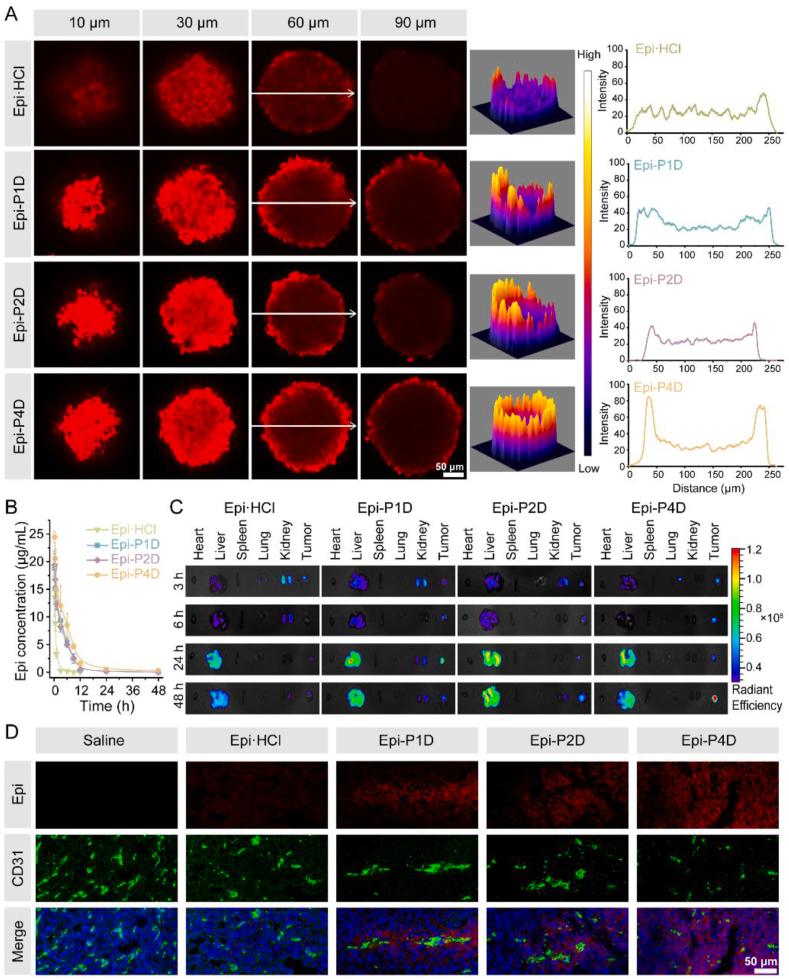
Inefficient drug penetration hurdled by the stroma in the tumor tissue leads to a diminished therapeutic effect for drugs and a reduced infiltration level of immune cells. Herein, we constructed a PEGylated dendritic epirubicin (Epi) prodrug (Epi-P4D) to regulate the metabolism of cancer-associated fibroblasts (CAFs), thus enhancing Epi penetration into both multicellular tumor spheroids (MTSs) and tumor tissues in mouse colon cancer (CT26), mouse breast cancer (4T1) and human breast cancer (MDA-MB-231) models. Enhanced cytotoxicity against CT26 MTSs and remarkable antitumor efficacy of Epi-P4D were ascribed to reduced fibronectin, -SMA, and collagen secretion. Besides, thinning of the tumor tissue stroma and efficient eradication of tumor cells promoted the immunogenic cell death effect for dendritic cell (DC) maturation and subsequent immune activation, including elevating the CD4 T cell population, reducing CD4 and CD8 T cell hyperactivation and exhaustion, and amplifying the natural killer (NK) cell proportion and effectively activating them. As a result, this dendritic nanomedicine thinned the stroma of tumor tissues to enhance drug penetration and facilitate immune cell infiltration for elevated antitumor efficacy.
肿瘤组织中的基质导致药物渗透效率低下,从而降低了药物的治疗效果,并减少了免疫细胞的浸润水平。在此,我们构建了一种聚乙二醇化的表柔比星(Epi)前药(Epi-P4D),以调节癌症相关成纤维细胞(CAF)的代谢,从而增强Epi在小鼠结肠癌(CT26)、小鼠乳腺癌(4T1)和人乳腺癌(MDA-MB-231)模型中的多细胞肿瘤球体(MTS)和肿瘤组织中的渗透。Epi-P4D对CT26 MTS的细胞毒性增强以及显著的抗肿瘤疗效归因于纤连蛋白、α-平滑肌肌动蛋白(α-SMA)和胶原蛋白分泌的减少。此外,肿瘤组织基质的变薄和肿瘤细胞的有效清除促进了树突状细胞(DC)成熟的免疫原性细胞死亡效应以及随后的免疫激活,包括增加CD4 T细胞群体、减少CD4和CD8 T细胞的过度激活和耗竭,以及扩大自然杀伤(NK)细胞比例并有效激活它们。因此,这种树突状纳米药物使肿瘤组织基质变薄,以增强药物渗透并促进免疫细胞浸润,从而提高抗肿瘤疗效。





 Zotero 插件