
轻度至中度 COVID-19 患者中根据 SARS-CoV-2 突变的药物治疗现状和临床结局:一项回顾性单中心研究。
Current status and clinical outcomes of pharmacotherapies according to SARS-CoV-2 mutations in patients with mild-to-moderate COVID-19: a retrospective single center study.
机构信息
College of Pharmacy, Kyungsung University, Busan, Republic of Korea.
College of Pharmacy, Pusan National University, Busan, Republic of Korea.
出版信息
BMC Infect Dis. 2024 Sep 3;24(1):871. doi: 10.1186/s12879-024-09765-4.
BACKGROUND
During the pandemic period, severe acute respiratory syndrome coronavirus 2 (SARS-CoV-2) mutated, leading to changes in the disease's severity and the therapeutic effect of drugs accordingly. This study aimed to present the actual use of therapeutics and clinical outcomes based on the prevalence of each variant using real-world data.
METHODS
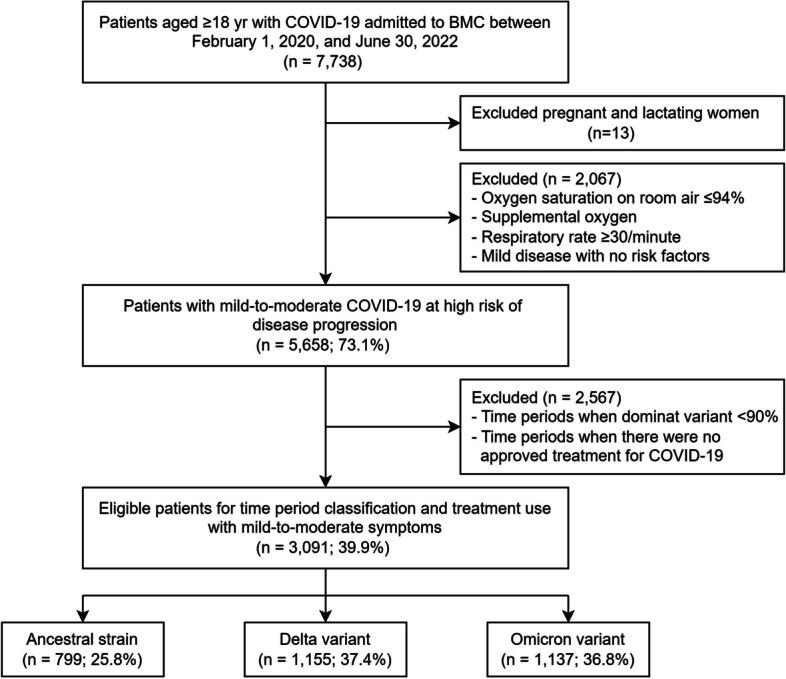
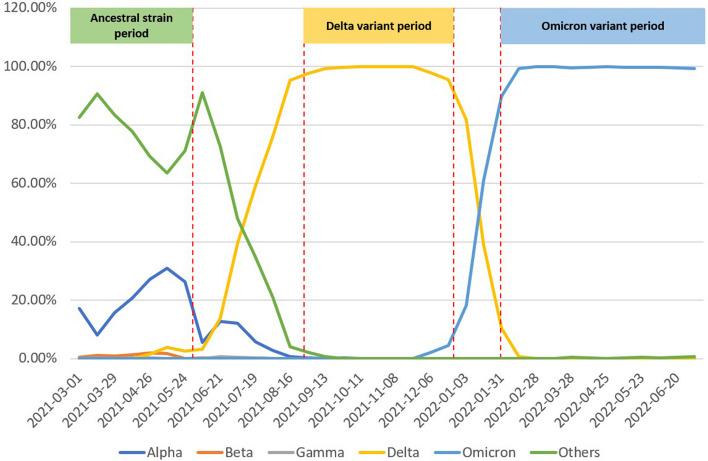
We analyzed the electronic medical records of adult patients admitted to Busan Medical Center after confirming coronavirus disease 2019 (COVID-19) from February 1, 2020, to June 30, 2022. Patients with mild-to-moderate COVID-19 who were at a high risk of disease progression were selected as study subjects, and the time period was classified according to the variants as ancestral strain, Delta variant, or Omicron variant. We compared drug use status and clinical outcomes by time period.
RESULTS
Among all 3,091 patients, corticosteroids were the most commonly used therapy (56.0%), being used most frequently in the Delta variant (93.0%), followed by the Omicron variant (42.9%) and ancestral strain (21.2%). Regdanvimab accounted for the majority of therapeutic use in the Delta variant (82.9%) and ancestral strain (76.8%), whereas remdesivir was most frequently used during the Omicron variant period (68.9%). The composite outcomes of death or disease aggravation were ranked in the order of the Delta variant, Omicron variant, and ancestral strain (14.5, 11.9, and 6.0%, respectively, P < 0.001).
CONCLUSION
Regdanvimab was primarily used during the ancestral strain period, regdanvimab plus corticosteroids during the Delta variant period, and remdesivir during the Omicron variant period. The rate of death or disease aggravation was highest in the Delta variant, followed by the Omicron variant and the ancestral strain.
背景
在大流行期间,严重急性呼吸综合征冠状病毒 2(SARS-CoV-2)发生了突变,导致疾病的严重程度和药物的治疗效果相应变化。本研究旨在根据每种变体的流行情况,使用真实世界数据介绍基于治疗药物的实际使用情况和临床结局。
方法
我们分析了 2020 年 2 月 1 日至 2022 年 6 月 30 日期间在釜山医疗中心确诊 2019 年冠状病毒病(COVID-19)后住院的成年患者的电子病历。选择有疾病进展高风险的轻症至中度 COVID-19 患者作为研究对象,并按变体分为原始株、Delta 变体或奥密克戎变体时间期。我们比较了不同时期的药物使用状况和临床结局。
结果
在所有 3091 名患者中,皮质类固醇是最常用的治疗方法(56.0%),在 Delta 变体中使用最频繁(93.0%),其次是奥密克戎变体(42.9%)和原始株(21.2%)。Regdanvimab 在 Delta 变体(82.9%)和原始株(76.8%)中占治疗使用的大多数,而 remdesivir 在奥密克戎变体期间使用最频繁(68.9%)。死亡或病情加重的综合结局按 Delta 变体、Omicron 变体和原始株的顺序排列(分别为 14.5%、11.9%和 6.0%,P<0.001)。
结论
Regdanvimab 主要在原始株期间使用,Regdanvimab 加皮质类固醇在 Delta 变体期间使用,remdesivir 在奥密克戎变体期间使用。Delta 变体的死亡率或病情加重率最高,其次是奥密克戎变体和原始株。
 Zotero 插件