
英国所有婴儿首个呼吸道合胞病毒(RSV)流行季的疾病负担:使用尼塞韦单抗针对RSV相关结局进行普遍免疫的静态模型
Disease Burden Associated with All Infants in Their First RSV Season in the UK: A Static Model of Universal Immunization with Nirsevimab Against RSV-Related Outcomes.
作者信息
Kieffer Alexia, Beuvelet Matthieu, Moncayo Gerald, Chetty Mersha, Sardesai Aditya, Musci Robert, Hudson Richard
机构信息
Sanofi, Lyon, France.
Sanofi, 410 Thames Valley Park Drive, Reading, Berkshire, RG6 1PT, UK.
出版信息
Infect Dis Ther. 2024 Oct;13(10):2135-2153. doi: 10.1007/s40121-024-01037-7. Epub 2024 Sep 5.
INTRODUCTION
Respiratory syncytial virus (RSV) leads to significant morbidity in newborn infants in the United Kingdom (UK). Nirsevimab, a long-acting monoclonal antibody, received approval from the European Medicines Agency and has been licensed by the Medicines and Healthcare products Regulatory Agency for preventing RSV lower respiratory tract disease (LRTD) in neonates and infants during their first RSV season. The objective of this study was to assess the potential impact of nirsevimab on RSV-associated LRTDs, related costs, and loss of quality-adjusted life years (QALYs) in infants experiencing their first RSV season.
METHODS
The impact of administering nirsevimab across all infant populations compared to palivizumab in the high-risk palivizumab-eligible population was assessed via a static decision-analytic model specified for a UK birth cohort experiencing their first RSV season. The RSV-related health events of interest included primary care (PC), accident and emergency (A&E) visits, hospitalizations [including hospitalizations alone and those resulting in intensive care unit (ICU) admissions], recurrent wheezing in infants who were previously hospitalized, and all-cause LRTD hospitalizations.
RESULTS
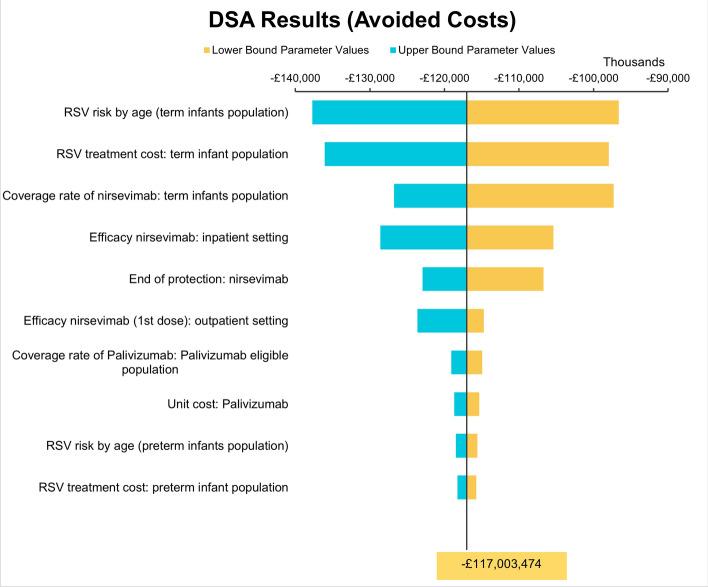
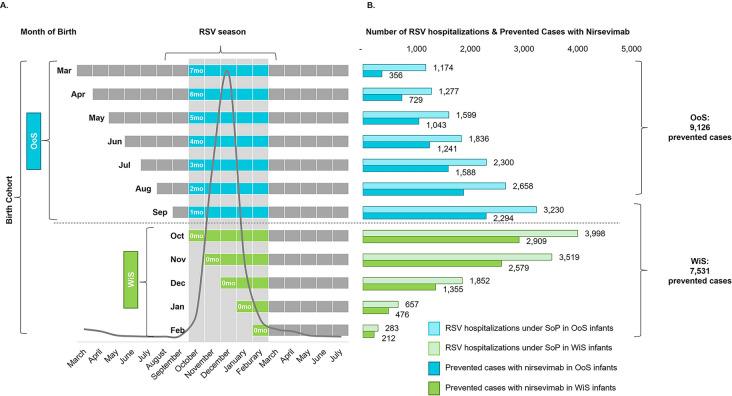
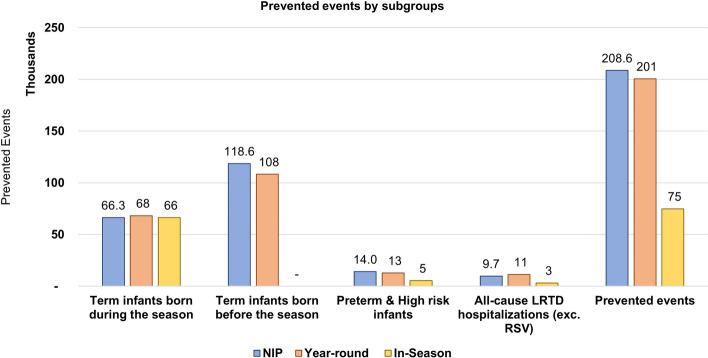
Under the current standard of practice (SoP), RSV was estimated to result in 329,425 RSV LRTDs annually, including 24,381 hospitalizations and ICU admissions, representing £117.8 million (2024 GBP) in costs. Comparatively, universal immunization of all infants with nirsevimab could avoid 198,886 RSV LRTDs, including 16,657 hospitalizations and ICU admissions, resulting in savings of £77.2 million in RSV treatment costs. Considering the impact on all-cause LRTD of a universal immunization strategy, nirsevimab could be valued between £243 and £274, assuming willingness-to-pay (WTP) thresholds of £20,000 and £30,000 per QALY saved, respectively.
CONCLUSIONS
This analysis demonstrated that the health and economic burden of RSV would be substantially reduced in all infants experiencing their first RSV season in the UK (including term, preterm, and palivizumab-eligible infants) as a result of a universal immunization strategy with nirsevimab.
引言
呼吸道合胞病毒(RSV)在英国导致新生儿出现严重发病情况。Nirsevimab是一种长效单克隆抗体,已获得欧洲药品管理局的批准,并已获英国药品和医疗产品监管局许可,用于预防新生儿和婴儿在首个RSV流行季发生RSV下呼吸道疾病(LRTD)。本研究的目的是评估nirsevimab对首个RSV流行季婴儿的RSV相关LRTD、相关成本以及质量调整生命年(QALY)损失的潜在影响。
方法
通过为经历首个RSV流行季的英国出生队列指定的静态决策分析模型,评估在所有婴儿群体中使用nirsevimab与在符合使用帕利珠单抗的高危人群中使用帕利珠单抗相比的影响。感兴趣的RSV相关健康事件包括初级保健(PC)、急诊(A&E)就诊、住院治疗[包括单纯住院以及导致入住重症监护病房(ICU)的住院治疗]、既往住院婴儿的反复喘息以及全因LRTD住院治疗。
结果
在当前的实践标准(SoP)下,估计RSV每年导致329,425例RSV LRTD,包括24,381例住院和ICU入住,成本达1.178亿英镑(2024年英镑)。相比之下,对所有婴儿普遍接种nirsevimab可避免198,886例RSV LRTD,包括16,657例住院和ICU入住,节省RSV治疗成本7720万英镑。考虑到普遍免疫策略对全因LRTD的影响,假设每挽救一个QALY的支付意愿(WTP)阈值分别为20,000英镑和30,000英镑,则nirsevimab的价值在243英镑至274英镑之间。
结论
该分析表明,通过使用nirsevimab的普遍免疫策略,在英国所有经历首个RSV流行季的婴儿(包括足月儿、早产儿和符合使用帕利珠单抗条件的婴儿)中,RSV的健康和经济负担将大幅降低。
 Zotero 插件