
伏硫西汀治疗儿童和青少年重度抑郁症:6个月和18个月开放标签、灵活剂量、长期延长期研究
Vortioxetine in children and adolescents with major depressive disorder: 6-month and 18-month open-label, flexible-dose, long-term extension studies.
作者信息
DelBello Melissa P, Findling Robert L, Huss Michael, Necking Oscar, Petersen Maria L, Schmidt Simon N, Rosen Monika
机构信息
Department of Psychiatry and Behavioral Neuroscience, University of Cincinnati College of Medicine, 260 Stetson Ave. Suite 3200, Cincinnati, Ohio, 45219, USA.
Department of Psychiatry, Virginia Commonwealth University, Richmond, VA, USA.
出版信息
Eur Child Adolesc Psychiatry. 2025 Apr;34(4):1425-1434. doi: 10.1007/s00787-024-02560-1. Epub 2024 Sep 6.
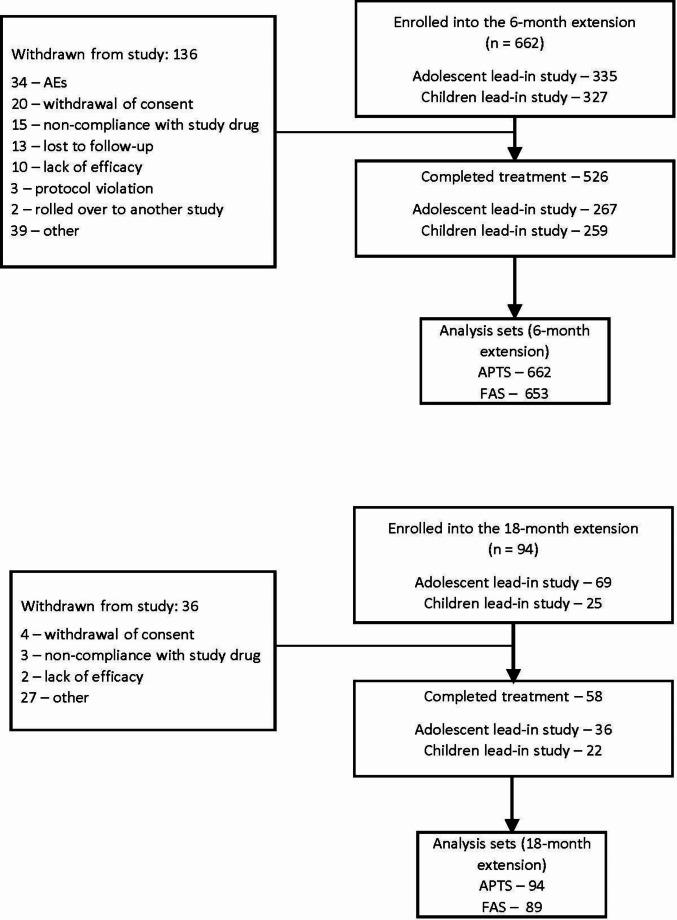
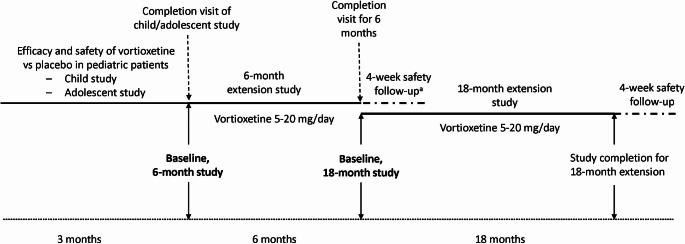
Children and adolescents with severe or relapsing major depressive disorder (MDD) may require long-term antidepressant use, but safety and tolerability data on long-term treatment are limited. In a randomized, placebo-controlled trial in children and another in adolescents, vortioxetine and placebo groups showed improvement in MDD symptoms without statistically significant differences between groups. To gain insights on long-term safety and tolerability of vortioxetine in pediatric patients, participants from these two studies were enrolled in two long-term extension studies: 6 months (NCT02871297) followed by another 18 months (NCT03108625). Key safety measures included adverse events (AEs) and Columbia-Suicide Severity Rating Scale (C-SSRS); effectiveness measures included depression symptom severity, cognitive function, and overall functioning. Among the 662 patients in the 6-month extension, 61% experienced a treatment-emergent AE (TEAE), with the most common being nausea (20.8%); 2.1% had a serious AE (SAE), and 6% withdrew because of TEAEs. In the following 18-month extension (n = 94), 51% of patients experienced a TEAE, with the most common being headache (13.8%); no SAEs were reported. Based on the C-SSRS, 94% and 96% of patients reported no suicidal ideation or behavior in the 6- and 18-month studies, respectively. During the extension studies, patients continued to show improvement in depressive symptoms and cognitive and overall functioning, with > 50% of patients in remission at the end of each study, regardless of study treatment in the lead-in trial. Overall, vortioxetine remained well tolerated in pediatric patients with MDD who continued in the long-term extension studies with no observed increased risk in suicidal ideation.
患有重度或复发性重度抑郁症(MDD)的儿童和青少年可能需要长期使用抗抑郁药,但长期治疗的安全性和耐受性数据有限。在一项针对儿童的随机、安慰剂对照试验和另一项针对青少年的试验中,伏硫西汀组和安慰剂组的MDD症状均有改善,组间差异无统计学意义。为了深入了解伏硫西汀在儿科患者中的长期安全性和耐受性,这两项研究的参与者被纳入两项长期扩展研究:一项为期6个月(NCT02871297),随后另一项为期18个月(NCT03108625)。主要安全指标包括不良事件(AE)和哥伦比亚自杀严重程度评定量表(C-SSRS);疗效指标包括抑郁症状严重程度、认知功能和整体功能。在为期6个月的扩展研究中的662名患者中,61%经历了治疗中出现的不良事件(TEAE),最常见的是恶心(20.8%);2.1%发生严重不良事件(SAE),6%因TEAE退出。在接下来为期18个月的扩展研究(n = 94)中,51%的患者经历了TEAE,最常见的是头痛(13.8%);未报告SAE。根据C-SSRS,在6个月和18个月的研究中,分别有94%和96%的患者报告无自杀意念或行为。在扩展研究期间,患者的抑郁症状、认知功能和整体功能持续改善,每项研究结束时超过50%的患者病情缓解,无论导入试验中的研究治疗如何。总体而言,在长期扩展研究中继续治疗的患有MDD的儿科患者中,伏硫西汀耐受性良好未观察到自杀意念风险增加。
 Zotero 插件