
一项针对多达 10 个寡转移灶和同步原发性肿瘤患者的立体定向消融放疗的随机 III 期临床试验(SABR-SYNC):研究方案。
A randomized phase III trial of stereotactic ablative radiotherapy for patients with up to 10 oligometastases and a synchronous primary tumor (SABR-SYNC): study protocol.
机构信息
Department of Oncology, London Health Sciences Centre, Western University, 800 Commissioners Rd. E, London, ON, N6A 5W9, Canada.
Department of Radiation Oncology, University of Toronto, Princess Margaret Cancer Centre, Toronto, ON, Canada.
出版信息
BMC Palliat Care. 2024 Sep 7;23(1):223. doi: 10.1186/s12904-024-01548-7.
BACKGROUND
Emerging randomized data, mostly from phase II trials, have suggested that patients with oligometastatic cancers may benefit from ablative treatments such as stereotactic ablative radiotherapy (SABR). However, phase III data testing this paradigm are lacking, and many studies have examined SABR in the setting of metachronous oligometastatic disease. The goal of the SABR-SYNC trial is to assess the effect of SABR in patients with oligometastatic cancers and a synchronous primary tumor.
METHODS
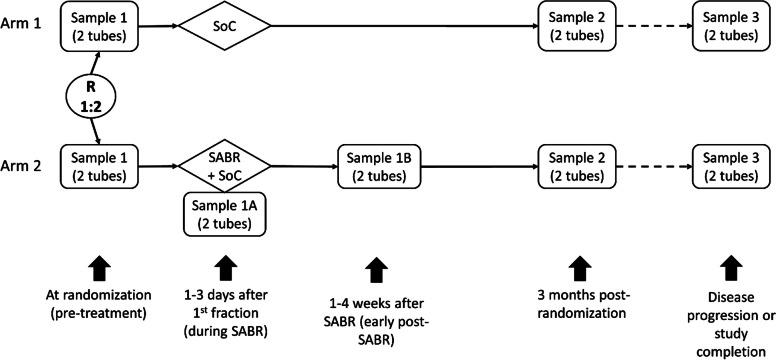
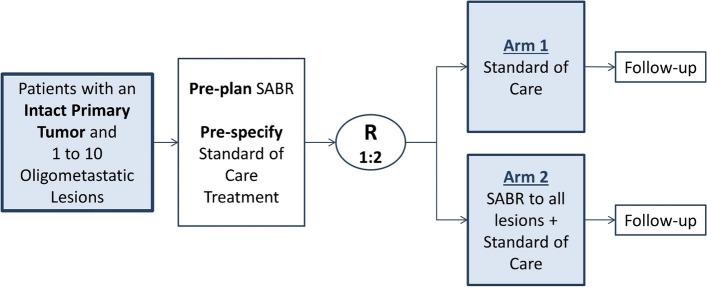
One hundred and eighty patients will be randomized in a 1:2 ratio between standard of care (SOC) palliative-intent treatments vs. SOC + ablative therapy (SABR preferred) to all sites of known disease. Randomization will be stratified based on histology and number of metastases at enrollment. SABR may be delivered in 1-, 3- and 5-fraction regimens, with recommended doses of 20 Gy, 30 Gy, and 35 Gy, respectively. Non-SABR local modalities (e.g. surgery, thermal ablation, conventional radiation) may be used for treatment of the primary or metastases at the discretion of the treating physicians, if those modalities are clinically preferred. The primary endpoint is overall survival, and secondary endpoints include progression-free survival, time to development of new metastatic lesions, time to initiation of next systemic therapy, quality of life, and toxicity. Translational endpoints include assessment of circulating tumor DNA and immunological predictors of outcomes.
DISCUSSION
SABR-SYNC will provide phase III data to assess the impact of SABR on overall survival in a population of patients with synchronous oligometastases. The translational component will attempt to identify novel prognostic and predictive biomarkers to aid in clinical decision making.
TRIAL REGISTRATION
Clinicaltrials.gov NCT05717166 (registration date: Feb. 8, 2023).
背景
新兴的随机数据,主要来自 II 期试验,表明寡转移癌症患者可能受益于消融治疗,如立体定向消融放疗(SABR)。然而,缺乏测试这一模式的 III 期数据,许多研究已经在同时性寡转移疾病的背景下检查了 SABR。SABR-SYNC 试验的目的是评估 SABR 在寡转移癌症和同步原发性肿瘤患者中的效果。
方法
180 名患者将按照 1:2 的比例随机分为标准治疗(SOC)姑息性治疗与 SOC+消融治疗(首选 SABR)两组,以治疗所有已知疾病部位。随机分组将根据组织学和入组时转移灶的数量进行分层。SABR 可以采用 1、3 和 5 个分数方案进行治疗,推荐剂量分别为 20 Gy、30 Gy 和 35 Gy。非 SABR 局部治疗方法(如手术、热消融、常规放疗)可根据治疗医生的判断,用于治疗原发性或转移灶,如果这些方法在临床上更优。主要终点是总生存期,次要终点包括无进展生存期、新转移灶发展时间、开始下一次系统治疗时间、生活质量和毒性。转化终点包括评估循环肿瘤 DNA 和免疫预测因子的预后。
讨论
SABR-SYNC 将提供 III 期数据,以评估 SABR 对同步寡转移患者总生存期的影响。转化部分将试图确定新的预后和预测生物标志物,以辅助临床决策。
试验注册
Clinicaltrials.gov NCT05717166(注册日期:2023 年 2 月 8 日)。
 Zotero 插件