
基于双向两样本孟德尔随机化研究的东亚人群口腔微生物组与 2 型糖尿病的遗传因果分析。
Genetics causal analysis of oral microbiome on type 2 diabetes in East Asian populations: a bidirectional two-sample Mendelian randomized study.
机构信息
West China Medical School, West China Hospital, Sichuan University, Chengdu, Sichuan, China.
Department of Endocrinology and Andrology Laboratory, West China Hospital, Sichuan University, Chengdu, Sichuan, China.
出版信息
Front Endocrinol (Lausanne). 2024 Aug 23;15:1452999. doi: 10.3389/fendo.2024.1452999. eCollection 2024.
INTRODUCTION
The dysbiosis of the oral microbiome is associated with the progression of various systemic diseases, including diabetes. However, the precise causal relationships remain elusive. This study aims to investigate the potential causal associations between oral microbiome and type 2 diabetes (T2D) using Mendelian randomization (MR) analyses.
METHODS
We conducted bidirectional two-sample MR analyses to investigate the impact of oral microbiome from saliva and the tongue T2D. This analysis was based on metagenome-genome-wide association studies (mgGWAS) summary statistics of the oral microbiome and a large meta-analysis of GWAS of T2D in East Asian populations. Additionally, we utilized the T2D GWAS summary statistics from the Biobank Japan (BBJ) project for replication. The MR methods employed included Wald ratio, inverse variance weighting (IVW), weighted median, MR-Egger, contamination mixture (ConMix), and robust adjusted profile score (RAPS).
RESULTS
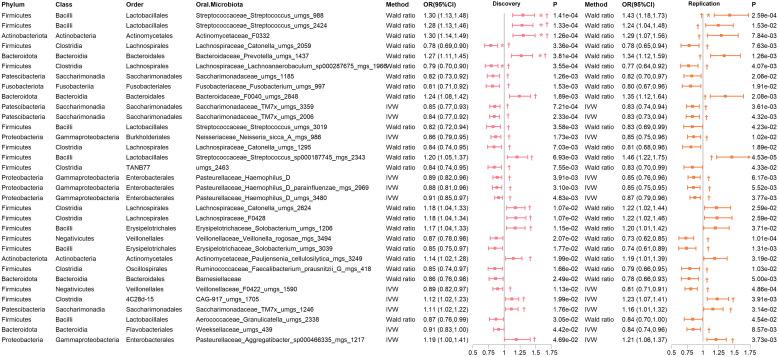
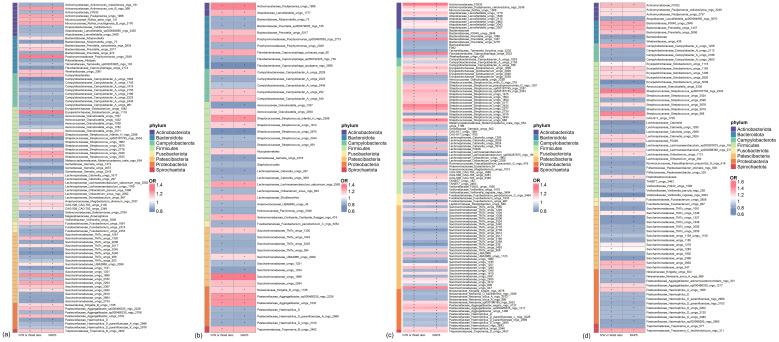
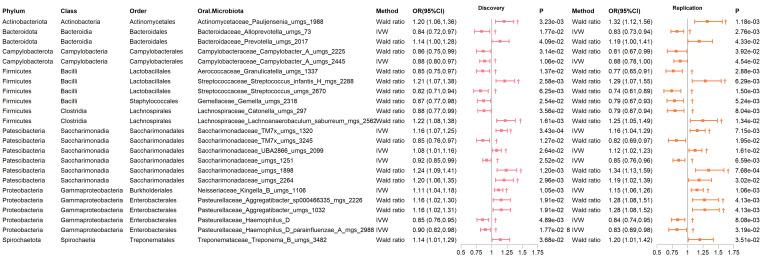
Our MR analyses revealed genetic associations between specific bacterial species in the oral microbiome of saliva and tongue with T2D in East Asian populations. The MR results indicated that nine genera were shared by both saliva and tongue. Among these, the genera , , and were identified as risk factors for T2D. Conversely, the genera and were found to be protective elements against T2D. However, different species within the genera , and exhibited multifaceted influences; some species were positively correlated with the risk of developing T2D, while others were negatively correlated.
DISCUSSION
This study utilized genetic variation tools to confirm the causal effect of specific oral microbiomes on T2D in East Asian populations. These findings provide valuable insights for the treatment and early screening of T2D, potentially informing more targeted and effective therapeutic strategies.
简介
口腔微生物组的失调与各种系统性疾病的进展有关,包括糖尿病。然而,确切的因果关系仍难以捉摸。本研究旨在通过孟德尔随机化(MR)分析研究口腔微生物组与 2 型糖尿病(T2D)之间的潜在因果关系。
方法
我们进行了双向两样本 MR 分析,以研究来自唾液和舌的口腔微生物组与 T2D 的关系。该分析基于口腔微生物组的宏基因组-全基因组关联研究(mgGWAS)汇总统计数据和东亚人群 T2D 的大型 GWAS 荟萃分析。此外,我们还利用日本生物银行(BBJ)项目的 T2D GWAS 汇总统计数据进行复制。所采用的 MR 方法包括 Wald 比、逆方差加权(IVW)、加权中位数、MR-Egger、污染混合物(ConMix)和稳健调整轮廓评分(RAPS)。
结果
我们的 MR 分析揭示了唾液和舌的口腔微生物组中特定细菌物种与东亚人群 T2D 之间的遗传关联。MR 结果表明,唾液和舌共有九个属。在这些属中,、和被确定为 T2D 的危险因素。相反,和被认为是 T2D 的保护因素。然而,属内的不同物种和表现出多方面的影响;一些物种与 T2D 的发病风险呈正相关,而另一些则呈负相关。
讨论
本研究利用遗传变异工具证实了特定口腔微生物组对东亚人群 T2D 的因果影响。这些发现为 T2D 的治疗和早期筛查提供了有价值的见解,可能为更有针对性和有效的治疗策略提供信息。

 Zotero 插件