
利用可穿戴胰岛素泵数据进行用餐时间预测,以支持糖尿病管理。
Mealtime prediction using wearable insulin pump data to support diabetes management.
机构信息
Department of Computer Science, Dartmouth College, Hanover, 03755, USA.
Integrated Science and Technology, James Madison University, Harrisonburg, 22807, USA.
出版信息
Sci Rep. 2024 Sep 9;14(1):21013. doi: 10.1038/s41598-024-71630-w.
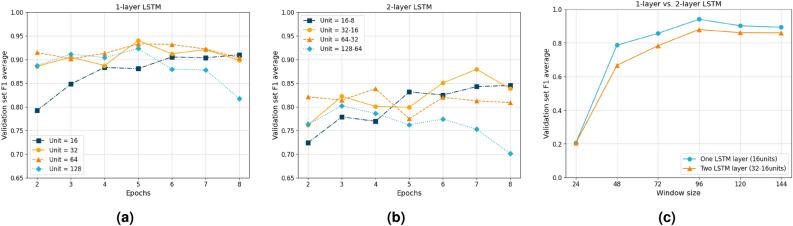
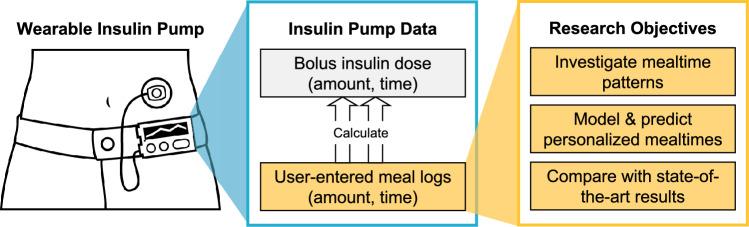
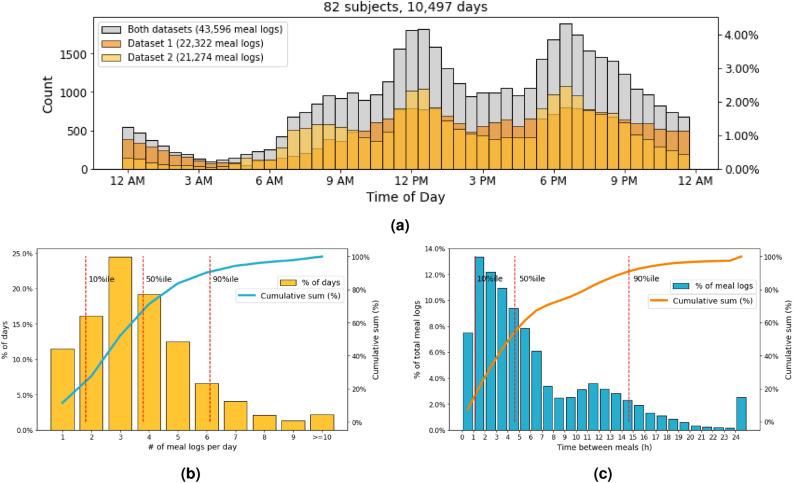
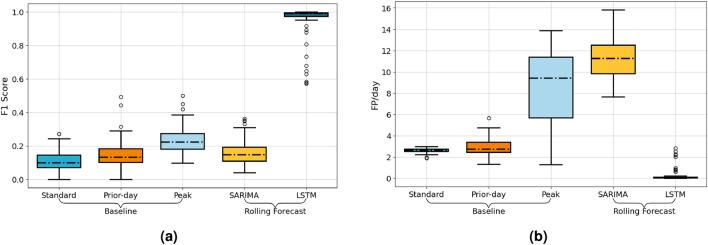
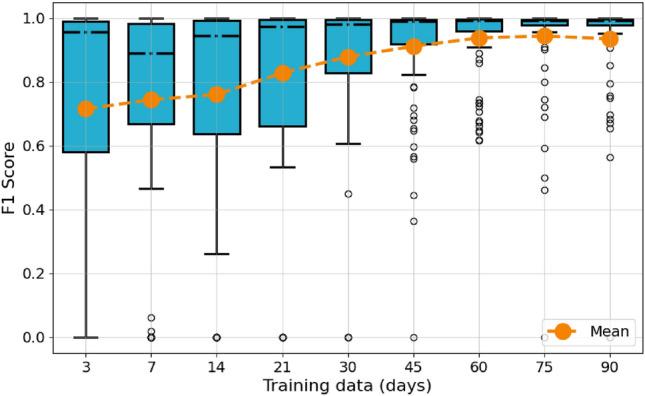
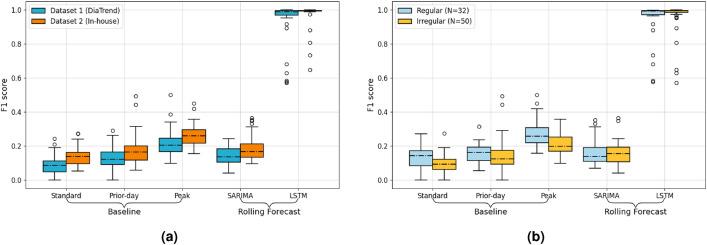
Many patients with diabetes struggle with post-meal high blood glucose due to missed or untimely meal-related insulin doses. To address this challenge, our research aims to: (1) study mealtime patterns in patients with type 1 diabetes using wearable insulin pump data, and (2) develop personalized models for predicting future mealtimes to support timely insulin dose administration. Using two independent datasets with over 45,000 meal logs from 82 patients with diabetes, we find that the majority of people ( 60%) have irregular and inconsistent mealtime patterns that change notably through the course of each day and across months in their own historical data. We also show the feasibility of predicting future mealtimes with personalized LSTM-based models that achieve an average F1 score of > 95% with less than 0.25 false positives per day. Our research lays the groundwork for developing a meal prediction system that can nudge patients with diabetes to administer bolus insulin doses before meal consumption to reduce the occurrence of post-meal high blood glucose.
许多糖尿病患者由于错过或未及时给予与进餐相关的胰岛素剂量而出现餐后高血糖。为了解决这一挑战,我们的研究旨在:(1)使用可穿戴胰岛素泵数据研究 1 型糖尿病患者的进餐模式,以及(2)开发个性化模型来预测未来的进餐时间,以支持及时给予胰岛素剂量。我们使用来自 82 名糖尿病患者的两个独立数据集,其中包含超过 45000 份进餐记录,发现大多数人(60%)的进餐模式不规律且不一致,而且在每天和每个月的过程中都会发生明显变化。我们还展示了使用基于 LSTM 的个性化模型预测未来进餐时间的可行性,这些模型的平均 F1 得分为>95%,每天的假阳性率低于 0.25。我们的研究为开发进餐预测系统奠定了基础,该系统可以促使糖尿病患者在进餐前给予餐时胰岛素剂量,以减少餐后高血糖的发生。
 Zotero 插件