
癌胚 TRIM71 通过重塑 CEBPA 介导的丝氨酸/甘氨酸代谢驱动肝癌发生。
Oncofetal TRIM71 drives liver cancer carcinogenesis through remodeling CEBPA-mediated serine/glycine metabolism.
机构信息
Department of Integrative Oncology, Fudan University Shanghai Cancer Center, and Shanghai Key Laboratory of Medical Epigenetics, International Co-laboratory of Medical Epigenetics and Metabolism, Institutes of Biomedical Sciences, Shanghai Medical College, Fudan University, Shanghai, China.
Department of Oncology, Shanghai Medical College, Fudan University, Shanghai, China.
出版信息
Theranostics. 2024 Aug 12;14(13):4948-4966. doi: 10.7150/thno.99633. eCollection 2024.
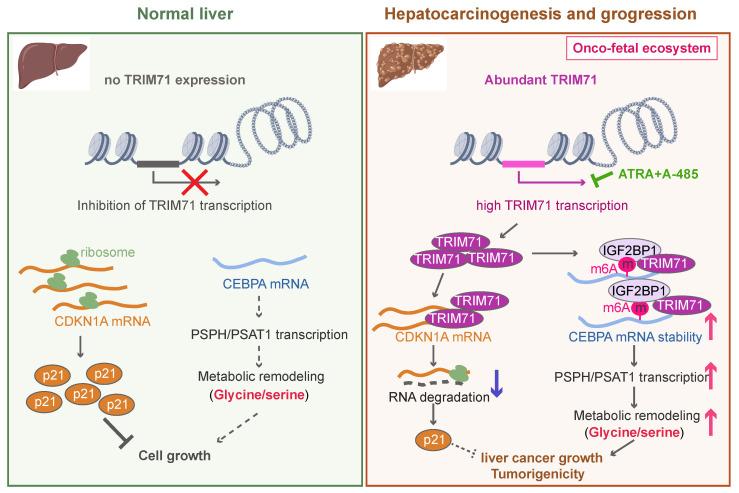
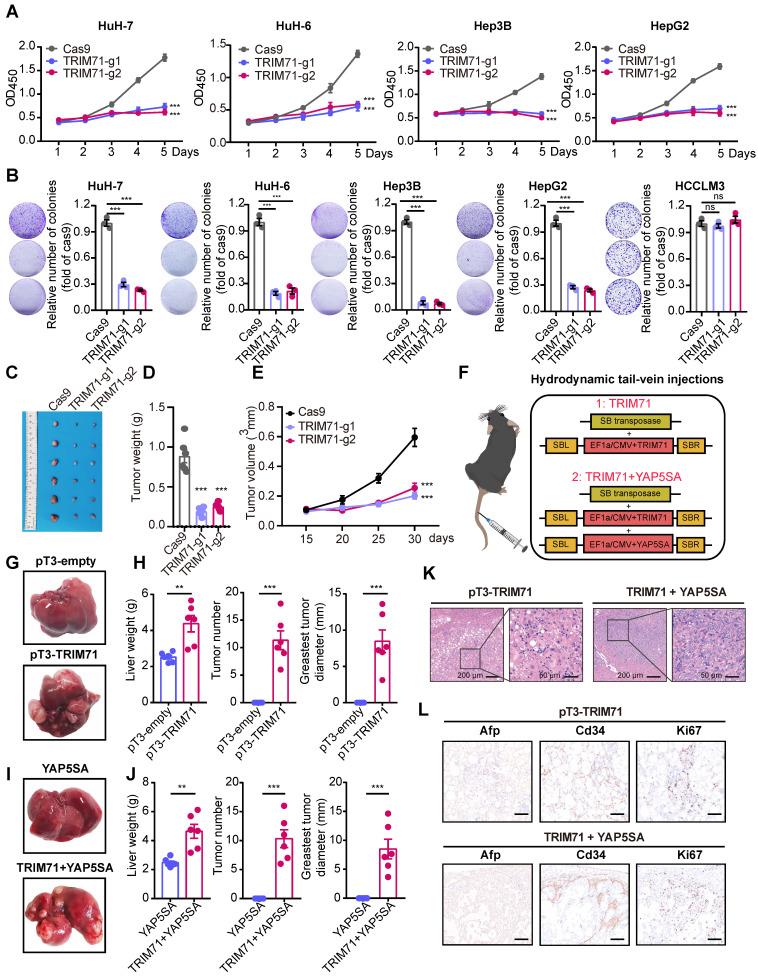
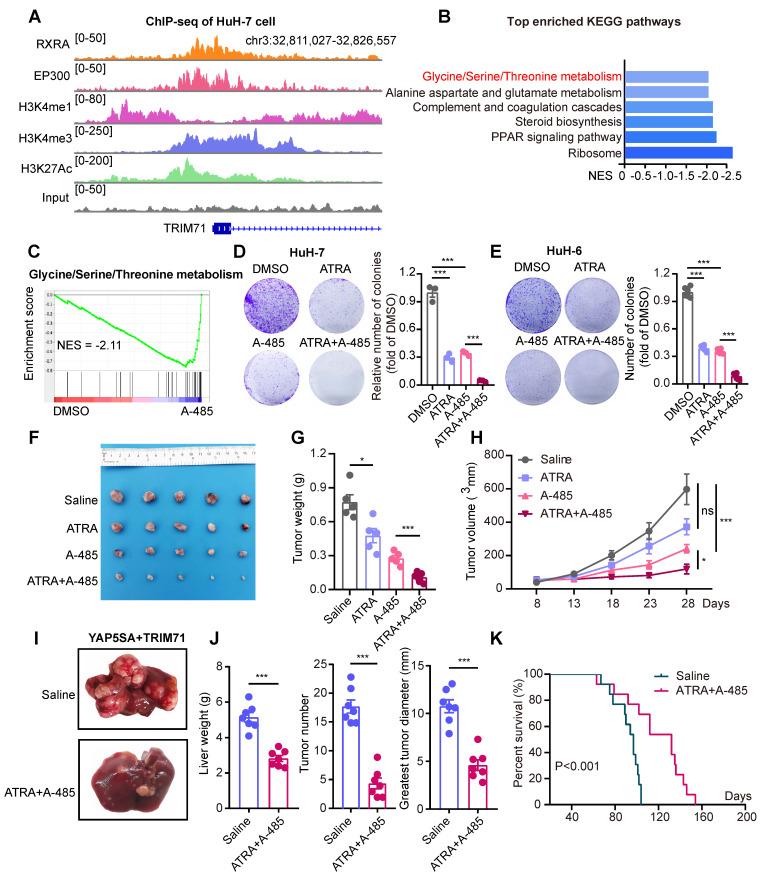
Tumor cells remodel transcriptome to construct an ecosystem with stemness features, which maintains tumor growth and highly malignant characteristics. However, the core regulatory factors involved in this process still need to be further discovered. Single cell RNA-sequncing (scRNA-seq) and bulk RNA-sequencing profiles derived from fetal liver, normal liver, liver tumors, and their adjacent samples were collected to analyze the ecosystem of liver cancer. Mouse models were established to identify molecular functions of oncofetal-related oncogenes using hydrodynamic tail vein injection. We found that liver cancer rebuilt oncofetal ecosystem to maintain malignant features. Interestingly, we identified a group of RNA-binding proteins (RBPs) that were highly overexpressed with oncofetal features. Among them, TRIM71 was specifically expressed in liver cancers and was associated with poor outcomes. TRIM71 drove the carcinogenesis of hepatocellular carcinoma (HCC), and knockdown of TRIM71 significantly abolished liver cancer cell proliferation. Mechanistically, TRIM71 formed a protein complex with IGF2BP1, bound to and stabilized the mRNA of CEBPA in an m6A-dependent manner, enhance the serine/glycine metabolic pathway, and ultimately promoted liver cancer progression. Furthermore, we identified that all-trans-retinoic acid (ATRA) combined with e1A binding protein p300 (EP300) inhibitor A-485 repressed TRIM71, attenuated glycine/serine metabolism, and inhibited liver cancer cell proliferation with high TRIM71 levels. We demonstrated the oncofetal status in liver cancer and highlighted the crucial role of TRIM71 and provided potential therapeutic strategies and liver cancer-specific biomarker for liver cancer patients.
肿瘤细胞重塑转录组,构建具有干性特征的生态系统,维持肿瘤生长和高度恶性特征。然而,这一过程中涉及的核心调节因子仍有待进一步发现。 我们收集了来自胎儿肝脏、正常肝脏、肝癌及其相邻样本的单细胞 RNA 测序 (scRNA-seq) 和批量 RNA 测序图谱,以分析肝癌的生态系统。我们通过尾静脉注射水动力建立小鼠模型,以鉴定与胎源性相关的癌基因的分子功能。 我们发现肝癌重建胎源性生态系统以维持恶性特征。有趣的是,我们鉴定了一组具有胎源性特征的高度过表达的 RNA 结合蛋白 (RBPs)。其中,TRIM71 在肝癌中特异性表达,与不良预后相关。TRIM71 驱动肝细胞癌 (HCC) 的发生,而 TRIM71 的敲低显著抑制肝癌细胞增殖。在机制上,TRIM71 与 IGF2BP1 形成蛋白复合物,以 m6A 依赖的方式结合并稳定 CEBPA 的 mRNA,增强丝氨酸/甘氨酸代谢途径,最终促进肝癌进展。此外,我们发现全反式维甲酸 (ATRA) 与 e1A 结合蛋白 p300 (EP300) 抑制剂 A-485 联合抑制 TRIM71,减弱甘氨酸/丝氨酸代谢,并抑制高 TRIM71 水平的肝癌细胞增殖。 我们证明了肝癌中的胎源性状态,并强调了 TRIM71 的关键作用,为肝癌患者提供了潜在的治疗策略和肝癌特异性生物标志物。




 Zotero 插件