
改善健康相关生活质量的生活方式干预措施:随机对照试验的系统评价和荟萃分析
Lifestyle interventions improving health-related quality of life: A systematic review and meta-analysis of randomized control trials.
作者信息
Amiri Sohrab, Mahmood Nailah, Junaidi Sameeha, Khan Moien Ab
机构信息
Quran and Hadith Research Center, Baqiyatallah University of Medical Sciences, Tehran, Iran.
Department of Clinical Psychology, Snö Healthcare, Abu Dhabi, United Arab Emirates.
出版信息
J Educ Health Promot. 2024 Jul 5;13:193. doi: 10.4103/jehp.jehp_1156_23. eCollection 2024.
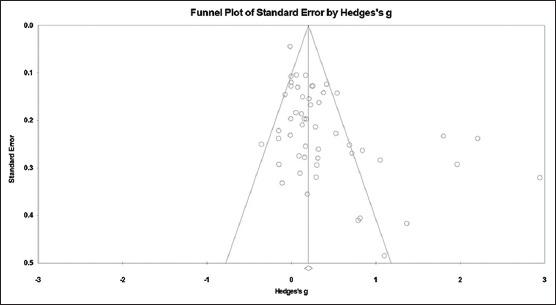
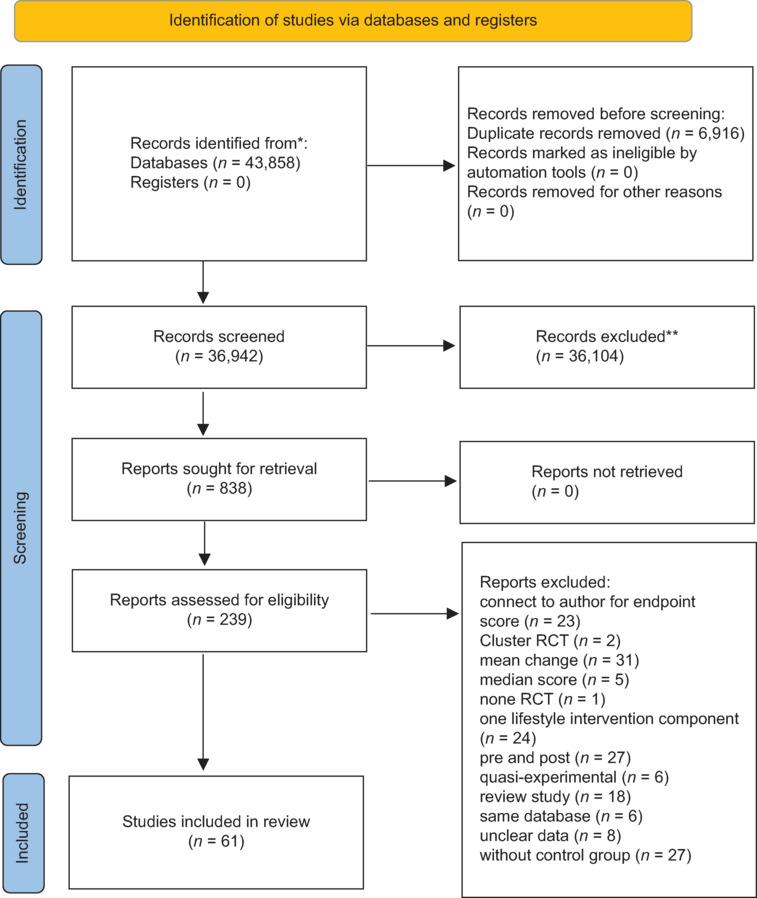
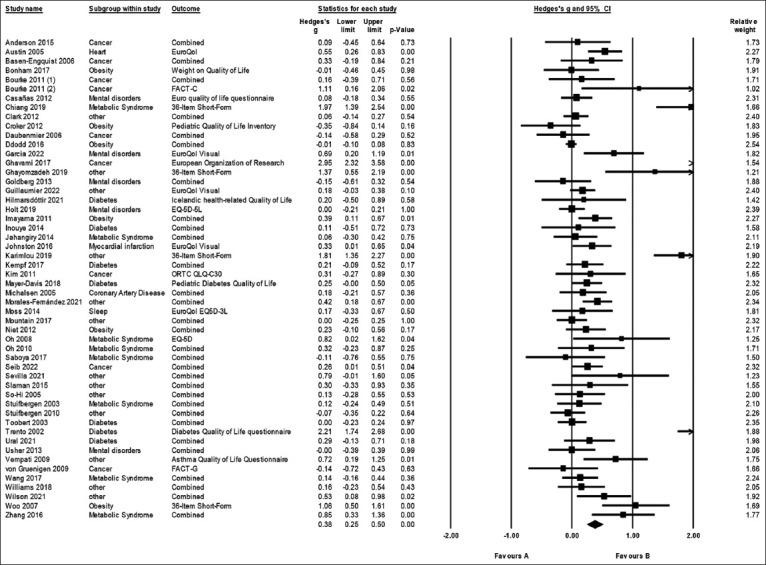
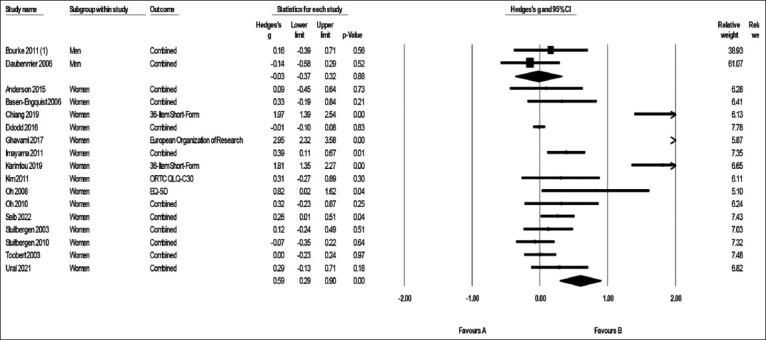
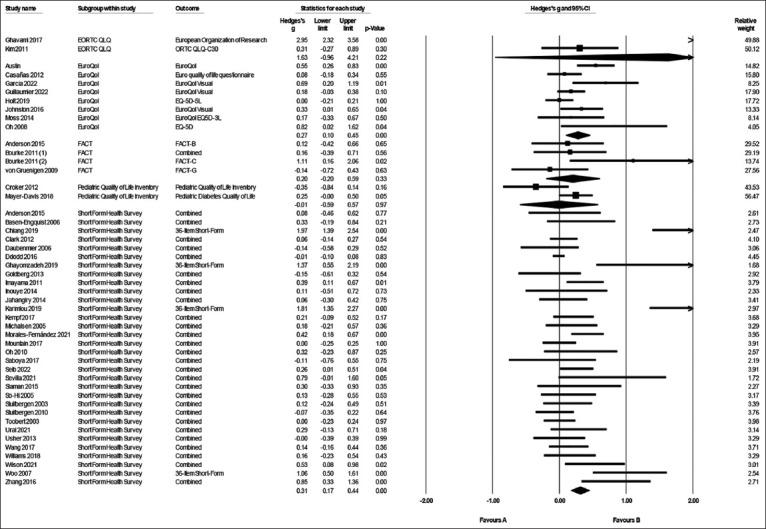
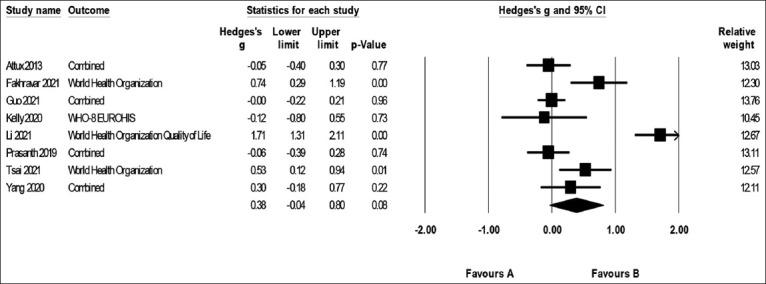
Lifestyle interventions have garnered significant research interest for their potential to enhance health-related quality of life (HRQoL). Understanding the impact of these interventions on various dimensions of HRQoL is crucial for effective healthcare strategies. This study aims to systematically review and meta-analyze the effects of lifestyle interventions on HRQoL in randomized control trials. A systematic search was conducted across five scientific databases, including PubMed, Web of Science, Scopus, the Cochrane Library, and gray literature, with a filter applied to include only English language publications. Study selection was carried out by two independent reviewers in several steps, including duplicate removal and eligibility evaluation for meta-analysis. Information extracted from the studies included authors, countries, study designs, target populations, ages, genders, number of participants, interventions, outcomes, and results. A total of 61 randomized control trials were included in this meta-analysis. The meta-analysis revealed that lifestyle interventions significantly improved healthrelated quality of life compared to control groups, with Hedges' g of 0.38 (95% CI 0.25-0.50, Z = 5.94; P < 0.001; I2 = 84.59%). This positive effect was consistently observed in patients with heart-related diseases and metabolic disorders. Meta-regression analysis indicated that lifestyle interventions had the most substantial impact on health-related quality of life in the 1-month follow-up period. Considering the cost-effectiveness of lifestyle interventions compared to other intervention types, they can benefit various patient groups. This systematic review contributes to health policy goals by advocating focused preventive strategies in alignment with the observed benefits of lifestyle interventions.
生活方式干预因其提升健康相关生活质量(HRQoL)的潜力而引发了大量研究兴趣。了解这些干预措施对HRQoL各个维度的影响对于有效的医疗保健策略至关重要。本研究旨在系统回顾和荟萃分析随机对照试验中生活方式干预对HRQoL的影响。我们在五个科学数据库中进行了系统检索,包括PubMed、科学网、Scopus、考克兰图书馆和灰色文献,并应用过滤器仅纳入英文出版物。研究筛选由两名独立评审员分几步进行,包括去除重复项和对荟萃分析的纳入资格评估。从研究中提取的信息包括作者、国家、研究设计、目标人群、年龄、性别、参与者数量、干预措施、结局和结果。本荟萃分析共纳入61项随机对照试验。荟萃分析显示,与对照组相比,生活方式干预显著改善了健康相关生活质量,Hedges' g为0.38(95% CI 0.25 - 0.50,Z = 5.94;P < 0.001;I2 = 84.59%)。在患有心脏病和代谢紊乱的患者中始终观察到这种积极效果。荟萃回归分析表明,生活方式干预在1个月随访期对健康相关生活质量的影响最大。考虑到生活方式干预与其他干预类型相比的成本效益,它们可以使不同患者群体受益。本系统评价通过倡导与生活方式干预所观察到的益处相一致的重点预防策略,为卫生政策目标做出了贡献。

 Zotero 插件