
泌尿生殖系统恶性肿瘤中的 microRNAs:癌症诊断与治疗的激动人心新领域。
MicroRNAs in Genitourinary Malignancies: An Exciting Frontier of Cancer Diagnostics and Therapeutics.
机构信息
Division of Hematology/Oncology, Department of Medicine, UCLA David Geffen School of Medicine, Los Angeles, CA 90095, USA.
School of Medicine, California University of Science and Medicine, Colton, CA 92324, USA.
出版信息
Int J Mol Sci. 2024 Aug 31;25(17):9499. doi: 10.3390/ijms25179499.
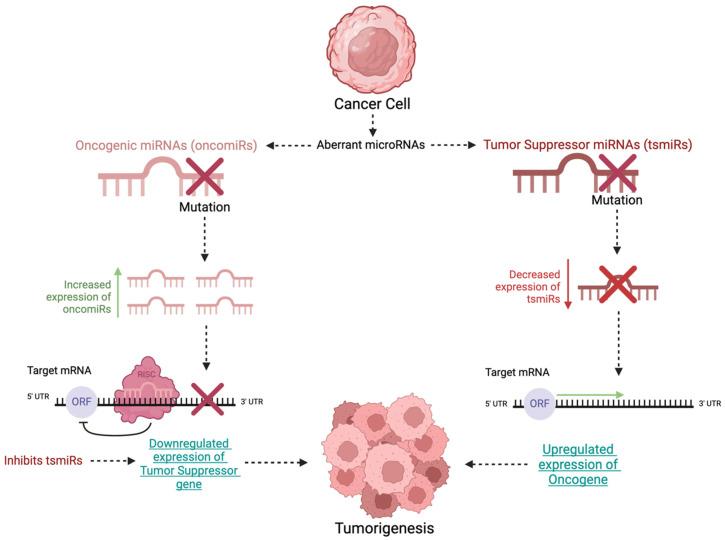
Genitourinary (GU) malignancies, including prostate, urothelial, kidney, testicular, penile, and adrenocortical cancers, comprise a significant burden of cancers worldwide. While many practice-changing advances have been made in the management of GU malignancies in the last decade, there is still significant room for improvement. MicroRNAs (miRNAs) are noncoding RNAs that regulate post-transcription gene expression and which have been implicated in multiple mechanisms of carcinogenesis. Therefore, they have the potential to revolutionize personalized cancer therapy, with several ongoing preclinical and clinical studies underway to investigate their efficacy. In this review, we describe the current landscape of miRNAs as diagnostics, therapeutics, and biomarkers of response for GU malignancies, reflecting a novel frontier in cancer treatment.
泌尿生殖系统(GU)恶性肿瘤,包括前列腺癌、尿路上皮癌、肾癌、睾丸癌、阴茎癌和肾上腺皮质癌,构成了全球癌症的重要负担。尽管在过去十年中,GU 恶性肿瘤的治疗取得了许多改变实践的进展,但仍有很大的改进空间。microRNAs(miRNAs)是一类非编码 RNA,调节转录后基因表达,与多种致癌机制有关。因此,它们有可能彻底改变个性化癌症治疗,目前正在进行多项临床前和临床研究,以评估其疗效。在这篇综述中,我们描述了 miRNAs 作为 GU 恶性肿瘤的诊断、治疗和反应生物标志物的现状,反映了癌症治疗的一个新前沿。


 Zotero 插件