
贵州省地膜覆盖农田土壤中微塑料的赋存与分布特征
Microplastics occurrence and distribution characteristics in mulched agricultural soils of Guizhou province.
作者信息
Miao Haiying, Zhang Shuyi, Gao Weichang, Zhou Jianyun, Cai Heqing, Wu Linjing, Liu Juncong, Wang Zhanghong, Liu Taoze
机构信息
College of Eco-Environment Engineering, Guizhou Minzu University, Guiyang, 550025, China.
Engineering Research Center of Green and Low-carbon Technology for Plastic Application, Guizhou Minzu University, Guiyang, 550025, China.
出版信息
Sci Rep. 2024 Sep 14;14(1):21505. doi: 10.1038/s41598-024-72829-7.
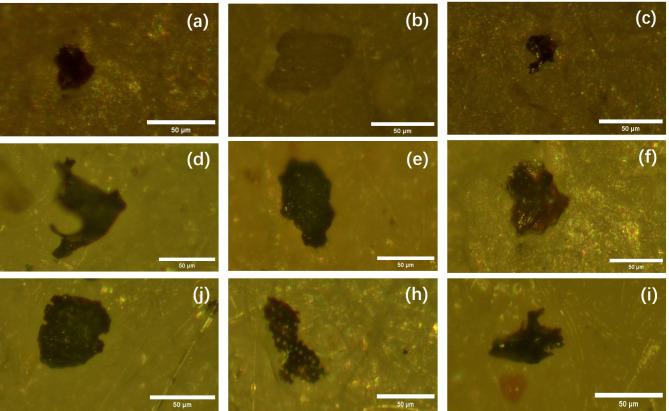
Microplastics pollution in agricultural soil is increasingly recognized, but the specific situation varies with geography, climate conditions, and farming practices. The karst landscape, a typical geomorphology in China, demands a deeper understanding of microplastics pollution in such areas. This research zeroes in on Guizhou, a province known for its karst formations, by collecting soil samples from the mulched cultivation layer in ten counties and cities. The study employed metallographic microscopy, scanning electron microscopy (SEM-EDS), and Fourier-transform infrared spectroscopy (FT-IR) to analyze the presence and distribution of microplastics. Results show that polyethylene is the predominant component of microplastics in the mulched agricultural soils of Guizhou, primarily existing as irregular fragments in black, transparent, and translucent forms, with diameters of 40 ~ 120 μm and rough surfaces marked by significant erosion. The concentration of microplastics varies from 143.28 to 3,283.46 items/kg, averaging 1,150.60 ± 647.86 items/kg. The majority of particles accounting for 64.79% are sized between 10 ~ 100 μm. A highly significant positive correlation (p < 0.001) is found between mulching duration and microplastics concentration, indicating that prolonged mulching increases microplastics accumulation in farmlands. Additionally, crop type, irrigation method, and soil type also influence microplastics concentration. This study highlights the escalating issue of microplastics pollution in China's karst regions, underscoring the need for attention.
农业土壤中的微塑料污染日益受到关注,但其具体情况因地理、气候条件和耕作方式而异。喀斯特地貌是中国的一种典型地貌,需要更深入地了解此类地区的微塑料污染情况。本研究聚焦于以喀斯特地貌而闻名的贵州省,从十个县、市的地膜覆盖耕作层采集土壤样本。该研究采用金相显微镜、扫描电子显微镜(SEM-EDS)和傅里叶变换红外光谱(FT-IR)来分析微塑料的存在和分布情况。结果表明,聚乙烯是贵州地膜覆盖农业土壤中微塑料的主要成分,主要以黑色、透明和半透明的不规则碎片形式存在,直径为40~120μm,表面粗糙且有明显侵蚀痕迹。微塑料的浓度在143.28至3283.46个/千克之间,平均为1150.60±647.86个/千克。占比64.79%的大多数颗粒尺寸在10~100μm之间。地膜覆盖持续时间与微塑料浓度之间存在极显著的正相关(p<0.001),这表明延长地膜覆盖时间会增加农田中微塑料的积累。此外,作物类型、灌溉方式和土壤类型也会影响微塑料浓度。本研究凸显了中国喀斯特地区微塑料污染问题的日益严重,强调了对此予以关注的必要性。




 Zotero 插件